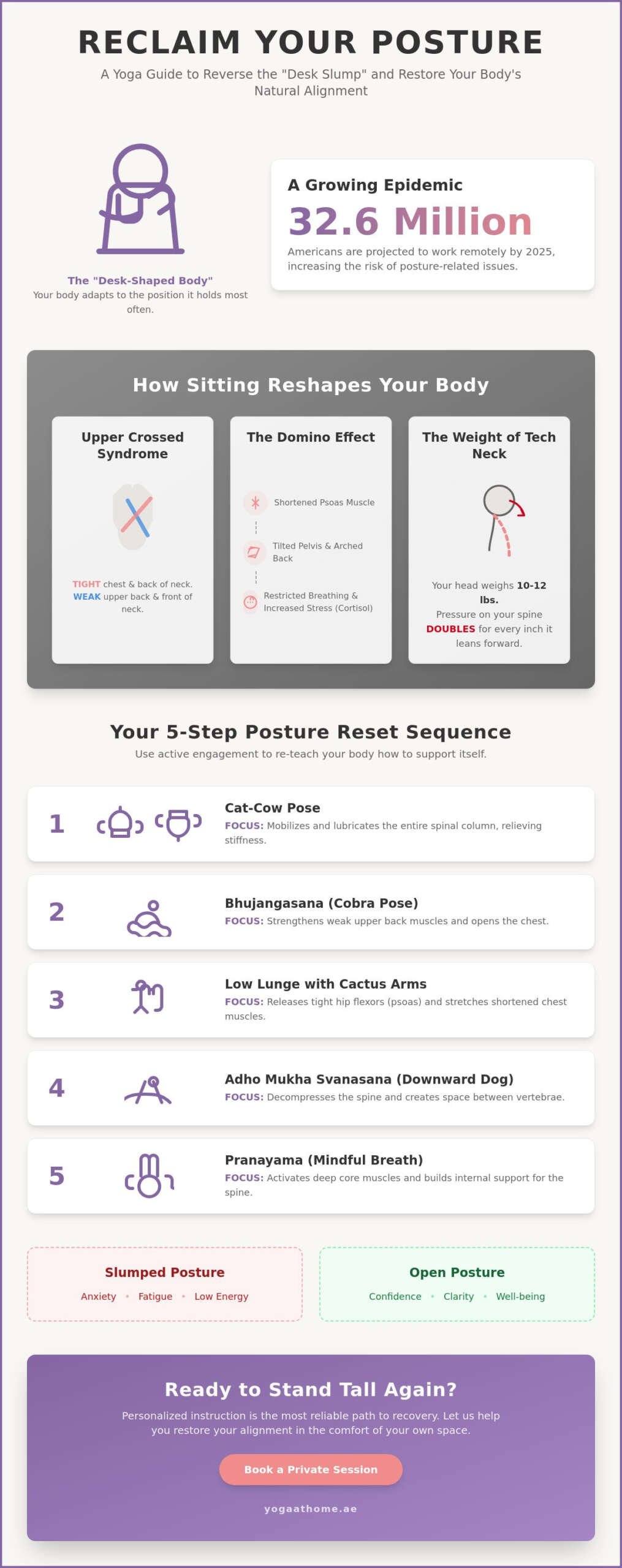
True health is the quiet foundation upon which all professional success is built. With over 32.6 million Americans working remotely in 2025, the quiet epidemic of the “desk-shaped body” has reached a new peak. You likely know the feeling of a heavy neck or shoulders that seem permanently hiked toward your ears, even when the laptop is closed. Integrating yoga to improve posture from desk work is a vital step in reclaiming the space and ease your body naturally deserves. It’s about moving beyond simple movement to achieve a state of internal balance and physical freedom.
We believe that wellness is a way of life that should be accessible and non-intimidating for every professional. This guide will show you how targeted yoga practices can reverse the structural damage of desk work and restore your natural alignment. We’ll explore specific Hatha and Corporate Yoga techniques to decompress your spine, strengthen your core, and provide you with practical tools to manage stress during your busiest hours. You don’t have to remain stuck in a seated shape; it’s time to stand tall with confidence and clarity.
Key Takeaways
- Gain clarity on how your body structurally adapts to sitting and why Upper Crossed Syndrome causes persistent tension in the chest and neck.
- Master a targeted five-pose sequence using yoga to improve posture from desk work to decompress the spine through mindful, active engagement.
- Harness the power of Pranayama to create internal scaffolding for your spine while naturally activating your deep core muscles.
- Discover why a professional assessment and bespoke instruction provide a more reliable path to recovery than generic group settings.
- See how bringing Corporate Yoga or Ladies Yoga into your personal space transforms your environment into a dedicated sanctuary for wellness.
The Anatomy of the Desk Slump: Why Your Posture Suffers
A balanced physical frame is the vessel for a tranquil spirit and a sharp mind. When we spend hours tethered to a workstation, our bodies undergo a process of structural adaptation often called the “desk slump.” This isn’t merely a temporary lack of effort; it’s a fundamental shift in The Anatomy of the Desk Slump where the musculoskeletal system reshapes itself to fit the seated environment. Using yoga to improve posture from desk work starts with recognizing that your body is simply trying to be efficient in the position it occupies most often.
Central to this adaptation is Upper Crossed Syndrome. This condition creates a distinct “X” pattern of imbalance across your torso. The muscles of the chest and the back of the neck become chronically tight and shortened. Conversely, the muscles of the upper back and the deep flexors in the front of the neck become overstretched and weak. This tug-of-war pulls the shoulders forward and the chin upward, creating a persistent strain that simple stretching cannot resolve on its own.
The impact travels further down the spine to the psoas muscle. As the primary connector between your lumbar spine and your legs, the psoas remains in a shortened state while you sit. Over time, this tightness pulls the pelvis out of its neutral alignment, leading to an arched lower back and a weakened core. This collapse of the midsection restricts the diaphragm’s natural movement. When you can’t take full, deep breaths, your lung capacity diminishes and your body increases cortisol production, keeping you in a state of physiological stress throughout the workday.
Understanding Tech Neck and Kyphosis
The physics of sitting are unforgiving. Your head weighs approximately 10 to 12 pounds in a neutral position, but for every inch it leans forward, the pressure on your cervical spine doubles. This leads to “tech neck” and the eventual development of kyphosis, or a rounded upper back hunch. Proprioception is your body’s internal sense of its position in space, which can unfortunately be recalibrated to accept this slumped state as your new, “normal” baseline.
The Emotional Toll of Physical Misalignment
Our physical shape and our internal state are deeply intertwined. A closed-off, slumped posture often mirrors and reinforces feelings of anxiety, fatigue, and low professional energy. By practicing yoga to improve posture from desk work, you engage in the vital act of “opening the heart.” This physical expansion reverses negative psychological states, fostering a sense of quiet confidence. We view yoga as a restorative partner that doesn’t just fix your back, but restores your entire sense of well-being.
Essential Yoga Poses to Reverse Desk Tension
Restoration is a conscious choice. To effectively use yoga to improve posture from desk work, we must move beyond passive stretching. True recovery requires “active engagement,” which means firing up stabilizing muscles rather than simply hanging into your joints. It’s about re-teaching the body how to support itself from within. By focusing on alignment and strength, we can begin to undo the structural habits formed by repetitive seated positions.
The Spinal Reset: Cat-Cow and Bhujangasana
Start with Cat-Cow to mobilize the entire vertebral column. On your hands and knees, inhale to drop your belly and lift your heart. As you exhale, round your spine toward the ceiling. This rhythmic movement lubricates the spinal discs and encourages fluid movement. To strengthen the weak muscles of the upper back, practice Bhujangasana (Cobra Pose). This pose targets the posterior chain, which often goes dormant during office hours. Focus on pulling your shoulder blades together and down, keeping them far from your ears to release neck tension.
Opening the Hips and Chest: Low Lunge and Cactus Arms
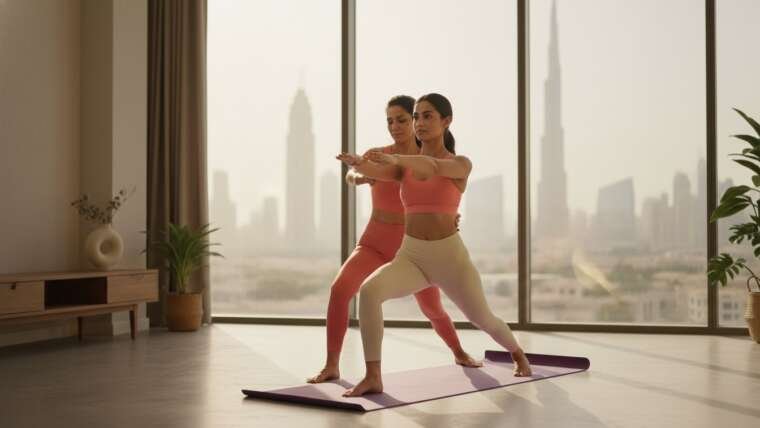
Sitting for hours traps the pelvis and shortens the psoas. Anjaneyasana (Low Lunge) is the perfect antidote to release these tight hip flexors. While in the lunge, bring your arms into a “Cactus” shape by bending your elbows at 90 degrees and pulling them back. This creates a powerful “counter-pose” to the rounded-shoulder shape of desk work. It physically opens the heart space and stretches the pectoral muscles that become shortened while typing, reversing the physical and emotional impact of a closed posture.
The Power of Inversion: Downward-Facing Dog
Adho Mukha Svanasana, or Downward-Facing Dog, acts as a natural traction system for the lower back. It uses gravity to create space between the vertebrae. If you have tight hamstrings, which is a common office-worker ailment, don’t worry about touching your heels to the floor. Bend your knees significantly and focus on maintaining a long, straight spine. The goal is decompression, not flexibility for its own sake. Focusing on the length of the spine rather than straight legs ensures you get the most restorative benefit from the pose.
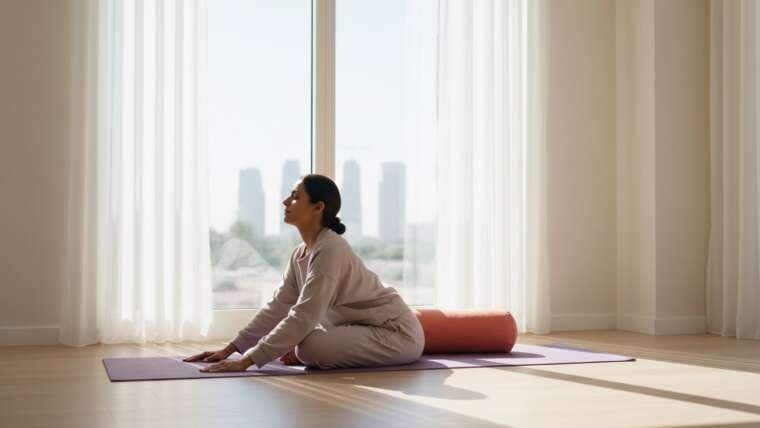
Using props like blocks or straps can make these poses much more accessible if you’re feeling particularly “stuck” in your seated shape. While these movements are restorative, a professional alignment check ensures you’re practicing safely and effectively. A dedicated teacher can provide the bespoke guidance found in Hatha Yoga sessions, helping you find your natural alignment once more within the comfort of your own space.
Beyond the Mat: Breath and Mindfulness for Posture
True wellness isn’t a destination reachable only on a yoga mat; it’s a continuous state of being that travels with you to your workstation. While physical poses provide the foundation, the true secret to using yoga to improve posture from desk work lies in the subtle power of the breath. We often view Pranayama, or life-force control, as an internal scaffolding that supports the spine from the inside out. When you breathe with intention, you create a pressurized support system that prevents your vertebrae from collapsing under the weight of a long professional day.
The Diaphragm-Posture Connection
Shallow “chest breathing” is a common byproduct of high-pressure environments and restrictive seated positions. When you breathe only into the upper chest, you force the muscles of your neck and shoulders to work as secondary respiratory muscles. This constant, micro-effort leads to the persistent tension that characterizes the desk slump. By practicing Dirga Pranayama, or the Three-Part Breath, you learn to expand the ribcage in all directions. You should inhale deeply into the belly, then the ribs, and finally the upper chest. A full, expansive breath creates tangible space between the vertebrae, lifting the heart and naturally engaging the transverse abdominis, which acts as your body’s built-in corset.
Neuromuscular Re-patterning
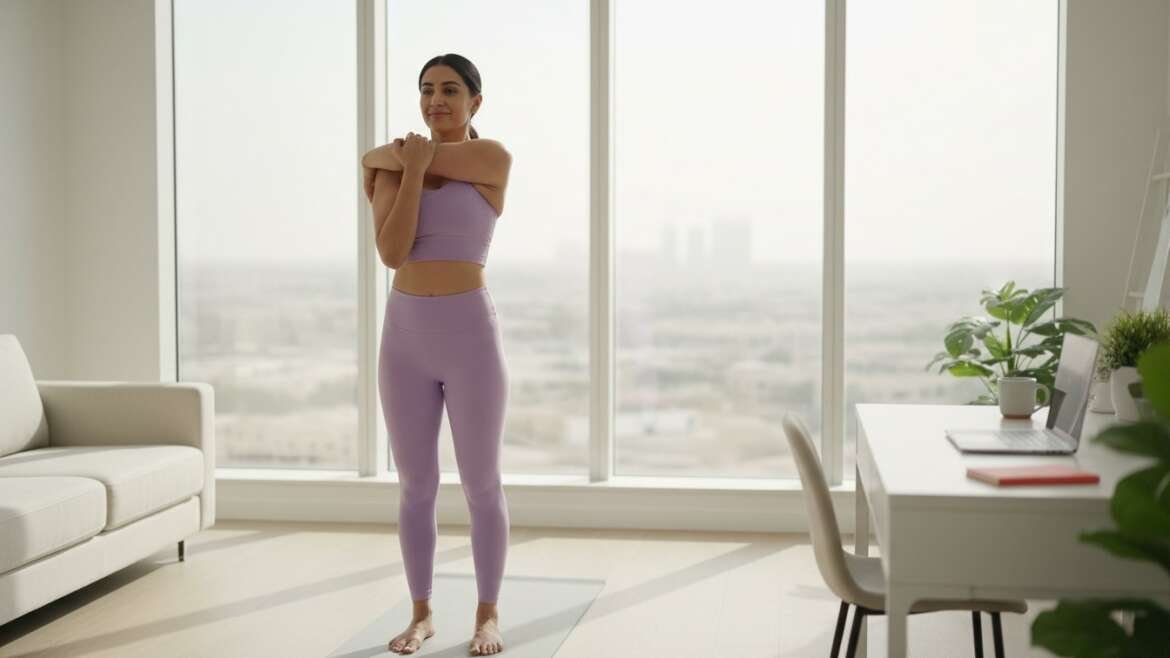
Permanent change requires more than just occasional stretching; it demands a shift in how your brain communicates with your muscles. This is the essence of neuromuscular re-patterning. Instead of simply “thinking” about sitting up straight, you must learn to “feel” alignment through mindfulness. We encourage the use of micro-breaks throughout your workday to perform a quick Body Scan. Close your eyes for thirty seconds and notice where you’re holding unnecessary tension. Is it in your jaw? The space between your eyes? Identifying these subtle signals allows you to release stress before it hardens into chronic physical pain.
Focus your awareness on your Solar Plexus, the area just above your navel. This is your center of personal power and stability. By maintaining a soft but firm awareness of this area, you’ll find it easier to maintain an upright, confident stance without feeling rigid or forced. Meditation helps you move from the mental effort of “correcting” yourself to the intuitive grace of “being” in alignment. This holistic approach ensures that the benefits of your practice extend far beyond your session, turning your workspace into a place of restorative growth rather than physical depletion.
Designing Your Personalized Posture Recovery Plan
True health is a quiet, steady investment in yourself. To reclaim your natural alignment, you need a strategy that respects your professional schedule and your body’s unique history. While occasional movement is helpful, using yoga to improve posture from desk work is most effective when it’s integrated into a consistent, daily rhythm. A focused 20 minute routine can often yield better results than a single, long session once a week, provided the movements are executed with precision and awareness.
Safe practice begins with expert guidance. When you’re dealing with chronic neck or back tension, the quality of instruction matters. We strongly recommend working with instructors who hold REPS UAE or Yoga Alliance certifications. These professional standards ensure that your mentor has the deep anatomical knowledge required to guide you through a restorative process without risking further strain. A professional assessment of your specific postural habits allows for a practice that’s truly bespoke, addressing the specific ways your body has adapted to your workstation. For those seeking a holistic approach, specialized care from a wellness studio like Livelovelife Chiropractic can provide the gentle, transformative support needed to restore the body’s natural balance.
Private vs. Group Yoga: Which is Right for You?
Generic group classes often follow a “one size fits all” approach that might not address the specific misalignments caused by years of office work. Beginners with significant tension often benefit from one-on-one adjustments. Private instruction allows your teacher to identify exactly where your body is “stuck” and provide immediate corrections. This personalized attention is vital for those who need a mentor who understands corporate-specific physical needs. There is also a profound sense of tranquility in having a dedicated professional come directly to your home or office, turning your personal space into a sanctuary for healing.
Setting Sustainable Wellness Goals
Progress is best tracked through subtle shifts in your daily life. You might notice a decrease on your personal pain scale or find that you’re sitting taller without effort during a long meeting. Some practitioners find it helpful to use photo checks every few weeks to visually document the improvement in their standing posture. This is the “Compound Effect” in action; small, consistent efforts lead to transformative results over time. By integrating yoga classes in dubai into your routine, you join a growing community of professionals who prioritize their well-being as a foundational pillar of their success.
Your journey toward a pain-free life doesn’t have to be complicated. It starts with a single step toward a more balanced version of yourself. If you’re ready to experience the benefits of a customized practice, you can book a private yoga session to begin your personalized recovery plan today.
The Yogaathome Approach: Restoring Alignment in Your Space
Wellness is not merely a goal to be reached but a way of life that is accessible to everyone. Yogaathome brings the sanctuary of the studio directly to your private environment, removing the barriers that often prevent professionals from prioritizing their health. Our philosophy centers on holistic transformation, where physical alignment, mental clarity, and spiritual balance meet. By choosing to practice in your own space, you allow the restorative benefits of your session to integrate more deeply into your daily routine. We position ourselves as your supportive partner, ensuring that your path to recovery is both serene and professionally managed.
Personalized Private Sessions at Your Doorstep
Every spine tells a story of the habits and pressures it has endured over years of professional life. Our Ladies Yoga and Hatha Yoga programs are inherently bespoke, designed to address your unique physical needs and spinal health. We understand that using yoga to improve posture from desk work requires a gentle yet authoritative approach that respects your current limitations. Our female instructors provide a deeply empathetic and private experience, ensuring you feel entirely at ease as you explore your body’s potential for recovery. You don’t have to worry about the stress of a commute or the anonymity of a public class; your home becomes the perfect setting for a life-long commitment to well-being.
Transforming the Corporate Environment
The physical health of a team is the foundation of its professional success. With over 32.6 million Americans working remotely in 2025, the need for structured wellness initiatives has never been greater. Our Corporate Yoga workshops are specifically designed to provide the tools needed to use yoga to improve posture from desk work within a professional setting. A 2025 study highlighted that remote workers are 35% to 40% more productive when their physical and mental needs are met. By fostering a culture of health, businesses see a visible improvement in both employee morale and collective focus, turning the workspace into an area of growth rather than depletion.
Restoring your natural alignment is a profound act of self-respect that pays dividends in every area of your life. Whether you’re seeking relief from chronic tension or looking to empower your entire workforce, our mentors are here to guide you with patience and expertise. We invite you to step away from the desk slump and reclaim your upright, confident stance. Your journey toward a pain-free and balanced life begins with a single, mindful breath in the comfort of your own sanctuary.
Reclaim Your Natural Alignment and Professional Vitality
True health is a living practice that transforms your daily experience from the inside out. We have explored how the structural “desk slump” is a physical adaptation that can be reversed through conscious, active movement. By integrating targeted poses and deep diaphragmatic breathing, you create a supportive scaffolding for your spine that lasts long after you leave the mat. Utilizing yoga to improve posture from desk work isn’t just about temporary stretching; it’s about re-patterning your body for a life of ease and quiet confidence.
Our REPS UAE and Yoga Alliance certified instructors bring decades of experience in holistic wellness directly to your doorstep. We provide a supportive environment through our specialized ladies-only private programs and corporate initiatives, ensuring your path to recovery is both professional and profoundly serene. You deserve a restorative partner who respects your unique physical needs and your busy schedule. Begin your journey to perfect posture with a personalized private session and rediscover the tranquility of a body in balance. Your journey toward physical freedom starts with a single, mindful choice today.
Frequently Asked Questions
Can yoga really fix a “hunchback” caused by years of desk work?
Yoga can certainly help reverse postural kyphosis, often called a “hunchback,” by strengthening weak posterior muscles and opening a tight chest. It’s a process of re-aligning the spine through consistent, mindful practice. While years of desk work create deep physical habits, the body remains remarkably adaptable. A dedicated practice focuses on lengthening the spine and opening the heart space to restore your natural, upright posture.
How many times a week should I practice yoga to see posture improvements?
Practicing yoga to improve posture from desk work is most effective when done at least three times per week. Consistency matters more than the duration of a single session. Short, daily “reset” movements of 10 to 15 minutes can significantly accelerate your progress. This regular engagement helps your nervous system recognize and maintain better alignment as your new baseline during the busy workday.
Is yoga better than the gym for fixing back pain?
Yoga offers a unique approach by focusing on spinal decompression and the mind-body connection, which is often missing in traditional gym routines. While weightlifting builds external strength, yoga addresses the deep stabilizing muscles and flexibility needed for long-term spinal health. For those who want to combine this with expert conditioning, small group personal training Aldgate East offers the specialized support needed to build a resilient frame. Our sessions specifically target the root causes of pain, such as a tight psoas or compressed vertebrae, providing a more holistic and gentle recovery process.
I am extremely stiff; can I still do yoga for posture?
Stiffness is actually the primary reason many professionals begin their yoga journey. You don’t need to be flexible to start; you practice yoga to gain that ease of movement and physical freedom. Our instructors use props like blocks and straps to make every pose accessible and safe for your current level. We meet you exactly where you are, focusing on gradual, restorative progress rather than forced positions.
What is the most important yoga pose for someone who sits all day?
Bhujangasana, or Cobra Pose, is arguably the most vital movement for those tethered to a desk for long hours. This pose directly counters the “desk slump” by strengthening the upper back and opening the chest. It encourages the shoulders to drop away from the ears and helps restore the natural curve of the spine. Practicing this regularly helps re-train your body to resist the forward pull of typing and screen use.
Do I need special equipment to start yoga at home for posture?
You only need a non-slip yoga mat and a small amount of quiet space to begin your practice at home. While specialized props like blocks and straps are helpful for maintaining alignment, household items like firm pillows or a sturdy belt can often serve as temporary substitutes. Our private sessions focus on using what you have available to create a personalized sanctuary for your wellness journey without the need for a gym.
Can private yoga sessions help with specific conditions like sciatica from sitting?
Private sessions are exceptionally effective for managing specific issues like sciatica, as they allow for a tailored focus on your unique pain points. A mentor can guide you through gentle hip openers and spinal stretches that relieve pressure on the sciatic nerve. This bespoke approach ensures that every movement is safe and directly addresses the physical strain caused by your specific workstation habits and seated duration.
How long does a typical private yoga session for posture last?
A typical private session lasts 60 minutes, providing ample time for a focused warm-up, targeted postural work, and a restorative conclusion. This duration allows us to move through a logical sequence that addresses both physical tension and mental stress. We respect your professional schedule and ensure that every minute is used efficiently to facilitate your holistic transformation and long-term spinal health within your own environment.