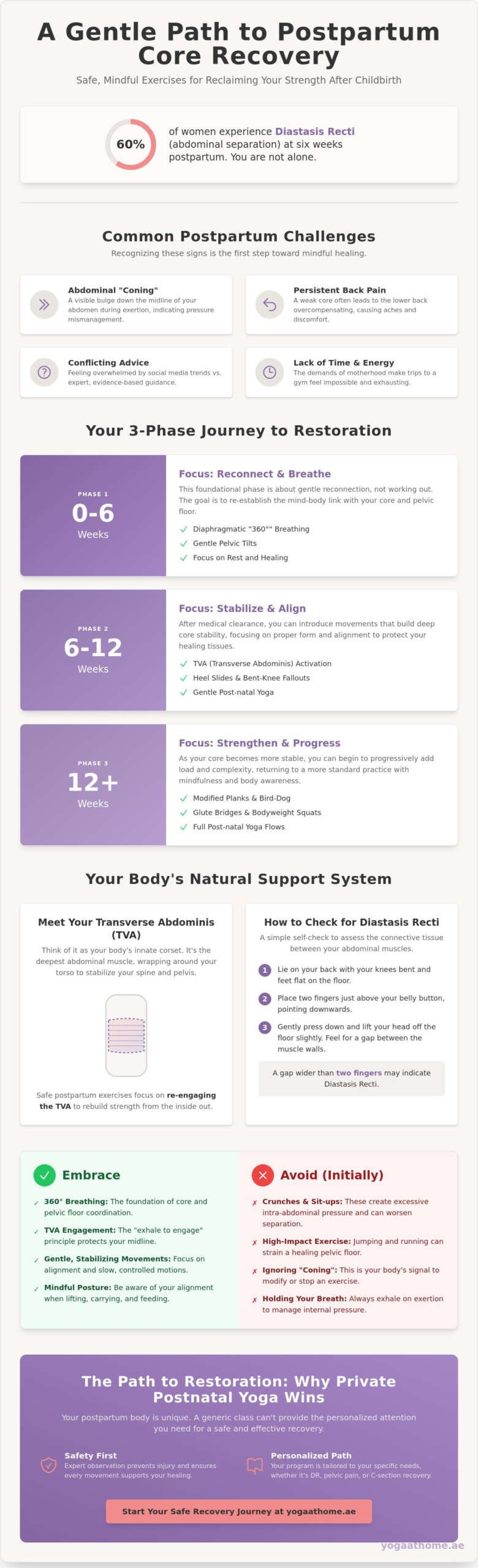
Did you know that nearly 60% of women experience diastasis recti, or abdominal separation, at six weeks postpartum? It’s a staggering figure that highlights just how common it is to feel a sense of disconnection from your center after pregnancy. You might find yourself worrying about “coning” during daily tasks or struggling with persistent back pain that makes holding your little one a challenge. If you feel overwhelmed by conflicting social media advice, you aren’t alone. It’s frustrating when you want to feel strong again but don’t have the time or energy to visit a crowded gym.
We believe that recovery is a restorative journey of re-knitting the body through breath and mindful alignment. This guide provides a gentle, expert-led path to reclaiming your vitality through safe core exercises after childbirth that actually work. You’ll discover how to build functional strength for daily motherhood and reduce discomfort without risking further injury. We will walk through the essential stages of healing; we’ll cover everything from early pelvic floor work to movements that restore your confidence and internal balance.
Restoration is a sacred journey of returning to one’s center with patience and professional wisdom. This summary outlines a mindful approach to recovery, emphasizing that safe core exercises after childbirth are rooted in the harmony of breath and structural alignment. By mastering diaphragmatic breathing, you create a vital foundation that manages internal pressure and protects your pelvic health during the initial stages of healing.
You will explore the essential role of the Transverse Abdominis, your body’s natural support system, and learn to identify critical red flags like coning. Safety is our priority. This guide highlights a curated sequence of stabilizing movements designed to replace high-strain traditional exercises. Embracing personalized Post-natal Yoga ensures your path to strength is both safe and effective, providing the expert observation necessary to navigate the unique physical landscape of motherhood with confidence.
What Are Safe Core Exercises After Childbirth?
Health is an intrinsic state of balance that begins within the center of the body. When we discuss safe core exercises after childbirth, we aren’t talking about intense abdominal crunches or high-impact training. Instead, we focus on movements that prioritize intra-abdominal pressure management. True safety means ensuring that the internal pressure created during movement doesn’t push outward against the abdominal wall or downward against the pelvic floor. This restorative approach protects your tissues while rebuilding strength from the inside out.
The cornerstone of this process is the Transverse Abdominis (TVA). Think of the TVA as your body’s natural, internal corset. It’s the deepest layer of the core abdominal muscles, wrapping around your torso to provide stability and support. Unlike traditional fitness moves that often focus on the superficial “six-pack” muscles, postpartum rehab exercises aim to wake up these deep stabilizers. Before you begin any routine, it’s vital to wait for your 6-week medical clearance from your obstetrician here in the UAE. This period allows the initial physical healing to take place, ensuring your foundation is ready for gentle movement.
Understanding Diastasis Recti and Pelvic Health
Diastasis Recti (DR) occurs when the connective tissue between your abdominal muscles stretches to accommodate your growing baby. It’s a natural adaptation, not a sign of a broken body. We must treat the pelvic floor and the core as a single, functional unit; they work together like a piston to manage pressure throughout your day. To check for separation, lie on your back with knees bent. Gently press your fingers just above your belly button as you lift your head slightly. If you feel a gap wider than two fingers, or a soft, deep space, you’re likely experiencing DR.
The Timeline of Postpartum Recovery
Recovery follows a rhythmic, logical path that respects your body’s unique pace. In Phase 1 (0 to 6 weeks), the focus remains entirely on restorative breathing and gentle pelvic tilts. This isn’t about working out but rather reconnecting with your center. Phase 2 (6 to 12 weeks) introduces functional core stabilization and light Post-natal Yoga, focusing on alignment and posture. Finally, Phase 3 (12 weeks and beyond) allows for progressive strengthening. During this time, you can begin returning to a more standard practice, provided you feel grounded and stable in your core.
The Foundation: Breathwork and Pelvic Floor Integration
The breath is the sacred bridge between the physical body and the quiet spaces of the mind. In the early weeks of your recovery, diaphragmatic breathing stands as the most vital practice you can master. It’s far more than just a way to oxygenate your blood; it’s the first step in safe core exercises after childbirth. When you breathe deeply into your belly and ribs, you’re teaching your diaphragm and pelvic floor to move in a coordinated, rhythmic dance. This harmony is essential because it prevents excessive downward pressure on a healing pelvic floor, which is a common cause of discomfort and long-term dysfunction. Beyond the physical, this focused breathing offers a moment of serenity amidst the beautiful, yet often chaotic, demands of new motherhood.
Establishing this foundation is what prepares your body for more advanced movement. Whether you’re exploring the best postpartum core exercises or preparing for specialized yoga classes in dubai, your breath is your primary stabilizer. Without this connection, even the gentlest movements can inadvertently strain your midline. Mastering this internal control allows you to move with a sense of grounded confidence, knowing your body is supported from the inside out.
Mastering 360-Degree Breathing
To begin, find a comfortable seat or lie on your back. Place your hands on the sides of your lower rib cage. As you inhale, feel your ribs expand not just into your belly, but outward to the sides and back against the floor. 360-degree breathing is a foundational tool for internal pressure regulation that ensures your core remains supported from every angle. When you exhale, imagine a gentle “zipping up” from your pubic bone to your sternum. This “exhale to engage” principle is the secret to protecting your abdominal wall during any activity, from lifting your baby to your first postnatal Hatha Yoga session.
Mula Bandha: The Yogic Pelvic Floor Connection
In the yogic tradition, we speak of Mula Bandha, or the “Root Lock.” While it sounds complex, it’s a simple, intuitive engagement of the pelvic floor muscles. Unlike a traditional Kegel, which can sometimes lead to over-tightening, Mula Bandha is a functional, subtle lift that coordinates with your breath. As you exhale, imagine gently drawing the tissues of your pelvic floor upward, as if you’re picking up a blueberry with a straw. This rhythmic lift builds endurance and resilience. If you’re looking for personalized guidance on these subtle internal engagements, our instructors offer bespoke Post-natal Yoga at home to help you navigate this restorative journey with expert care.
5 Essential Core Exercises for Postpartum Strength
True strength is a quiet, internal resilience that supports every action of a mother’s day. After establishing the foundation of breath, we move into active stabilization. These safe core exercises after childbirth are designed to protect the spine while re-awakening the deep abdominal layers. Rather than high-repetition sets that can strain the midline, we prioritize slow, mindful execution. This approach aligns perfectly with our philosophy for the best yoga poses for back pain, treating the body as a whole, interconnected system. By focusing on stability rather than trunk flexion, you ensure that your recovery is both restorative and effective.
Stabilization Moves: Heel Slides and Pelvic Tilts
Stabilization is the art of remaining still while the limbs move. Heel slides are a perfect example; lie on your back with knees bent and slowly slide one heel away from you along the floor. Exhale as the leg extends, keeping your lower back pressed gently into the mat. Pelvic tilts are even more subtle. Use your breath to gently rock the pelvis toward your chin on the exhale, then find a tiny, natural arch on the inhale. These movements wake up the deep core without placing undue stress on the healing tissues of the abdominal wall.
- Heel Slide Form Check: If you feel your lower back arching away from the floor or see any “coning” in your midline, reduce the distance your leg travels.
- Pelvic Tilt Form Check: Focus on the deep “zipping” sensation in the lower abdominals rather than squeezing the glutes or legs to drive the movement.
Functional Strength: Modified Dead Bug and Bird-Dog
Moving from stabilization to functional strength requires coordinating the core with the rest of the body. The Modified Dead Bug is a staple in postpartum recovery. By keeping your knees bent and tapping one foot at a time to the floor, you reduce the leverage on your abdominal wall. This makes it one of the most effective and safe core exercises after childbirth for rebuilding deep control. The Bird-Dog exercise takes this a step further by promoting cross-body stabilization. From an all-fours position, extend the opposite arm and leg while keeping your torso as still as a table.
Finally, Glute Bridges serve as a bridge to both physical stability and mental grounding. Lift your hips toward the ceiling while pressing through your heels, ensuring your ribs stay “knitted” toward your hips. Strong glutes act as a vital secondary support system. They relieve the burden on a recovering core and help mitigate the lower back discomfort often experienced by new mothers in the UAE. Mindful repetition of these moves builds the functional power needed for the lifting and carrying that motherhood requires.
Common Mistakes and Red Flags to Watch For
Wisdom begins with listening to the body’s subtle whispers before they become shouts of distress. While the desire to return to your pre-pregnancy strength is natural, rushing the process often leads to setbacks. Many new mothers believe that high intensity equals faster results, but when it comes to safe core exercises after childbirth, the opposite is true. True progress is measured by the quality of your connection to your center, not the sweat on your brow. One of the most dangerous habits to develop is the Valsalva maneuver, or holding your breath during exertion. This creates a massive spike in internal pressure that can strain both your abdominal wall and your pelvic floor, potentially reversing the progress you’ve made in your recovery.
Traditional crunches and sit-ups are often the first moves people reach for, yet they can be the most damaging in the early postpartum months. These exercises focus on the superficial “six-pack” muscles, which increases the outward pressure on your midline. If your connective tissue hasn’t yet regained its tension, this pressure can worsen Diastasis Recti. It’s a common misconception that feeling a “burn” in the abs means the exercise is working. In reality, if that burn is accompanied by poor pressure management, you’re simply training your body to bulge outward rather than pull together.
Visual and Physical Warning Signs
Your body provides clear visual cues when a movement exceeds its current capacity. The most prominent sign is “coning” or “doming,” where a ridge or peak forms along the midline of your stomach during an exercise. Coning is the physical manifestation of unmanaged internal pressure struggling to find an exit through the abdominal midline. Beyond what you see, pay close attention to how you feel. Physical symptoms such as a sensation of pelvic heaviness, unexpected leaking, or a sharp ache in the lower back are immediate signals to stop. These aren’t signs of weakness; they’re your body’s way of asking for a modification or a more restorative approach.
Exercises to Avoid in the First 6 Months
To build a truly resilient core, you must temporarily set aside high-demand movements. Our “No-Go” list for the first half-year includes traditional crunches, full planks, heavy weightlifting, and high-impact jumping. These moves require a level of tension that the healing linea alba cannot yet sustain. We avoid them to prevent further stretching of the midline and to protect the pelvic floor from excessive impact. You can safely transition back to these activities once you can maintain a “knitted” core and steady breath during your stabilization practice. If you’re unsure whether your current movement pattern is supportive, our experts provide personalized Post-natal Yoga sessions in the comfort of your home to ensure every move you make is a step toward healing.
The Path to Restoration: Why Private Postnatal Yoga Wins
Wellness is not a destination but a way of life that respects your personal rhythm and physical history. Navigating safe core exercises after childbirth requires more than just a list of movements; it demands the watchful eye of a dedicated mentor. While digital apps provide a basic starting point, they cannot observe the subtle nuances of your alignment or the visual cues of unmanaged pressure. Private Post-natal Yoga offers a supportive partnership where your recovery is guided by real-time expertise. This one-on-one attention ensures that every breath and every engagement is serving your body’s restoration rather than working against it.
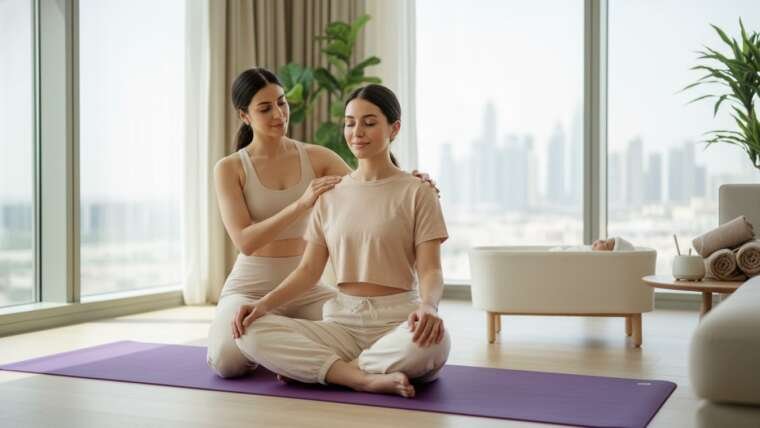
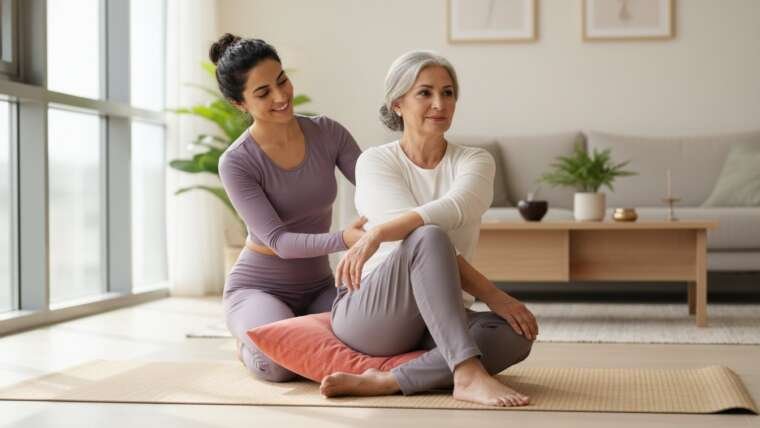
Our commitment to bespoke care is rooted in the belief that every mother’s journey is unique. We provide ladies-only instruction with female trainers who bring both professional reliability and a serene, empathetic presence to your home. This location-specific service removes the stress of commuting or finding childcare, allowing you to focus entirely on your internal balance. By bringing the practice to your sanctuary, we honor your schedule and your need for a non-intimidating, private environment to rebuild your strength.
The Benefits of Bespoke Instruction
A private session allows for a truly individualized approach that a group class simply cannot match. Your trainer assesses your specific degree of Diastasis Recti and adapts every pose to your current level of stability and comfort. This customization creates a safe container where you can explore movement without the fear of causing injury or worsening separation. You’ll find a profound peace of mind that comes from expert, REPS UAE-certified guidance, knowing that your form is being corrected the moment a red flag appears. This professional oversight is the most effective way to ensure you are performing safe core exercises after childbirth correctly.
Holistic Wellness Beyond the Physical
Motherhood is a profound transformation that often brings “mom burnout” along with its many joys. Our approach moves beyond mere physical exercise to include meditation and restorative postures that soothe the nervous system and clear the mind. By integrating these elements, you build a sustainable, injury-free yoga practice that supports your long-term well-being. We invite you to prioritize your recovery and mental clarity through professional home yoga. Reclaiming your center is a sacred act of self-care, and we are here to support you in returning to your most vibrant, grounded self. If you are ready to begin your personalized healing journey, explore our tailored Post-natal Yoga sessions today.
Embrace Your Path to Vitality
Health is a sanctuary that deserves careful cultivation, especially during the transformative postpartum period. You’ve learned that reclaiming your center is a delicate balance of managing internal pressure and mastering the foundation of diaphragmatic breath. By choosing safe core exercises after childbirth and remaining vigilant for red flags like coning, you’re investing in a future of functional strength and lasting well-being. This journey doesn’t have to be navigated alone or in the stressful environment of a public gym. True restoration happens when you feel safe, supported, and heard.
Our team of female trainers specializes in post-natal care, bringing REPS UAE and Yoga Alliance certifications directly to your door. We offer a convenient national home-delivery service across the Emirates, ensuring your practice fits seamlessly into your life as a new mother. Begin your restorative journey with personalized private yoga sessions today. Trust in your body’s innate ability to heal and move forward with the quiet confidence that professional, bespoke support provides. You’re building more than just physical muscle; you’re restoring your internal harmony and reclaiming your sense of self.
Frequently Asked Questions
When can I start core exercises after a C-section?
Most practitioners can begin a gentle routine six to eight weeks after a C-section, provided they have received specific medical clearance from their healthcare provider in the UAE. This recovery period is vital for deep tissue healing. Once cleared, you can start with safe core exercises after childbirth that focus on breath and light stabilization. Rushing back too early can disrupt the healing of your incision and the underlying muscle layers.
Is it ever too late to fix Diastasis Recti with exercise?
It is never too late to begin the restorative process of healing your abdominal midline through mindful movement. While the initial postpartum year is a time of hormonal support for tissue repair, the body remains resilient and capable of change years later. Focused exercises that target the deep transverse abdominis can improve the tension and function of the linea alba at any stage of motherhood, even years after your last delivery.
How do I know if I am ‘coning’ during an exercise?
Coning is visible when a ridge or protrusion peaks along your stomach’s midline during exertion. You can easily spot this by looking down at your abdomen while performing a move like a heel slide. If you see this peak, it means the internal pressure is pushing against the connective tissue rather than being managed by your muscles. Immediately stop or modify the movement to protect your recovery and maintain structural integrity.
Can I do planks if I have abdominal separation?
Traditional full planks are often too demanding for a recovering midline and should be avoided until your deep stabilizers are fully functional. This high-pressure position can easily cause coning or strain the pelvic floor if your foundation isn’t ready. Instead, we recommend modified versions, such as planks against a wall or on your knees. These variations allow you to build strength without compromising the integrity of your abdominal wall or pelvic health.
How often should I perform these postpartum core moves?
Consistency is the heart of transformation, so aim for short, focused sessions of ten to fifteen minutes most days of the week. This rhythmic approach is far more effective than one long, exhausting workout. Performing safe core exercises after childbirth regularly helps your nervous system relearn how to engage the deep stabilizers. Listen to your body’s daily energy levels and adjust your practice to remain in a state of tranquility and balance.
What should I do if I experience pelvic floor leaking during exercise?
If you experience leaking, it’s a sign that the internal pressure of the exercise is exceeding your pelvic floor’s current strength. This is a common signal from your body to slow down and return to foundational breathwork. Stop the movement immediately and focus on coordinating your exhale with a gentle pelvic lift. If this persists, we suggest consulting a pelvic health specialist alongside your private yoga practice for a truly holistic and safe recovery; you can also discover Dr. Tiffany Yeo-Reddy for expert insights into integrative wellness and holistic medicine.
Are these core exercises safe if I am still breastfeeding?
Gentle core work is perfectly safe while breastfeeding and can actually help alleviate the upper back tension often caused by nursing postures. It doesn’t negatively impact your milk supply, provided you stay well-hydrated and consume enough calories for your needs. We recommend wearing a supportive, well-fitting sports bra to ensure your comfort. Practicing after a feeding session can also make the movements feel more physically easeful and serene for the mother.
Do I need any special equipment for home postpartum yoga?
You don’t need a professional studio setup to begin your journey toward wellness at home. A simple yoga mat provides the necessary grip and cushioning for your stabilization work. You might also find that common household items, like firm pillows or folded blankets, act as wonderful bolsters to support your alignment. Our instructors bring their expertise to your environment, helping you use what you have to create a restorative sanctuary for your personal practice.