Your body is not failing you; it’s simply speaking a new, demanding language that requires a specialized response. As you enter the final stretch of your journey, the weight of new life often manifests as a relentless strain on your lower back and pelvis. Finding the right yoga for third trimester pregnancy discomfort is not about generic stretching or pushing through the ache. It is about inviting a sense of profound ease through movements precisely tailored to your shifting center of gravity and unique physical needs.
It’s completely normal to feel overwhelmed by the persistent pressure of Pelvic Girdle Pain or the exhaustion that follows a night of shallow breathing and insomnia. You deserve a restorative practice that honors these challenges with professional expertise and gentle care. This guide explores how bespoke prenatal yoga provides immediate relief from late-pregnancy aches while fostering the mental clarity and internal balance essential for a positive birthing experience.
We will examine specific, safe techniques to restore your mobility and improve your sleep quality. You will also discover how mindful preparation can transform your perspective on labor, leaving you feeling grounded, confident, and physically supported.
Key Takeaways
- Understand how hormonal shifts like Relaxin affect your joints and how to adjust your practice to ensure safety as your centre of gravity changes.
- Learn how bespoke yoga for third trimester pregnancy discomfort alleviates common aches by improving circulation and preparing the pelvic floor for delivery.
- Discover why private, one-on-one instruction is essential for managing the specific physical risks of late pregnancy through a personalised wellness plan.
- Gain a practical sequence of gentle movements, such as spinal decompression, that you can safely practice at home to find immediate relief from pressure.
- Connect with certified female experts who bring restorative, location-specific instruction to your doorstep, ensuring your comfort and privacy.
Understanding the Physical Shifts of the Third Trimester
The third trimester, spanning from week 28 until birth, is a period of profound physical transformation. During these final twelve weeks, your body works tirelessly to accommodate a rapidly growing baby. This growth triggers significant physiological changes, including a shift in hormonal balance and a redistribution of weight that alters your skeletal alignment. Understanding these shifts is the first step toward finding relief through specialized Exercise during pregnancy.
As your belly expands, your spine naturally adapts to the forward weight. This often results in “Lordosis,” which is an exaggerated inward curve of the lower back. While this curve helps you stay upright, it places immense pressure on the lumbar vertebrae and surrounding muscles. Simultaneously, the body prepares for the upcoming birth by increasing the production of specific hormones. These chemical messengers ensure your body is pliable enough for delivery, but they also introduce new challenges for your daily comfort and stability.
The Shift in Your Centre of Gravity
Your centre of gravity moves forward and upward as the uterus grows, pulling the pelvis into an anterior tilt. This constant forward pull strains the muscles of the lower back and changes how you walk, stand, and move. Many women find their balance feels slightly off, making daily tasks more taxing than they were just a few weeks prior. Relaxin is a hormone that increases during the third trimester to soften the pelvic ligaments and joints in preparation for delivery. While this laxity is essential for birth, it means your joints don’t provide the same structural support they once did, making mindful movement and proper alignment a priority.
Common Third Trimester Aches: PGP and Sciatica
Discomfort in the final weeks often goes beyond simple muscle fatigue. Pelvic Girdle Pain (PGP) occurs when the joints at the back or front of your pelvis move unevenly, causing sharp or radiating pain. Sciatica is another common concern, where the baby’s position or spinal compression irritates the sciatic nerve, leading to tingling or shooting pains down the legs. You might also feel intense pressure against your ribs as the uterus pushes upward, which often makes deep breaths feel like a luxury.
It’s crucial to distinguish between general pregnancy “heaviness” and actual nerve impingement. When practicing yoga for third trimester pregnancy discomfort, the goal shifts from deep stretching to structural stability. Traditional, aggressive stretching can actually aggravate hyper-mobile joints already softened by Relaxin. Instead, we focus on gentle, supportive movements that create space for the ribs and lungs while keeping the pelvis stable. Using yoga for third trimester pregnancy discomfort allows you to address these specific pains with a sense of serenity and professional guidance, ensuring your body feels supported rather than strained.
The Therapeutic Mechanism of Prenatal Yoga
True wellness is a state of fluid harmony where the body and mind move in unison. In the final weeks of your pregnancy, this natural flow is often challenged by restricted circulation and the physical weight of new life. Engaging in specialized movement is not merely a way to stay active; it’s a therapeutic intervention that addresses the root causes of late-pregnancy aches. By focusing on gentle, intentional transitions, you encourage venous return. This process is vital when the heavy uterus can slow blood flow from the legs, which often leads to swelling or oedema in the ankles and feet.
The benefits of prenatal yoga go far beyond simple flexibility. This practice creates essential “internal space” by lifting the ribcage away from the pelvis, which allows the diaphragm more room to move. This architectural shift is a primary reason why many women find that yoga for third trimester pregnancy discomfort is the most effective way to reclaim their breath. Beyond the physical, these sessions act as a bridge to mental tranquility. By lowering cortisol levels through mindful movement, you signal to your nervous system that it’s safe to rest, which directly leads to improved sleep quality and a calmer emotional state.
Pranayama for Increased Lung Capacity
When your baby sits high against the ribs, every breath can feel like a struggle. Pranayama, or yogic breathing, teaches you to access the back and sides of the lungs rather than relying on shallow chest breaths. We focus on soft, rhythmic inhales that soothe the nervous system, which is particularly helpful during the intensity of Braxton Hicks contractions. It’s vital to avoid any form of breath retention during this stage. Instead, we cultivate a continuous, steady flow of air that keeps oxygen moving freely to both you and your baby, ensuring you feel energized rather than depleted.
Strengthening the Pelvic Floor and Deep Core
Labour is an endurance event that requires a unique balance of strength and the ability to consciously release. We utilize Mula Bandha, or the pelvic lock, to build the subtle support needed to carry the increasing weight of the third trimester. This isn’t about traditional abdominal exercises that strain the body. Instead, it’s about functional, gentle core engagement that protects your spine from the exaggerated curves common in late pregnancy. By preparing these “birth muscles” now, you’re building the physical stamina and body awareness necessary for an empowered delivery experience. If you’re ready to experience this support firsthand, private prenatal yoga sessions can be tailored to your specific energy levels and physical needs.
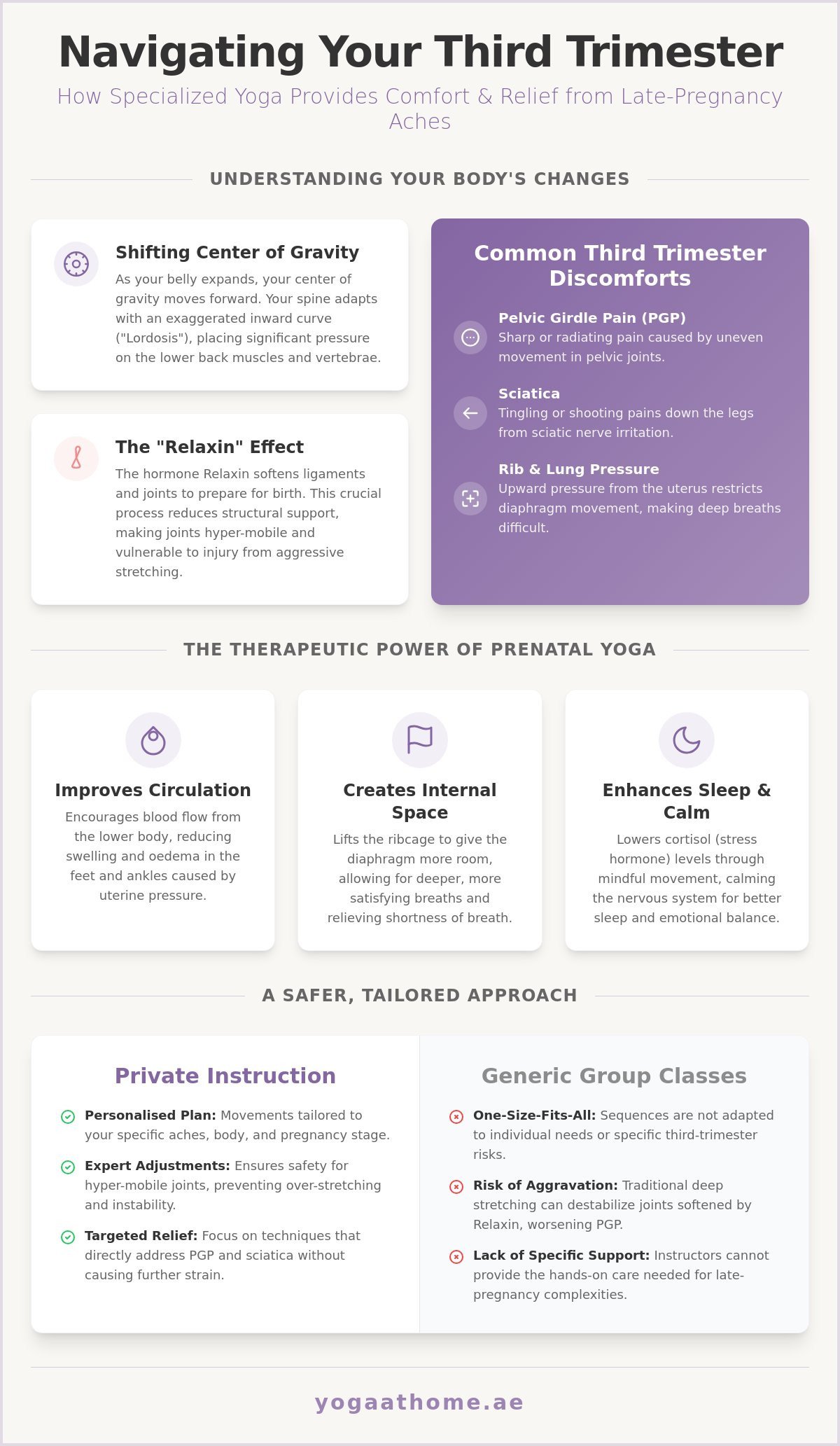
Private Instruction vs. Group Classes for Late Pregnancy
True health is not a fixed destination but a continuous dialogue between your intentions and your body’s daily reality. While group classes offer community, the final weeks of pregnancy demand a level of precision that only a one-on-one environment can provide. Generic, gym-based prenatal sessions often rely on a standardized pace that may be too intense for someone experiencing high-level pelvic pressure or fatigue. Choosing private yoga for third trimester pregnancy discomfort ensures that every movement is adapted to how you feel the moment your instructor arrives at your door.
In a private setting, the risks of over-exertion are significantly mitigated. An expert eye monitors your breath and heart rate, ensuring you never push into the “red zone” where your body feels taxed rather than restored. This is particularly important because your joints are more vulnerable now than at any other time. Following a safe yoga practice during pregnancy requires more than just avoiding certain poses; it requires constant feedback and the ability to pivot the routine based on your immediate physical feedback.
Personalised Alignment and Props
Every session utilizes a curated selection of tools to bring the floor to you and ensure your body remains fully supported. These items are not just for comfort; they are essential for maintaining the integrity of your spine and pelvis as your centre of gravity shifts. Your instructor will integrate props in various ways:
- Bolsters: Used to support the belly and back during restorative poses to prevent vena cava compression.
- Blocks: These provide stability and extra height in seated positions, reducing the strain on tight hip flexors.
- Chairs: A secure base for balance-focused movements, allowing for safe spinal lengthening without the risk of a fall.
Your instructor acts as a vigilant guardian, watching for subtle signs of strain that you might miss in a crowded room. REPS UAE certification serves as the definitive benchmark for safety in the region, guaranteeing that your teacher understands the intricate biomechanics of a third-trimester body.
Addressing Specific Discomforts in Real-Time
Discomfort is rarely static during the final weeks. You might wake up with carpal tunnel in your wrists one day and intense heartburn or sciatica the next. A private session allows for immediate pivots, focusing on relief for these specific issues rather than sticking to a pre-planned studio routine. This bespoke approach is especially effective for managing chronic issues, and you can learn more about targeted relief in our guide to the Best Yoga Poses for Back Pain.
Practicing in a private, female-only environment also provides a psychological sanctuary. It allows you to fully surrender to the restorative process without the distractions or self-consciousness of a public studio. This tranquility is a key component of yoga for third trimester pregnancy discomfort, as it helps lower your stress response and prepares your mind for the focused energy required during labour.
A Gentle Yoga Sequence for Daily Relief
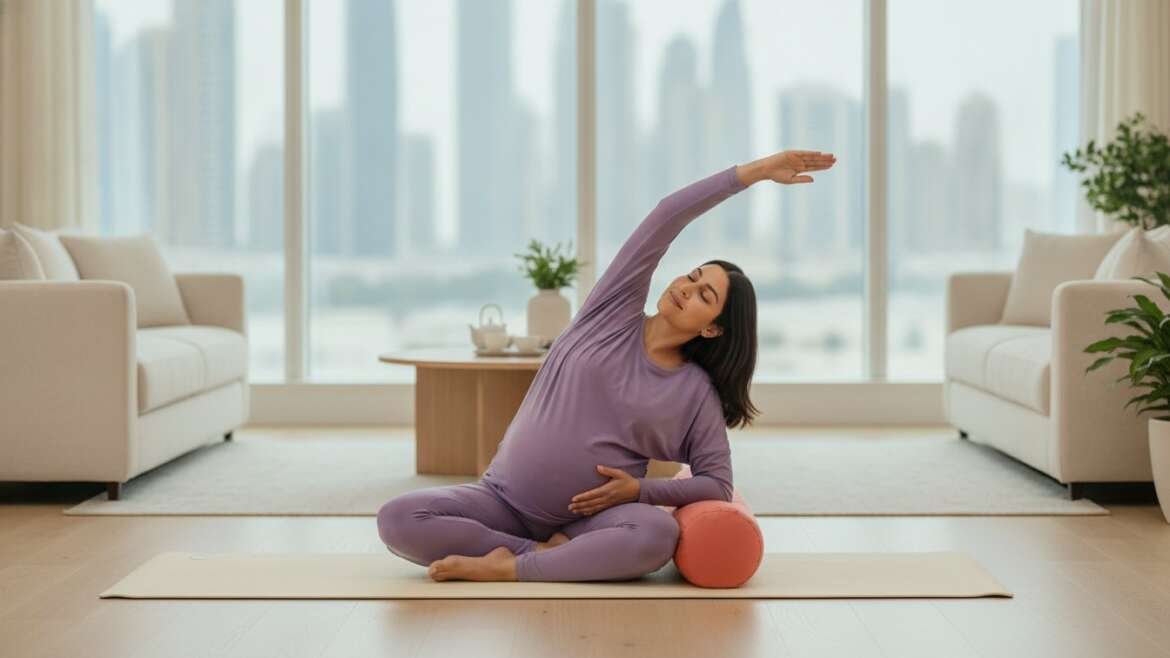
Gentle movement is a sanctuary for the late-pregnancy body. As you approach your due date, your practice should shift from active strengthening to restorative maintenance. Safety is the foundation of every session. You must always maintain a wide stance to create space for the belly and avoid lying flat on your back to prevent compression of the vena cava. By moving with intention and respect for your current physical boundaries, you can navigate these final weeks with grace. Implementing a sequence of yoga for third trimester pregnancy discomfort helps you manage weight redistribution while keeping your joints stable.
- Step 1: Marjaryasana-Bitilasana (Cat-Cow). This rhythmic movement decompressess the spine and encourages the baby into an optimal position for birth.
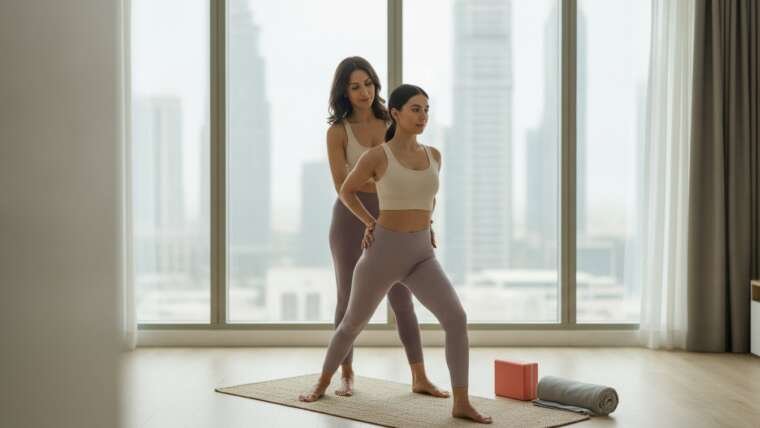
- Step 2: Utkata Konasana (Goddess Pose). Stand with feet wide and toes turned out, gently pulsing to build functional strength in the thighs and pelvic floor.
- Step 3: Janu Sirsasana (Head-to-Knee). Sit with one leg extended and the other tucked in. Use a bolster over your extended leg to rest your head, providing a gentle stretch for the hamstrings without straining the lower back.
- Step 4: Viparita Karani (Legs up the Wall) Variation. Rest your hips on a bolster and place your legs against the wall at a slight angle. This encourages fluid drainage and reduces swelling in the ankles.
If you wish to deepen your practice with expert guidance, our team provides private prenatal yoga in the comfort of your home.
Poses for Pelvic Pressure and PGP
When Pelvic Girdle Pain is present, standing poses require careful modification. You should avoid splitting the pelvis too wide, as this can strain the already loose ligaments. Instead, focus on wall-supported squats with a narrow stance to maintain stability while building the endurance needed for labour. Marjaryasana offers a rhythmic release for the lower back by gently oscillating the pelvis and decompressing the lumbar spine. These adjustments ensure that your yoga for third trimester pregnancy discomfort remains a source of healing rather than irritation.
Restorative Poses for Insomnia and Anxiety
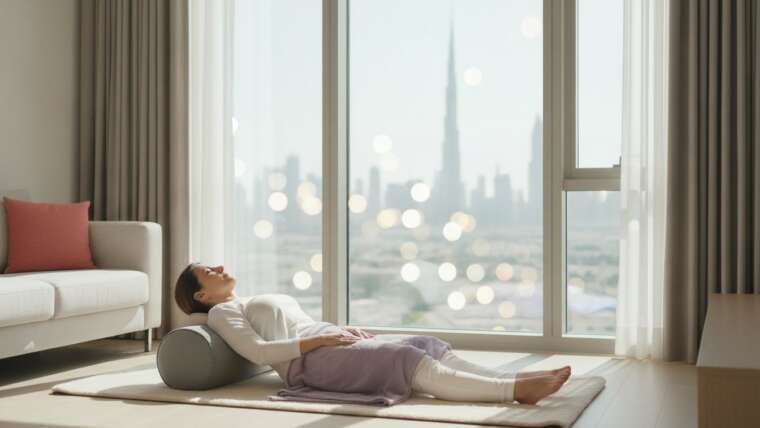
Rest is just as productive as movement in the final trimester. Supported Savasana is a vital tool for calm; side-lying with a bolster between the knees is the only safe way to fully relax during this stage. This position keeps the pelvis neutral and the spine aligned, making it easier to drift into a deep sleep. You can pair this rest with a guided visualization of a calm birthing process to soothe the nervous system. For those seeking a professional mentor to guide these sessions, exploring Yoga Classes in Dubai can connect you with specialists who understand the nuances of third-trimester wellness.
Restorative Wellness at Home with Yogaathome
Health is a foundational pillar of a fulfilling life. In the final stretch of pregnancy, the convenience of professional support becomes a necessity rather than a luxury. Yogaathome offers national private prenatal yoga services designed to meet you exactly where you are. Our approach bypasses the stress of travel and the distractions of a public space. We bring the profound serenity of a professional studio directly to your doorstep. This allows you to focus entirely on managing yoga for third trimester pregnancy discomfort in the sanctuary of your own home.
Every instructor in our network holds prestigious REPS UAE and Yoga Alliance certifications. These credentials ensure that your practice is guided by a mentor who understands the delicate biomechanics of the late third trimester. Our female instructors specialize in creating bespoke programs that adapt to your daily energy levels and specific health needs. Whether you’re dealing with Pelvic Girdle Pain or simply need a restorative hour to improve your sleep, we provide a supportive partnership in your wellness journey. This personalized attention ensures that every movement is safe, effective, and deeply relaxing.
Professional Prenatal Care in Your Environment
Practicing in your own space allows for a deeper level of relaxation that is often impossible to achieve elsewhere. You don’t have to worry about the logistics of commuting or the discomfort of a crowded room. Our instructors respect your personal schedule as much as your growth; they ensure that consistent care fits seamlessly into your life. We believe in a holistic transformation. This means your sessions combine physical poses with targeted meditation and breathwork. This integrated approach helps lower the barrier to entry for practitioners of all levels, making wellness accessible and non-intimidating during this transformative time.
Starting Your Personalised Journey
Beginning your path to relief is a straightforward and welcoming process. You can easily schedule your first session to address yoga for third trimester pregnancy discomfort with a qualified professional who understands your unique needs. This initial guidance is not just for the present; it builds a foundation for your post-natal recovery later on. Having a trusted mentor who knows your body’s history makes the transition into motherhood much smoother. You deserve a restorative process that honors your needs and respects your time. Take the first step toward a more comfortable and balanced final trimester. Book your private prenatal session today and experience the tranquility of expert care in your own home.
Embracing the Journey to an Empowered Birth
True wellness is a continuous process of adaptation and self-care. You now understand how the unique physiological shifts of late pregnancy, such as increased joint laxity and a changing centre of gravity, demand a specialized response. By choosing a practice that prioritizes stability over extreme flexibility, you protect your body while finding genuine ease. Utilizing yoga for third trimester pregnancy discomfort is not just about physical relief; it’s a vital step in preparing your mind and spirit for the transformative experience of labour.
Our holistic approach integrates gentle movement with calming meditation and breathwork to ensure you feel supported on every level. We offer personalised programmes for all pregnancy stages, guided by REPS UAE certified female instructors who bring expert care directly to your home. You don’t have to navigate these final weeks alone or in pain. Professional guidance ensures your practice remains safe, restorative, and perfectly aligned with your daily energy levels.
Experience personalised relief with our private prenatal yoga sessions
Trust in your body’s incredible strength and allow yourself the grace of professional support. You’re nearly there, and we’re honored to be your partner in this restorative process.
Frequently Asked Questions
Is it safe to start yoga in the third trimester if I haven’t practiced before?
Yes, it’s perfectly safe to begin your practice now as long as you choose a specialized prenatal session. A bespoke approach is essential because your instructor will tailor every movement to your current fitness level and physical needs. Starting yoga for third trimester pregnancy discomfort now helps you build the stamina and mental focus required for the final weeks and upcoming birth.
Can yoga help turn a breech baby in the third trimester?
Yoga can help create the internal space necessary for your baby to move into an optimal position. Poses like Marjaryasana (Cat-Cow) gently oscillate the pelvis and may encourage a breech baby to turn naturally. However, you should always consult your healthcare provider or midwife before attempting specific inversion poses designed for fetal positioning, as they can monitor your progress professionally.
How often should I practice prenatal yoga to see results for back pain?
Practicing two to three times per week is usually sufficient to experience a significant reduction in lower back strain. Consistency is the key to managing yoga for third trimester pregnancy discomfort effectively. Even short, daily ten-minute sessions focused on spinal decompression can provide immediate relief and improve your overall mobility as your centre of gravity continues to shift.
Are there any yoga poses I should strictly avoid during late pregnancy?
You should strictly avoid lying flat on your back, deep abdominal twists, and intense backbends during the third trimester. Poses that require you to lie prone on your belly are also off-limits. These movements can compress the vena cava or overstretch the already vulnerable abdominal muscles. We focus instead on upright or side-lying variations that prioritize your safety and the baby’s oxygen supply.
What should I do if I feel dizzy or short of breath during a pose?
Stop the pose immediately and rest on your left side if you feel dizzy or short of breath. This position optimizes blood flow to your heart and the placenta. Dizziness can occur due to shifts in blood pressure or the baby’s position. Once you feel grounded, take several slow, diaphragmatic breaths and inform your instructor so they can adjust the intensity of your session.
How does yoga help with Pelvic Girdle Pain (PGP) specifically?
Yoga addresses PGP by focusing on pelvic stability rather than flexibility. We avoid wide-legged poses that might “split” the pelvis and instead use movements that strengthen the glutes and deep core. This targeted support helps keep the pelvic joints aligned, reducing the sharp or radiating pain often felt when walking or changing positions. It turns a source of physical strain into a manageable condition.
Can yoga reduce the need for medical intervention during labour?
While no practice can guarantee a specific birth outcome, yoga significantly improves your physical stamina and mental resilience. By learning to use your breath to manage intensity, you develop the tools needed for effective pain management during labour. This increased body awareness often leads to a more confident birthing experience, which can naturally reduce the perceived need for certain medical interventions.
What equipment do I need for a private home yoga session?
You don’t need a professional studio setup to enjoy an effective home session. A standard yoga mat provides the necessary grip, while household items like firm pillows, rolled blankets, or a sturdy chair can substitute for bolsters and blocks. Our instructors often bring specialized props, but having these basics ready ensures you can comfortably practice your restorative sequences whenever you need relief.