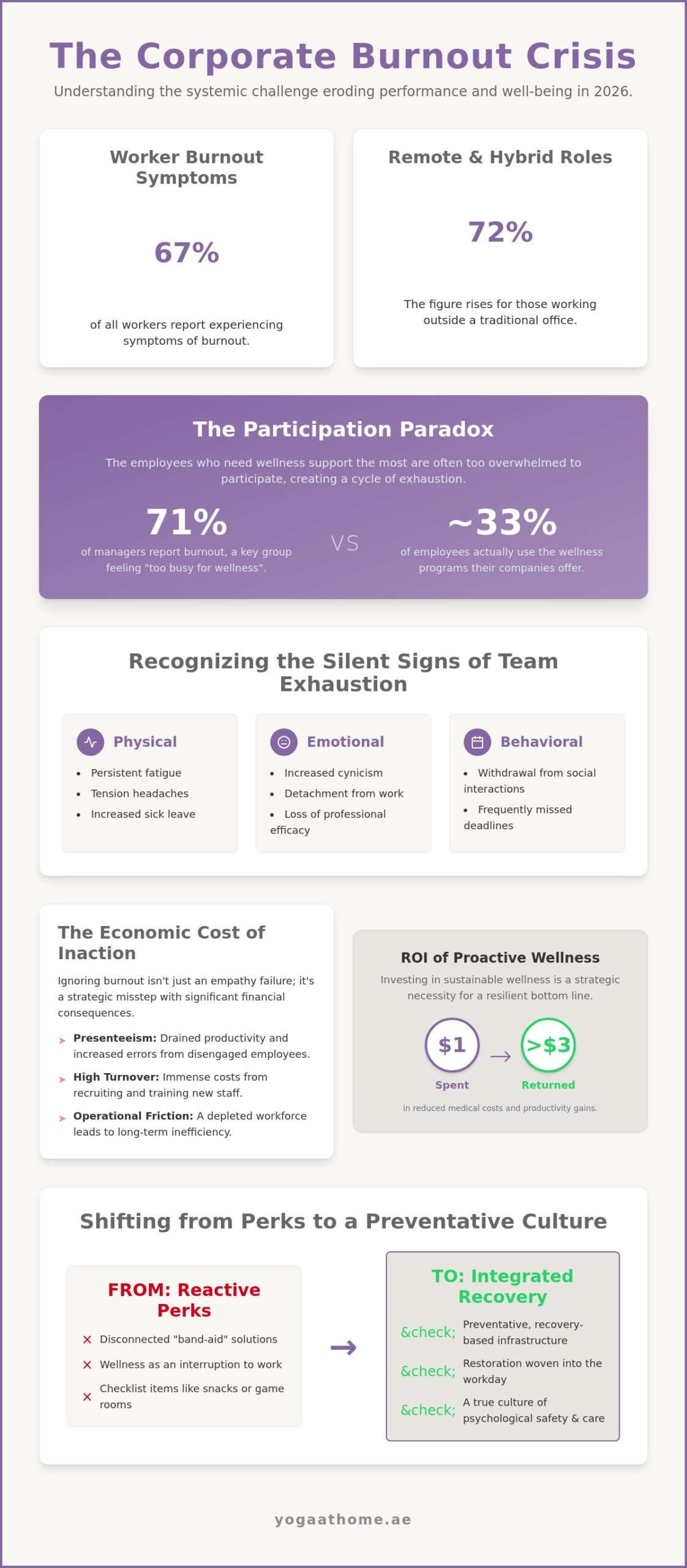
67% of all workers report experiencing burnout symptoms in 2026, a figure that rises to 72% for those in remote or hybrid roles. It’s a quiet crisis that erodes the spirit of your organization, leading to the high turnover and low morale you see every day. You’ve likely noticed the participation paradox, where the employees who need help the most are simply too busy to engage with traditional events. Implementing the right corporate wellness ideas for employee burnout isn’t about adding more to a “to-do” list; it’s about weaving restoration into the very fabric of the workday.
True wellness is a lifestyle, not a destination, and it begins with a supportive partner who understands the deep need for mental clarity. This strategic guide shares transformative, research-backed strategies to eliminate exhaustion and foster a high-performing team culture. We will explore how to move beyond basic compliance and mandatory OSHA training to create a workplace where productivity and peace coexist. Discover how a culture of genuine care can lead to higher retention and a more resilient, vibrant workforce.
Key Takeaways
- Understand why burnout is a systemic organizational challenge rather than an individual failing to address the root causes of workplace exhaustion.
- Learn how to overcome the participation paradox by implementing low-friction corporate wellness ideas for employee burnout that fit naturally into a busy workday.
- Discover how to shift from reactive, “band-aid” solutions to a preventative recovery infrastructure that protects your team’s long-term mental clarity.
- Explore the vital role of psychological safety in building a resilient culture where employees feel genuinely supported and valued every day.
- See how integrating ancient restorative wisdom with modern professional needs through on-site instruction can transform your office into a sanctuary of productivity.
The Burnout Crisis: Why Modern Professional Environments Need a New Approach
Health is a sacred foundation that allows every other aspect of our lives to flourish. When a team begins to falter, it’s rarely because of a lack of individual willpower. Instead, it’s often a sign that the organizational ecosystem has become misaligned with human needs. As we navigate the complexities of 2026, the pressures of hyper-connectivity and rapid technological shifts have created a landscape where stress is no longer an occasional visitor but a constant companion. To address this, leaders must look toward holistic corporate wellness ideas for employee burnout that treat recovery as a vital business function rather than a luxury.
Occupational burnout is a systemic issue born from environments that prioritize constant output over sustainable rest. Many organizations fall into the “high-performance trap.” This occurs when your most dedicated talent, those who consistently go above and beyond, are the very ones most at risk of breaking. They carry the heaviest loads until the weight becomes unsustainable. Traditional wellness efforts often focused on “perks” like office snacks or game rooms. However, true transformation requires moving toward “recovery-based” wellness. This approach integrates restorative practices directly into the workflow, ensuring that mental clarity is maintained throughout the day.
Recognizing the Silent Signs of Team Exhaustion
Exhaustion doesn’t always announce itself with a loud crash; it often whispers through subtle changes in a team’s rhythm. Leaders should stay mindful of physical indicators like persistent fatigue, tension headaches, or a sudden increase in staff taking sick leave. Emotional shifts are equally telling. When once-passionate employees show increased cynicism, detachment, or a loss of professional efficacy, the seeds of burnout have taken root. Watch for behavioral red flags too. Withdrawal from social interactions and missed deadlines are signals that an individual’s internal balance has been disrupted.
The Economic Cost of Ignoring Employee Well-being
The financial impact of a depleted workforce is staggering. Presenteeism, where employees are physically present but mentally disengaged, silently drains productivity and increases quality errors. When burnout isn’t addressed, it leads directly to high talent turnover and the immense costs associated with recruiting and training new staff. The ROI of wellness is a reduction in long-term operational friction. By investing in sustainable corporate wellness ideas for employee burnout, companies can see a return of over $3 in reduced medical costs for every dollar spent. Taking a proactive stance isn’t just an act of empathy; it’s a strategic necessity for a resilient bottom line.
Why Generic Wellness Programs Fail (and the Participation Paradox)
Health is a sacred rhythm, not a simple transaction. Many leaders view employee well-being through a checklist lens, treating it as a series of disconnected perks. This mindset is exactly why many corporate wellness ideas for employee burnout fail to gain traction. When a program feels like an interruption to “real work,” busy teams naturally resist it. They don’t see a benefit; they see a distraction that adds to their already overflowing plates.
We often encounter the “Participation Paradox.” Research suggests that while a majority of companies offer wellness programs, only about one-third of employees actually use them. Those who need the most support, such as the 71% of managers reporting burnout in 2026, are often the least likely to participate. They feel they don’t have the luxury of time to step away. To them, a gym membership or a distant seminar feels like just another obligation in a day already stripped of margin.
To solve this, we must address “Wellness Friction.” This represents every barrier between an employee and a restorative choice. It includes the physical distance to a studio, the time required to change clothes, or the social pressure to remain visible at a desk. True transformation happens when you move from a “purchasing decision” mindset to a “culture-building” mindset. You aren’t just buying a service; you’re creating a sanctuary where health is the default choice.
Overcoming the “Too Busy for Wellness” Mindset
Normalizing rest begins at the top. If leadership doesn’t model healthy boundaries, the team will perceive wellness as a performance rather than a practice. It’s vital to transition from optional perks to integrated workday rituals. When a manager pauses for a brief session of Corporate Yoga, it grants the entire team permission to do the same. This alignment with CDC guidelines on worker mental health ensures that recovery is seen as a pillar of productivity, not a distraction from it.
Designing for Inclusivity and Accessibility
Every individual carries different needs into the workspace. An effective program must be inclusive of all personality types and physical abilities. While extroverts might enjoy high-energy group activities, introverts often seek the quiet, internal focus provided by practices like Hatha Yoga. By bringing certified instructors directly to the office, you remove the “commute barrier.” This makes gentle, restorative movement accessible to everyone, regardless of their fitness level or their schedule.
Innovative Corporate Wellness Ideas for Sustainable Recovery
Health is a quiet, internal balance that requires consistent nurturing to sustain. When searching for corporate wellness ideas for employee burnout, the most effective solutions are those that integrate seamlessly into the existing workday. The World Health Organization’s definition of burnout frames it as a workplace phenomenon resulting from chronic stress that hasn’t been successfully managed. To counter this, we must shift the team from “active stress”—the state of constant doing—to “passive recovery.” This is a restorative state where the body and mind can finally integrate the day’s experiences and release accumulated tension.
Sustainable corporate wellness ideas for employee burnout prioritize sensory-based wellness. By focusing on breath, sound, and movement, we engage the nervous system directly. These are high-impact, low-friction activities that don’t require a total schedule overhaul. It’s about creating small, sacred windows of time where an employee can reset. This transition from doing to being is the foundation of long-term resilience and mental clarity.
Physical Recovery: Beyond the Gym Membership
Physical recovery should be effortless and accessible. On-site yoga sessions are a vital tool for this, specifically targeting the physical toll of office work. These sessions offer practical techniques for back pain relief, which is a major contributor to workplace discomfort. By focusing on the spine, neck, and shoulders, we help employees release the “armor” they carry throughout the day. Regular ergonomic audit workshops also play a role. They ensure the physical environment supports the body rather than straining it. Additionally, guided breathing sessions provide a quick way to reset the nervous system during high-pressure periods, requiring only five minutes of dedicated focus.
Mental and Environmental Micro-Wellness
The environment shapes the mind. Digital noise is constant. We need silence. Implementing “Meeting-Free Zones” protects the space needed for deep, focused work, reducing the cognitive load that leads to mental fatigue. Zen spaces or quiet rooms provide a necessary refuge from digital screens. These areas allow for non-digital reflection, helping to clear the mental clutter that accumulates during back-to-back tasks. Using professional environmental branding or custom mirror installations from Image Square Printing can help transform these spaces into true sanctuaries. Short, 15-minute mindfulness workshops are also highly effective. They teach simple “desk poses” that provide instant relief and mental grounding without requiring a change of clothes or a trip to a studio. These micro-moments of wellness build a culture that respects the individual’s need for peace.
Designing a Burnout-Resistant Workplace Culture
Wellness is a way of life, not just a response to a crisis. While many organizations focus on remedial efforts after a team has already reached its breaking point, true leadership involves establishing preventative cultural standards. This means moving beyond occasional events and building a recovery infrastructure that is woven into daily operations. When you prioritize corporate wellness ideas for employee burnout as a foundational pillar, you create an environment where health isn’t a reward for hard work but the fuel that makes it possible.
Psychological safety is the bedrock of this cultural shift. If employees feel that taking a moment for stillness will be viewed as a lack of commitment, they’ll continue to push until they break. A culture of genuine care encourages open dialogue about mental fatigue. Leaders can use consistent feedback loops to refine their initiatives, ensuring that the support provided actually meets the evolving needs of the team. By fostering a community of wellness, you transform the office from a place of high-pressure output into a supportive space where everyone contributes to a collective sense of balance.
The “Restorative Workday” Framework
A sustainable workday follows the natural rhythms of human energy. Instead of demanding eight hours of peak intensity, a restorative framework acknowledges the need for ebbs and flows. We encourage “Active Rest,” where brief periods of movement are used to clear mental blocks and refresh the spirit. This is why yoga classes in Dubai and other professional hubs are evolving. They’re no longer just for the studio; they’re becoming integrated sessions that happen where the work happens. This shift ensures that physical relief is always within reach, helping to maintain a steady flow of focus throughout the day.
Empowering Employees with Self-Regulation Tools
True resilience comes from within. By training your staff in basic stress-management techniques, you give them the power to navigate high-pressure moments independently. Meditation plays a central role here, as it enhances productivity by training the mind to return to the present moment. Mental clarity is the ultimate professional competitive advantage. When your team has the tools to regulate their own internal state, they become less susceptible to the external pressures that lead to exhaustion. To begin building this resilient infrastructure for your organization, consider exploring our Corporate Yoga offerings designed for modern teams.
Revitalizing Your Team with Yogaathome’s Corporate Programs
Health is a sacred foundation that requires a supportive partner to maintain. Yogaathome serves as a bridge between ancient spiritual wisdom and the rigorous demands of the modern professional world. We understand that effective corporate wellness ideas for employee burnout must be more than just a theory; they must be practical, accessible, and deeply restorative. By integrating our specialized Corporate Yoga sessions into your organization, you’re not just offering a class; you’re facilitating a profound shift toward mental clarity and internal balance. Our approach is grounded in the belief that wellness is a way of life that should be non-intimidating and welcoming to everyone, regardless of their previous experience or physical needs.
Personalized Wellness at Your Doorstep
Eliminating “logistics stress” is at the heart of our mission. We bring the tranquility of a professional studio directly to your workspace, removing the barriers that often prevent participation in traditional fitness settings. Our instructors are deeply familiar with the local professional landscape and the specific pressures faced by teams in high-intensity environments. We offer bespoke sessions tailored to your department’s unique stress points. For example, a high-intensity sales team might benefit from grounding Hatha Yoga to lower cortisol levels and restore emotional balance. Conversely, a deep-focus tech department might require specific movements to address postural strain and the mental fatigue of long digital sessions. This individualized approach ensures that every employee feels seen and supported in their specific physical and mental needs.
A Holistic Partnership for Long-Term Success
Professional peace of mind is built on a foundation of trust and expertise. Every Yogaathome instructor holds industry-standard certifications, including REPS UAE and Yoga Alliance credentials. This ensures a safe, authoritative, and inclusive practice for practitioners of all levels. We believe in moving beyond one-off events toward recurring wellness contracts that foster a sustainable, life-long approach to well-being. This commitment to consistency allows us to deliver measurable results in team resilience, morale, and overall productivity. When evaluating various corporate wellness ideas for employee burnout, the most successful choice is one that provides a steady, reliable rhythm of care. Our trainers respect your schedule as much as your personal growth, providing a reliable and serene experience every time. We invite visionary leaders to schedule a consultation today to design a custom corporate wellness plan that transforms your workplace into a sanctuary of productivity and peace.
Cultivating a Sanctuary of Sustainable Performance
Health is the quiet strength that sustains every great achievement. By shifting from reactive perks to a preventative recovery infrastructure, you protect your team from the modern epidemic of exhaustion. We’ve explored how integrating restorative rituals and removing logistics friction can finally bridge the gap between wellness offerings and actual employee participation. Implementing long-term corporate wellness ideas for employee burnout is an investment in your team’s most valuable asset: their peace of mind, which can be further enhanced by occasional retreats in restorative settings—utilizing services like a luxury villa rental Ibiza to create a truly bespoke recovery experience.
Yogaathome brings decades of experience in holistic wellness directly to your office. Our bespoke programs are led by certified REPS UAE and Yoga Alliance instructors who understand the delicate balance of the professional world. We invite you to Book a restorative Corporate Yoga session for your team to experience a transformation that begins with a single, mindful breath. Together, we can foster a culture where productivity and serenity exist in perfect harmony. You have the power to turn your workplace into a sanctuary where every individual can truly flourish.
Frequently Asked Questions
What are the most effective corporate wellness ideas for burnout?
The most effective corporate wellness ideas for employee burnout are those that integrate recovery directly into the workday rather than adding to a busy schedule. High-impact strategies include on-site yoga sessions to release physical tension, guided breathing exercises for immediate nervous system resets, and the establishment of meeting-free zones to protect deep focus. By focusing on sensory-based recovery like movement and stillness, you address the root causes of exhaustion rather than just the symptoms.
How do I start a wellness program with a limited budget?
You can begin by implementing low-cost cultural shifts that prioritize mental clarity. Start with “micro-wellness” moments, such as five-minute desk-stretching sessions or designating a quiet, digital-free room for reflection. Encouraging “active rest” where employees take short walks to clear mental blocks costs nothing but yields significant results. These small rituals build a foundational culture of care that can eventually scale into more comprehensive, instructor-led programs as resources allow.
Why do employees resist participating in corporate wellness activities?
Resistance often stems from the “Participation Paradox,” where the most exhausted employees feel they simply don’t have the time to engage. If a program requires a commute to a gym or a long time commitment, it creates “Wellness Friction” that discourages participation. Employees also fear that stepping away from their desks might be perceived as a lack of productivity. Overcoming this requires leaders to model healthy behaviors and bring wellness directly into the office environment.
Can yoga really help reduce employee burnout?
Yoga is a powerful tool for burnout because it addresses both the physical and mental manifestations of stress. Practices like Hatha Yoga help regulate the nervous system and provide much-needed relief for back pain and desk-related tension. Beyond the physical benefits, yoga fosters the internal balance and mental clarity necessary for long-term professional resilience. It’s an inclusive practice that welcomes all levels, making it an ideal cornerstone for any corporate wellness ideas for employee burnout.
How often should we hold corporate wellness sessions?
Consistency is more valuable than intensity when building a restorative culture. Weekly instructor-led sessions provide a reliable rhythm that employees can look forward to and plan around. This regular frequency helps turn wellness from an occasional event into a sustainable lifestyle. Between these sessions, encouraging daily five-minute micro-moments of mindfulness ensures that the benefits of recovery are integrated into every single workday for lasting impact.
What is the “Participation Paradox” in workplace wellness?
The Participation Paradox describes the gap where the employees who need wellness support the most are the least likely to use it. In 2026, research shows that while most companies offer programs, only about one-third of staff participate. This often happens because high-performing, burnt-out individuals feel overwhelmed by their workloads. To solve this, wellness must be woven into the fabric of the workday so that choosing health becomes the path of least resistance.
How can I measure the success of our burnout prevention initiatives?
Success is measured through a combination of quantitative data and qualitative feedback. Track metrics such as employee retention rates, reduced absenteeism, and participation levels over time. You can also look at the ROI, where well-designed programs often see a return of over $3 in reduced medical costs for every dollar spent. Equally important are consistent feedback loops, where employees share how these initiatives have improved their mental clarity and daily energy levels.
What are some wellness ideas for remote or hybrid teams?
Remote and hybrid teams benefit from virtual wellness sessions and digital-free windows that respect home-work boundaries. Offer virtual yoga classes that employees can join from their own environment, ensuring they feel connected to the company culture. Providing ergonomic audits for home workspaces is another practical way to show care. Encouraging “non-digital” breaks helps remote workers disconnect from screens, which is vital since they report higher burnout rates than their in-office counterparts.