True health is a sanctuary we build from within, one mindful breath at a time. What if the persistent ache in your lower back wasn’t a permanent tax on motherhood, but a signal that your body is ready to be rediscovered? For many new mothers across the UAE, the joy of a new arrival is often shadowed by a core that feels fragile and a spine that carries the weight of every nursing session. Practicing yoga for postpartum back pain offers more than just physical relief. It provides a serene path to reclaiming your strength in the comfort of your own environment.
We understand that the transition into postnatal life can leave you feeling disconnected from your physical self. You likely agree that finding the time and confidence to exercise safely feels like a daunting task when your body is still healing. This 2026 recovery guide promises to teach you how to alleviate tension and restore your pelvic floor through expert-led, private instruction. We will explore the specific movements that target your pain and show you how professional guidance from REPS UAE certified female instructors can turn your home into a space for holistic transformation.
Key Takeaways
- Understand the root causes of postnatal discomfort, from hormonal shifts to the structural changes of the fourth trimester.
- Learn how restoring the integrity of your pelvic floor and core is the essential foundation for a pain-free spine.
- Follow expert-vetted safety guidelines for 2026 to ensure you return to movement only when your body is truly ready.
- Practice targeted yoga for postpartum back pain using gentle, restorative poses that offer immediate relief and decompression.
- Discover the peace of mind that comes with personalized, private instruction delivered by certified female experts in your own home.
Understanding Postpartum Back Pain: The Path to Restoration
Holistic health begins with the realization that your body is a masterpiece in transition. Postnatal discomfort isn’t merely a result of the physical strain of carrying your little one. It’s a complex interplay of hormonal shifts and significant postural realignments. During pregnancy, your center of gravity moves forward, and your spine must adapt to this new weight. Once your baby arrives, your body enters the Fourth Trimester, a critical twelve-week window for structural healing and recovery.
Practicing yoga for postpartum back pain is a gentle yet powerful way to navigate this period. It addresses the root causes of your discomfort rather than just masking the symptoms. While generic fitness routines might prioritize burning calories, they often overlook the fragility of your recovering frame. In fact, high-impact movements can sometimes worsen spinal issues if your core isn’t properly stabilized. A bespoke approach ensures that every stretch and strengthening move respects your body’s current state of healing. Understanding Back Pain and its specific postnatal triggers is the first step toward reclaiming your physical vitality in 2026.
The Physiological Demands of New Motherhood
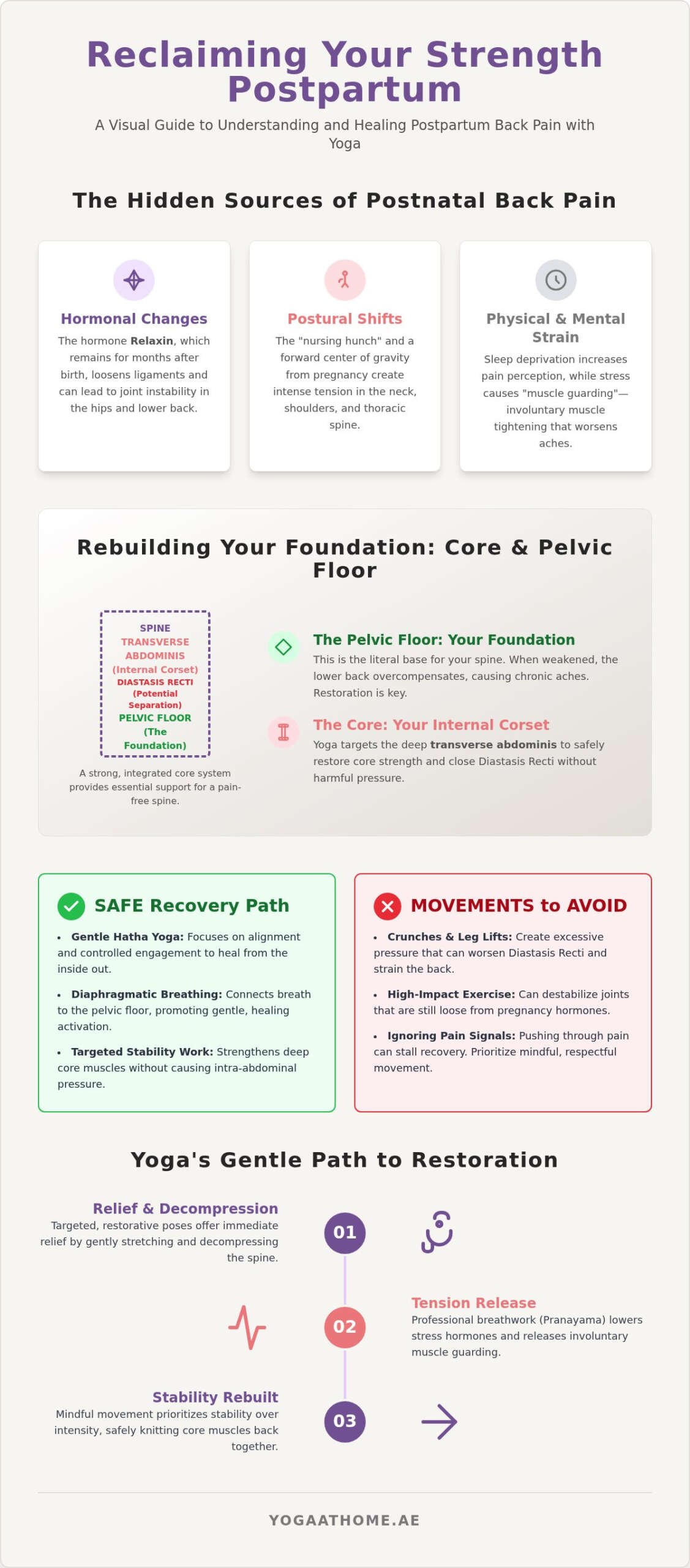
New mothers often find themselves stuck in the “nursing hunch,” a postural habit where the shoulders round forward during feeding. This creates intense tension in the thoracic spine and neck. This physical strain is compounded by the hormone Relaxin, which stays in your system for months after birth. While Relaxin is essential for loosening ligaments during delivery, its continued presence can lead to joint instability and a feeling of “looseness” in the hips and lower back. Your gait may also feel different as your body relearns how to move without the extra weight of pregnancy. Yoga helps realign these structural shifts with mindful, stabilizing poses that prioritize spinal integrity.
Mental Clarity as a Catalyst for Physical Healing
Healing is never just a physical process. Sleep deprivation can significantly increase your perception of pain, making every ache feel more intense than it might otherwise be. By integrating Pranayama, or professional breathwork, you can actively lower cortisol levels and release “muscle guarding.” This is the involuntary tightening of muscles that happens when you’re in pain or stressed. Creating a meditative space within your national UAE home allows you to step away from the daily demands of motherhood. This mental clarity acts as a catalyst for recovery, turning your session into a sacred ritual that restores both your spine and your spirit. It’s about finding peace amidst the beautiful chaos of a new life.
The Science of Recovery: Rebuilding Core and Pelvic Floor Integrity
True structural stability begins where the spine meets the core. After birth, many women experience a profound disconnect in this vital area, leading to persistent discomfort that radiates through the lower back. The pelvic floor acts as the literal foundation for your spine; if this base is weakened, the lumbar region must overcompensate, resulting in that all-too-familiar postnatal ache. Traditional abdominal exercises like crunches or leg lifts are often contraindicated in 2026. These movements create excessive intra-abdominal pressure that can widen existing gaps rather than closing them, potentially stalling your recovery journey.
Practicing yoga for postpartum back pain focuses on the safe, rhythmic knitting of these muscles through Hatha yoga postures. Unlike high-impact routines, Hatha emphasizes alignment and controlled engagement. This approach ensures that you aren’t just moving, but moving with intention. By prioritizing stability over intensity, you allow your body to heal from the inside out, creating a resilient framework that supports both your spinal health and your daily life as a new mother.
Addressing Diastasis Recti with Precision
Diastasis Recti is a natural separation of the abdominal muscles during pregnancy that requires expert-led closure to restore functional strength. When this separation persists, the spine loses its primary support system, forcing the back muscles to work double time. Our approach targets the transverse abdominis, which functions as your body’s “internal corset.” We utilize specific poses that avoid harmful intra-abdominal pressure while building deep, stabilizing strength. This precision prevents the “doming” effect often seen in improper core work and ensures your path to a stronger back is both steady and secure.
Restoring the Pelvic Floor Foundation
A stable spine is impossible without a resilient pelvic floor. There is a beautiful synergy between deep diaphragmatic breathing and pelvic floor activation that we explore in every session. As you inhale, the diaphragm and pelvic floor descend; as you exhale, they lift together in a coordinated wave of support. This internal rhythm is the secret to lasting structural integrity. Specific yoga poses stabilize the pelvic girdle, which is essential for reducing sacroiliac (SI) joint pain that often plagues the postnatal period. Integrating Mula Bandha, or the “root lock,” provides a subtle yet powerful lift that reinforces your entire posture from the base up.
This delicate rebuilding process shouldn’t be left to chance or generic online videos that don’t account for your unique physical history. Working with a professional ensures that your recovery is both safe and effective. You might find that private postnatal yoga offers the precise adjustments needed to ensure your core is healing correctly while your baby rests nearby in the peace of your own home.
Safety First: When to Start Your Postnatal Yoga Journey
Patience is the cornerstone of true restoration. Your body has performed a miracle, and the path back to movement requires a steady, respectful approach. While you may be eager to begin yoga for postpartum back pain, following medical clearance guidelines is essential for long-term health. Standard protocols in 2026 suggest waiting at least six weeks after a vaginal delivery and twelve weeks following a C-section before resuming physical activity. This isn’t just a suggestion; it’s a necessary window for your internal structures to begin their quiet work of knitting back together.
During your practice, you must remain deeply attuned to your body’s signals. If you experience any of the following red flag symptoms, you should pause your practice immediately and consult your healthcare provider:
- A sudden increase in postnatal bleeding or discharge.
- Sharp, localized pain in the pelvic region or at an incision site.
- Dizziness or a feeling of faintness during movement.
- New or worsening urinary or fecal leakage.
Before unrolling your mat, a professional postural assessment is vital. This ensures that your unique physical needs are met with precision. In the UAE, safety is paramount. Always verify that your instructor holds both REPS UAE and Yoga Alliance credentials. This specialized approach to yoga for postpartum back pain ensures that your mentor possesses the knowledge required to guide a postnatal body safely, respecting the delicate balance of your recovery.
Vaginal Delivery: Gentle Reintroduction
For those who had a vaginal delivery, the initial focus remains on gentle reintroduction. We begin with subtle pelvic tilts and restorative postures that encourage circulation without causing strain. As your stability returns, we gradually progress to standing poses. It’s a rhythmic dance of listening and responding. You should always monitor for signs of overexertion or a feeling of heaviness in the pelvic floor, as these are indicators that your body needs more rest before increasing intensity.
C-Section Recovery: Protecting the Incision
C-section recovery requires an even more cautious approach. Deep tissue healing often takes much longer than the external scar suggests, making the twelve-week clearance rule particularly important. During this phase, we avoid deep twists or intense backbends that could strain the lower abdominal wall or the incision site. Instead, we use gentle yoga to prevent scar tissue adhesions and stiffness. This ensures your recovery is as smooth as it is serene, allowing the body to heal without the risk of secondary injury.
Essential Yoga Poses for Postpartum Back Pain Relief
True restoration is a journey of small, intentional movements. When you practice yoga for postpartum back pain, the goal isn’t to push your limits, but to invite your body back into a state of balance. The following postures are selected for their ability to decompress the spine and stabilize the core without overtaxing your healing tissues. Each movement should be performed with a steady, rhythmic breath, allowing your nervous system to settle as your muscles release.
Marjaryasana-Bitilasana, commonly known as Cat-Cow, is the foundation of spinal articulation. By moving gently between these two shapes, you encourage blood flow to the vertebral discs and release tension in the lower back. Balasana, or Child’s Pose, serves as a sanctuary for the lumbar spine. By widening the knees slightly to accommodate your postnatal frame, you allow the lower back to broaden and decompress. Setu Bandhasana (Bridge Pose) is equally vital; it strengthens the glutes and hamstrings, which are often weakened during pregnancy. Stronger glutes provide the necessary support for your back, taking the pressure off your sensitive joints.
Finally, Tadasana (Mountain Pose) acts as the blueprint for your new posture. It helps correct the “pregnancy sway” by teaching you how to stack your joints and find your center of gravity again. This simple standing pose is a powerful tool for long-term spinal health in 2026.
Targeting Upper Back and Shoulder Tension
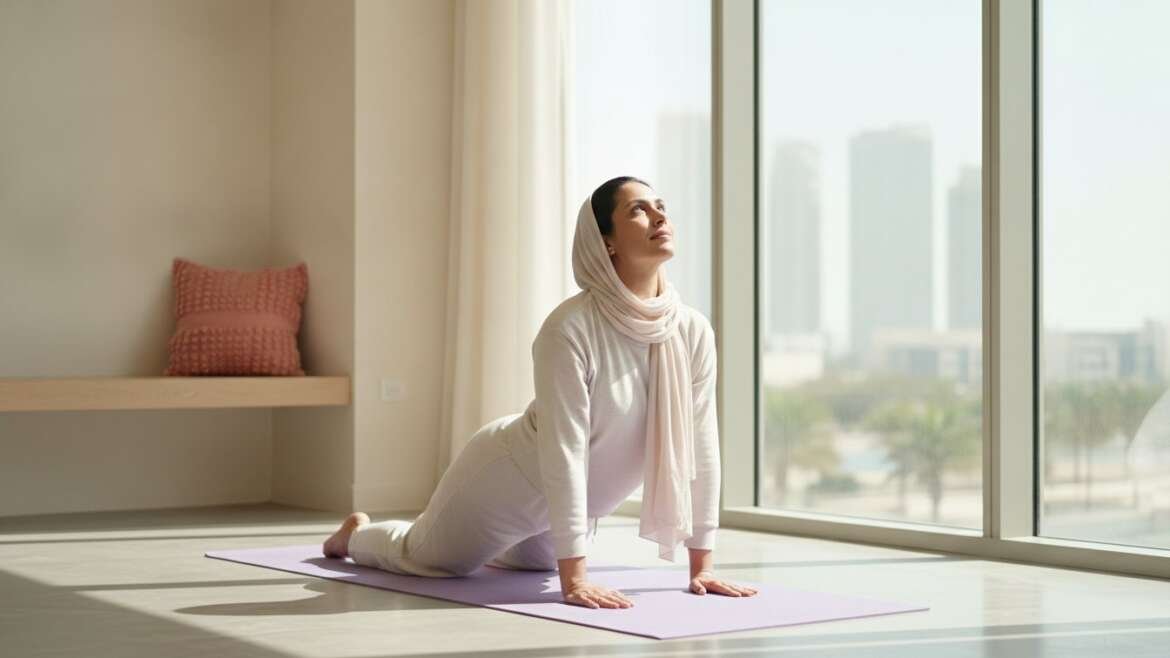
The physical demands of caring for a newborn often lead to a persistent ache between the shoulder blades. Garudasana (Eagle) arms are exceptionally effective for releasing this specific tension. By crossing your arms and lifting your elbows, you create space in the rhomboids and upper trapezius. We also recommend a modified Bhujangasana, or Cobra pose, which focuses on gentle chest opening. Unlike the full version, the postnatal modification keeps the elbows bent and the chest low to protect the abdominal wall. Complement these with gentle neck releases to counter the “nursing posture” and restore a sense of lightness to your upper body.
Poses to Avoid in Early Recovery
Knowing what to avoid is just as important as knowing what to practice. During the first few months of recovery, your body is still navigating the effects of Relaxin and potential abdominal separation. You should steer clear of deep backbends, such as Wheel pose, as these can overstretch the healing linea alba. Strong inversions should also be avoided, as they can affect blood pressure and interfere with the natural flow of lochia. High-impact transitions or “Power Yoga” styles often place too much stress on unstable joints. If you are ready to begin your recovery with expert guidance, our team offers personalized postnatal yoga sessions designed for your specific needs.
Why Private Home Yoga is the Gold Standard for New Moms
Wellness is a sanctuary that begins at your own front door. For a new mother, the outside world can often feel overwhelming and fast-paced; however, your recovery deserves a space of total tranquility. Choosing yoga for postpartum back pain in a private, home-based setting eliminates the logistical hurdles that often prevent healing from taking place. You don’t have to worry about traffic, parking, or the stress of being away from your child. Instead, professional yoga is delivered directly to your doorstep across the UAE, allowing you to focus entirely on your physical and mental restoration.
Your baby’s routine is unpredictable, and your recovery shouldn’t be penalized for that. Private sessions offer the unique scheduling flexibility that public studios simply cannot match. Whether you need to practice while the baby naps or during a quiet morning window, your instructor works around your life. This creates a supportive partnership where your well-being is prioritized alongside your responsibilities as a parent. It’s a sustainable approach to health that respects your time and your energy levels in 2026.
There is also a profound sense of cultural comfort and total privacy in practicing within your own residence. With female-only instructors, you can move freely and authentically without the self-consciousness often felt in public gym settings. This environment fosters a deeper connection to the practice, making each session more effective.
Personalized Guidance vs. Generic Video Classes
While online platforms offer convenience, they lack the critical element of physical safety. Private yoga classes provide 1-on-1 adjustments that are essential when dealing with structural issues like pelvic floor weakness or abdominal separation. Every pose is tailored to your specific delivery type, whether vaginal or C-section, and your unique pain points. You aren’t just following a screen; you’re building a relationship with a mentor who deeply understands the nuances of the postnatal journey and can adjust the practice in real-time as your strength returns.
The Peace of Mind of Professional Certification
Trust is the foundation of any therapeutic relationship. When you invite an instructor into your home, knowing they hold REPS UAE and Yoga Alliance credentials provides immense peace of mind. These experts are specifically trained to monitor C-section recovery and ensure that no movement compromises your incision or internal healing. Professional home yoga provides the accountability a new mom needs to stay consistent. Having an expert physically present means your form is constantly monitored, preventing the common mistakes that lead to further injury. This level of dedicated care ensures that your path to a pain-free back is both safe and profoundly restorative.
Embrace Your Path to Lasting Postnatal Vitality
Your journey into motherhood is a profound transformation that deserves a foundation of strength and serenity. By prioritizing the restoration of your core and pelvic floor, you aren’t just treating symptoms; you’re rebuilding your physical sanctuary. Specialized yoga for postpartum back pain provides the structural support your spine needs while respecting the delicate healing process of the Fourth Trimester. Safety remains our highest priority; working with a mentor who understands your unique recovery path is essential for long-term wellness.
You can reclaim your well-being without the stress of travel or public classes. Our REPS UAE and Yoga Alliance Certified Trainers bring Specialized Postnatal Care at Your Doorstep across the UAE. With Ladies-Only Instructors for Maximum Privacy, you enjoy personalized attention that adapts to your daily routine and your baby’s needs. It’s time to transition from persistent discomfort to a life of balanced movement and mental clarity. Book Your Private Postnatal Yoga Session Today and rediscover the quiet strength within you. Your body is ready to heal.
Frequently Asked Questions
Is it safe to practice postnatal yoga while breastfeeding?
Yes, it’s safe to practice while breastfeeding, provided you listen to your body’s signals. It’s best to schedule your session immediately after a feed to ensure physical comfort during poses. Staying hydrated is vital, as nursing mothers have higher fluid requirements. Professional instruction helps you release the specific upper back tension caused by breastfeeding postures. Your teacher will guide you through gentle movements that don’t place undue pressure on the chest area.
How often should I practice yoga to see relief from back pain?
Practicing two to three times each week is the ideal frequency for achieving lasting results. Consistency allows your body to build the necessary structural strength and muscle memory for a pain-free spine. Even shorter, focused sessions are more effective than one long class every two weeks. When using yoga for postpartum back pain, we prioritize steady progress. Your instructor will adjust the intensity of each session based on your energy levels and physical recovery.
Can yoga help with postpartum abdominal separation (Diastasis Recti)?
Yes, yoga is an excellent tool for healing Diastasis Recti when practiced with professional guidance. We focus on deep, internal core engagement rather than superficial abdominal work. You must avoid generic exercises like crunches, which can actually worsen the separation. Instead, we use breath-led movements to knit the abdominal wall back together safely. This restoration is essential for stabilizing your spine and reducing the strain that causes persistent postnatal back discomfort.
What should I wear for a private home yoga session?
You should wear comfortable, stretchy clothing that allows you to move without restriction. High-waisted leggings are often preferred as they provide gentle support for the abdominal area during recovery. A supportive nursing or sports bra is also essential for your comfort. Since you are practicing in your own UAE home, you can choose whatever attire makes you feel most relaxed. Avoid excessively loose clothing that might prevent your instructor from properly checking your alignment.
Do I need to have my own yoga equipment for home sessions?
You don’t need an extensive range of equipment to begin your home practice. A high-quality yoga mat is the most important requirement for safety and joint cushioning. While props like blocks or straps are helpful, your instructor can show you how to use household items like firm cushions or folded towels for support. Having your own mat also encourages you to practice gentle restorative stretches between your professional sessions, helping you maintain your progress.
Can I do yoga if I had a complicated C-section delivery?
Yoga is possible after a complicated C-section, but it requires a significantly longer waiting period and medical clearance. We typically wait at least twelve weeks before starting any physical practice in these cases. The focus remains on restorative poses that encourage circulation and prevent scar tissue adhesions without straining the incision. Private instruction is vital here, as your teacher will provide the 1-on-1 monitoring necessary to ensure your recovery remains safe and pain-free.
How do I verify if my yoga instructor is certified in the UAE?
You can verify your instructor’s credentials by checking the REPS UAE official register. This national database ensures that fitness professionals in the Emirates meet strict safety and training standards. Additionally, look for Yoga Alliance certification, which indicates specialized training in yogic disciplines. A professional service will always be happy to confirm their instructors’ qualifications. This transparency ensures you are receiving expert care from a mentor who understands the complexities of postnatal physical health.
What is the main difference between prenatal and postnatal yoga?
The primary difference lies in the direction of the physical work. Prenatal yoga focuses on opening the body and creating space for the growing baby. In contrast, postnatal yoga for postpartum back pain emphasizes closing and stabilizing the core and pelvic floor. After birth, your ligaments are still loose due to pregnancy hormones, so the focus shifts from flexibility to building internal strength. This specialized approach ensures your body returns to its natural alignment safely.