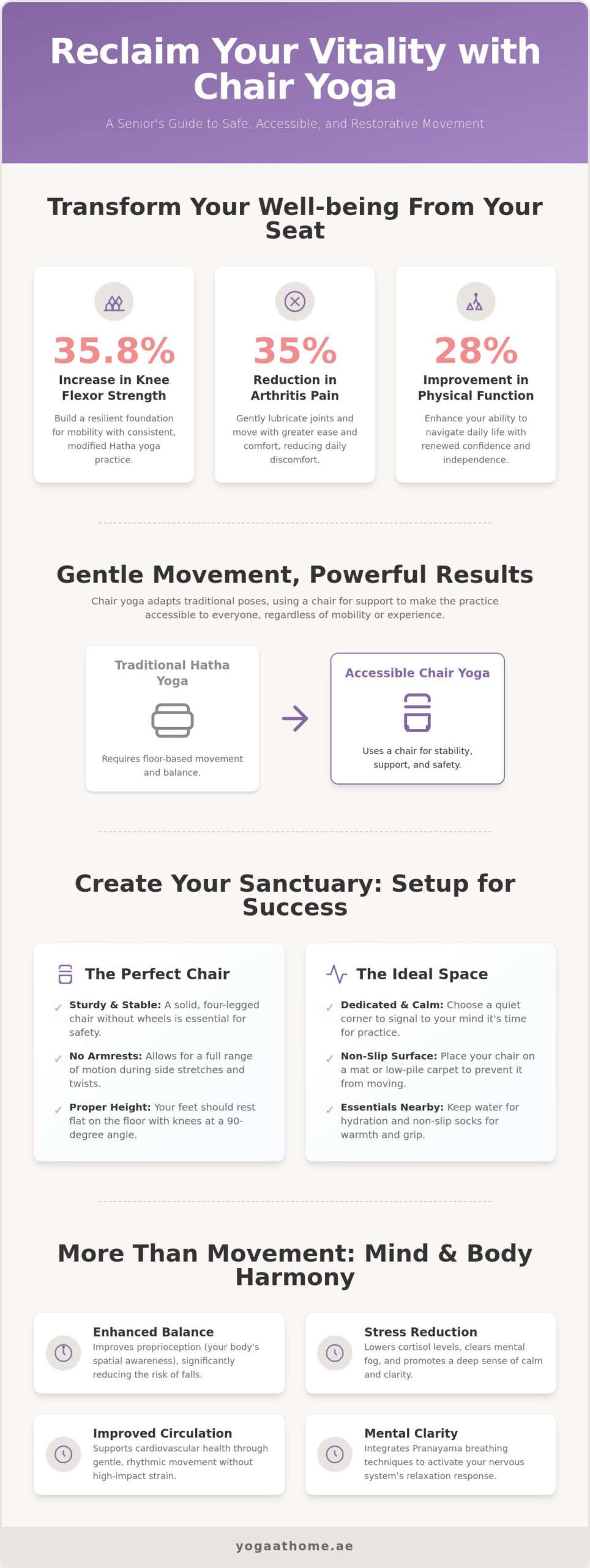
Did you know that a consistent practice of modified Hatha yoga can increase knee flexor strength by 35.8% in just a few months? For many, the passage of time brings an unwelcome guest of stiff joints and a nagging fear of falling that makes traditional exercise feel out of reach. You don’t have to accept limited mobility as your permanent reality. By embracing chair yoga exercises for seniors, you can reclaim your physical independence without ever needing to step onto a floor mat. It’s a gentle yet profound way to honor your body’s wisdom while staying safely within your comfort zone.
We understand that feeling excluded from high-intensity fitness environments can be isolating and discouraging. You deserve a movement habit that feels safe, sustainable, and deeply restorative. This guide will show you how gentle chair-based movements can reduce arthritis pain by 35% and provide the mental clarity you’ve been seeking. We will explore a curated selection of poses designed to improve your range of motion and lower stress from the sanctuary of your own living room. This 2026 guide provides the foundational steps for a more vibrant, balanced life through professional, compassionate guidance.
Key Takeaways
- Learn how chair yoga adapts traditional Hatha Yoga into a specialized practice that provides stability and support for those with mobility challenges.
- Discover the specific criteria for a safe yoga chair and how to curate a tranquil, focused space for your practice within your home.
- Master five essential chair yoga exercises for seniors using the ‘Gentle Flow’ method to improve strength without overexerting your joints.
- Explore the restorative power of Pranayama breathing techniques to activate your nervous system’s relaxation response and enhance mental clarity.
- Understand the benefits of private, in-home instruction for receiving personalized form corrections and sessions tailored to your unique health history.
Understanding Chair Yoga: A Path to Vitality for Seniors
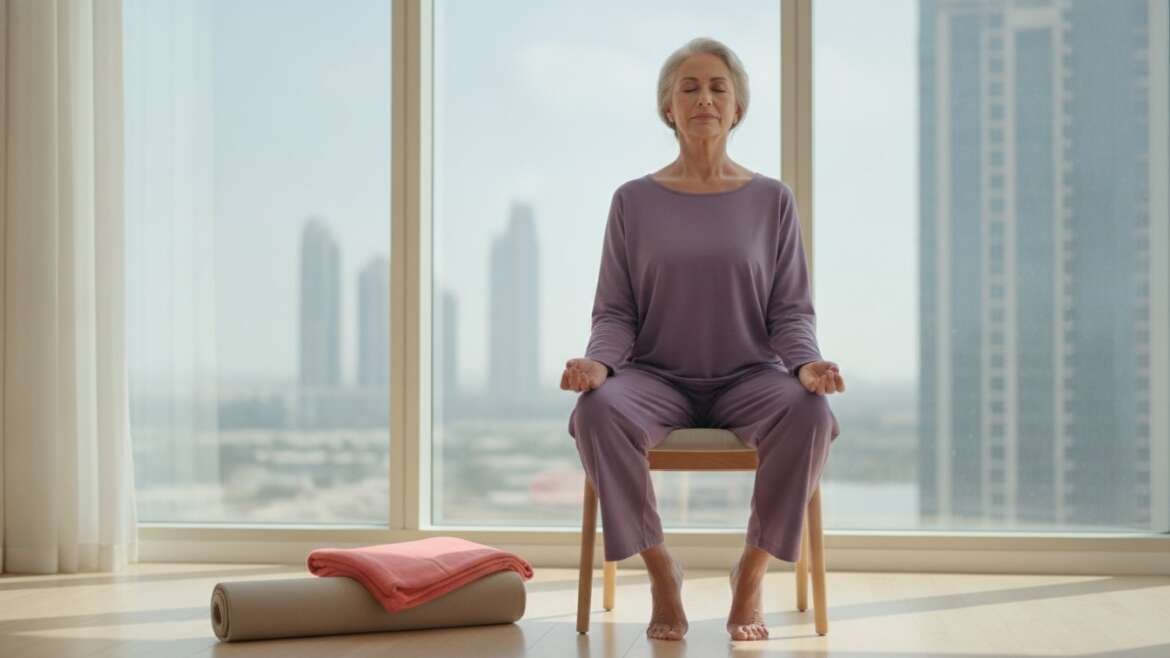
True wellness is an internal state that persists regardless of physical limitations. Chair yoga is a specialized practice that utilizes a sturdy, stable chair as a foundational prop to provide both support and balance. Unlike traditional floor-based practices, it brings the transformative power of Hatha Yoga to those who find getting on and off a mat challenging. By adapting these ancient postures, chair yoga exercises for seniors ensure that the path to vitality remains open to everyone. It isn’t just a modified version of yoga; it’s a sophisticated discipline that honors the body’s current state while inviting gentle expansion.
Choosing this practice is a proactive investment in your future self. Instead of waiting for an injury to occur, you can use these movements to build a resilient foundation for the years ahead. While the history of chair yoga shows a deep commitment to inclusivity, modern science now validates what practitioners have known for centuries. Regular engagement lubricates the joints, strengthens the muscles, and regulates the nervous system, creating a bridge between physical health and spiritual peace. It’s about more than just fitness; it’s a restorative process that fosters a sense of internal balance and tranquility.
The Physical and Mental Benefits of Regular Practice
Rhythmic movement is the language of the heart. These exercises encourage improved circulation, which supports cardiovascular health without the strain of high-impact activities. Beyond the physical, the practice enhances proprioception, or your body’s innate sense of where it is in space. This heightened awareness is a critical tool for seniors, as it has been shown to significantly reduce the risk of falls. Mindful movement also acts as a natural balm for the mind. It helps lower cortisol levels, clearing the mental fog that often accompanies chronic stress and allowing for greater mental clarity throughout the day.
Addressing the ‘Too Old for Yoga’ Myth
The belief that one must be flexible or young to practice yoga is a persistent misconception. Yoga meets you exactly where you are today. Whether you’re managing arthritis, osteoporosis, or a limited range of motion, chair yoga exercises for seniors offer a personalized pathway to movement. Research indicates that yoga can improve arthritis pain by 35% and physical function by 28%. Consistency is the key to maintaining independence during your golden years. By dedicating even a small amount of time each day to these gentle stretches, you protect your ability to move through the world with grace and confidence. You aren’t just stretching; you’re reclaiming your freedom.
Preparing Your Sacred Space: Safety and Equipment
Creating a dedicated sanctuary for your practice is the first act of self-care. When you designate a specific corner of your home for chair yoga exercises for seniors, you signal to your mind that it’s time to transition from the busyness of daily life into a state of restorative calm. Your environment should be a reflection of the tranquility you seek to cultivate within. A well-prepared space doesn’t just foster focus; it’s the primary foundation for a safe, injury-free experience. By gathering the right tools, you allow yourself to fully surrender to the movement without the distraction of physical discomfort or instability.
Safety is the cornerstone of every session. Expert research from Harvard Medical School emphasizes the health benefits of chair yoga, particularly its ability to improve balance and reduce the risk of falls. To mirror these benefits at home, ensure your chair is placed on a non-slip surface, such as a thin yoga mat or a firm, low-pile carpet. Keep a glass of water nearby to maintain hydration, and choose footwear that provides a tactile connection to the earth. Bare feet are often best for grip, but non-slip yoga socks are a wonderful alternative if you prefer to keep your feet warm.
Selecting the Right Chair for Your Body
Your chair is your most important prop. It must be a solid, four-legged piece of furniture, ideally a dining chair without armrests. Armrests can restrict your range of motion during lateral stretches or seated twists. It’s essential that your feet rest flat on the floor while your back is supported; this alignment protects your lower spine and encourages an upright, dignified posture. If your chair is slightly too tall, place a firm cushion or yoga block under your feet. Avoid folding chairs or anything with wheels, as these lack the structural integrity required for stable chair yoga exercises for seniors.
Setting the Intentional Atmosphere
The atmosphere of your room deeply impacts your nervous system. Choose a space with soft, natural lighting and a comfortable temperature that allows your muscles to remain supple. Silence is often the best soundtrack, though gentle, lyric-free music can help drown out household distractions. Wear breathable, non-restrictive clothing that moves with you rather than against you. If you feel unsure about your setup, seeking professional guidance for Yoga for Seniors can help you refine your home environment for maximum safety. Beyond the chair, consider having these props within reach:
- Yoga Blocks: To bring the floor closer to you during seated reaches.
- Yoga Strap: To assist with leg stretches if your flexibility is currently limited.
- Firm Cushions: To provide extra height or lumbar support when needed.
5 Essential Chair Yoga Exercises for Mobility and Strength
Effective movement is a conversation between your breath and your body. The ‘Gentle Flow’ concept focuses on moving with the inhale and exhale rather than forcing your limbs into rigid shapes. This approach ensures that chair yoga exercises for seniors remain a restorative experience rather than a source of strain. Before you begin, find your foundation in Seated Mountain Pose. Sit tall with your feet flat, your spine long, and your shoulders relaxed. This alignment serves as the neutral starting point for every movement. Always listen to your body’s subtle signals; if you feel sharp pain, back off immediately.
Consistency in these movements builds a resilient body and a calm mind. By focusing on the quality of your movement rather than the depth of the pose, you allow your nervous system to remain in a state of ‘rest and digest.’ This mindful approach is what distinguishes yoga from mere calisthenics. It’s a way to honor your physical journey while gently expanding your current capabilities from the safety of your chair.
Spinal Health: Cat-Cow and Seated Twists
A supple spine is the key to youthful energy. For Seated Cat-Cow, place your hands on your knees. As you inhale, lift your chest and look slightly upward (Cow). As you exhale, round your spine and tuck your chin toward your chest (Cat). This rhythmic flexion and extension helps lubricate the spinal discs. To transition into a Gentle Spinal Twist, sit tall and place your right hand on the back of the chair. Use the chair for gentle leverage to rotate your upper body while keeping your hips square. These movements alleviate mid-back stiffness and can even aid digestion by gently massaging the internal organs.
Lower Body Stability: Chair Pigeon and Warrior II
Hip health is vital for maintaining balance and preventing lower back tension. Seated Pigeon involves crossing one ankle over the opposite knee to open the hip. If you have severe hip tightness or a knee replacement, simply cross your ankles instead. This pose is exceptionally effective for relieving sciatica. For Seated Warrior II, turn your body to the side of the chair, extending one leg back while the other remains bent at a 90-degree angle. Reach your arms out parallel to the floor. This builds significant arm strength and opens the chest while providing the security of the chair beneath you.
Upper Body Release: Neck Rolls and Eagle Arms
Modern life often causes us to carry tension in our shoulders and neck. Begin with slow, deliberate Neck Rolls, dropping your ear toward your shoulder and rolling forward to the other side. Avoid tilting your head too far back to protect the cervical spine. To address the space between the shoulder blades, practice Seated Eagle Arms. Cross your arms at the elbows and wrists in front of your face. If this is too intense, simply hug yourself. You’ll feel an immediate release in the upper trapezius, which is essential for maintaining an upright, confident posture during your chair yoga exercises for seniors.
Integrating Pranayama: Breathing Techniques for Mental Clarity
Breath is the vital bridge between the physical vessel and the quietude of the mind. In the tradition of Hatha Yoga, this practice is known as Pranayama, a term that describes the intentional direction of life-force energy. By focusing on controlled respiration, you activate the parasympathetic nervous system, commonly known as the ‘rest and digest’ state. This internal shift is essential for seniors. It counters the ‘fight or flight’ response that often accompanies chronic pain or the persistent fear of falling. When you breathe with intention, you’re not just taking in oxygen; you’re signaling to every cell in your body that it’s safe to relax.
While lung capacity can naturally decrease as the decades pass, dedicated breathwork helps you reclaim that vital space. This expansion is a cornerstone of effective chair yoga exercises for seniors, as it ensures your body receives the nourishment it needs to maintain energy and focus. Beyond the physical, these techniques are powerful tools for managing anxiety and the emotional weight of chronic stiffness. By anchoring your awareness to the breath, you create a sanctuary of calm that remains accessible even after you’ve finished your seated postures.
Nadi Shodhana: Alternate Nostril Breathing
Nadi Shodhana is a practice that brings immediate calm to the nervous system. This technique involves gently closing one nostril at a time to direct the flow of air, which helps balance the left and right hemispheres of the brain. For seniors, this balance is particularly beneficial for achieving better sleep and emotional stability during times of transition. To practice, sit tall in your chair and use your thumb and ring finger to alternate the breath between nostrils. It’s a quiet, rhythmic process that clears mental clutter and prepares the mind for deep, restorative rest.
Dirga Pranayama: The Three-Part Breath
The Three-Part Breath teaches you to utilize the full potential of your lungs by filling the belly, then the ribs, and finally the chest. This ‘full breath’ improves your posture and encourages core engagement without the need for strenuous effort. As you exhale, you release the air in reverse order, feeling the chest drop, the ribs knit together, and the belly soften. This practice is incredibly useful in daily life. You can use it to stay grounded during a stressful medical appointment or a moment of frustration. If you’re ready to experience the profound effects of mindful breathing under expert care, explore our specialized Yoga for old age sessions. Expert guidance ensures you master these techniques safely and effectively from your own home.
Personalized Care: Why Private Home Yoga is the Gold Standard
While the digital world offers many tutorials, there’s no substitute for the watchful eye of a dedicated mentor. Practicing chair yoga exercises for seniors independently can sometimes lead to anxiety about proper alignment or the fear of accidental strain. Private instruction removes this barrier, transforming a solitary effort into a supported journey of restorative growth. A certified professional provides immediate form correction, ensuring that every movement honors your physical boundaries while gently inviting progress. This personalized attention is the most effective way to prevent injury and build lasting confidence in your practice.
Your wellness journey is unique. A private instructor doesn’t just teach a sequence; they curate a bespoke experience based on your specific medical history and daily energy levels. If you’re managing chronic stiffness or recovering from a procedure, your session is adjusted in real-time to meet your needs. This level of customization is impossible to find in a generic group setting or a pre-recorded video. It allows you to focus entirely on the tranquility of the moment, knowing that your health is being handled with the highest degree of professional care.
Removing the stress of travel is a significant benefit of in-home sessions. You don’t have to navigate traffic or worry about being late for a class at a crowded studio. Instead, the sanctuary of your own home remains undisturbed. The convenience of having a mentor arrive at your doorstep allows you to stay in a grounded, peaceful state before and after your practice. It fosters a relationship of deep trust, where your instructor becomes a supportive partner in your long-term vitality. By choosing this personalized path, chair yoga exercises for seniors become more than just a workout; they become a cherished ritual of self-care.
Certified Expertise: REPS UAE and Yoga Alliance
Working with professionals who hold credentials from REPS UAE and Yoga Alliance ensures that your practice is scientifically sound. These certifications signal a deep understanding of anatomy and the specific modifications required for senior health. Our instructors are well-versed in specialized disciplines, including Yoga Classes in Dubai, providing a breadth of expertise that covers everything from balance to flexibility. This professional reliability is what allows you to surrender to the practice with total peace of mind.
The Yogaathome Approach: Serenity at Your Doorstep
We believe that comfort is the foundation of transformation. Our commitment to providing ladies-only sessions with female trainers ensures that you can practice in total privacy and ease. We integrate physical postures, mindful breathing, and meditation into a cohesive wellness plan that addresses your whole being. For those seeking targeted relief, our guide on Yoga Poses for Back Pain offers additional insights into maintaining spinal health. By bringing serenity to your doorstep, we make wellness a sustainable and non-intimidating way of life.
Embrace a Future of Movement and Serenity
True health is a lifelong journey that adapts to your needs as you grow. You’ve discovered how a stable chair and the intentional flow of breath can restore your physical confidence and mental peace. By consistently practicing chair yoga exercises for seniors, you aren’t just moving your limbs; you’re actively investing in your longevity and independence. This gentle path bridges the gap between ancient spiritual traditions and the modern necessity for safe, home-based wellness.
You don’t have to navigate this restorative process alone. Our team of certified professionals, recognized by REPS UAE and Yoga Alliance, specializes in tailored programmes for seniors and relief for back pain. We provide the highest level of personalized care, including ladies-only sessions with female trainers to ensure your sanctuary remains private and serene. Begin your journey to vitality with a personalized private session today. Your path to a more balanced, pain-free life is waiting for you, and it starts with a single, mindful breath.
Frequently Asked Questions
Is chair yoga as effective as regular yoga for seniors?
Yes, chair yoga provides comparable benefits for strength, flexibility, and mental clarity while significantly reducing the risk of falls. A 32-week modified Hatha program resulted in a 35.8% increase in knee flexor strength, proving that seated movements are highly effective. It targets the same muscle groups and nervous system responses as mat-based practices but uses the chair to ensure every posture is accessible and safe.
Can I do chair yoga if I have limited mobility or use a wheelchair?
Absolutely, chair yoga is designed specifically to accommodate those with limited mobility or those who use a wheelchair. The practice focuses on upper body movement, seated leg stretches, and mindful breathing that you can perform entirely from a stationary seat. Professional instructors modify every pose to suit your specific range of motion, ensuring you feel included and supported regardless of your physical challenges.
How many times a week should a senior practice chair yoga to see results?
Practicing two to three times per week is generally recommended to see noticeable improvements in mobility and stress levels. Consistency is more vital than duration; even a 15-minute daily session can yield better results than a single long session once a week. This steady rhythm helps maintain joint lubrication and muscle tone while building a sustainable habit of mindful movement.
What should I look for in a private yoga teacher for seniors?
You should prioritize teachers with recognized certifications from REPS UAE or Yoga Alliance and specific training in senior-focused disciplines. It’s essential that they have a deep understanding of anatomy and common age-related conditions like osteoporosis. A great mentor will be patient and capable of tailoring every session to your unique energy levels and medical history.
Can chair yoga help with arthritis pain in the hands and knees?
Yes, chair yoga is highly effective for managing arthritis, often improving joint function by 28% and reducing pain by 35%. Gentle, non-weight-bearing chair yoga exercises for seniors help circulate synovial fluid, which reduces stiffness and inflammation. Specific hand stretches and seated leg extensions provide targeted relief without putting undue pressure on sensitive joints.
Is it safe to practice chair yoga alone at home?
It’s safe to practice alone once you have a firm grasp of the foundational poses and safety protocols. Beginners benefit immensely from an initial period of professional guidance to ensure their form is correct and their chair setup is stable. Always ensure your environment is free of obstacles and your chair is on a non-slip surface before you begin your solo session.
How long does a typical chair yoga session for seniors last?
A typical session usually lasts between 30 and 60 minutes, depending on your current stamina and wellness goals. Shorter sessions of 15 to 20 minutes are also highly effective for those just starting or managing chronic fatigue. The focus should always remain on the quality of the movement and the depth of the breath rather than the total time spent on the chair.
What is the best time of day for seniors to practice yoga?
The best time is whenever you feel most alert and least stiff, which for many is during the mid-morning. A morning practice helps clear overnight joint stiffness and sets a tranquil, focused tone for the rest of your day. Others prefer a late afternoon session to release accumulated tension and prepare the body for a restful night’s sleep.