What if the most effective way to dissolve a high-pressure workday isn’t found in a luxury retreat, but within the rhythmic flow of your own breath? Most of us feel the heavy weight of constant connectivity and the physical tension that lingers after hours at a desk. It’s often difficult to transition from a high-performance work brain to a peaceful home state when your nervous system remains stuck in overdrive. You likely already know that deep breathing helps, yet finding the time to step away for a full practice feels impossible in a world where the global yoga market is projected to reach over 138 billion dollars this year.
The secret to lasting tranquility lies in integrating yoga breathing into daily life through small, seamless moments of mindfulness. You’ll discover how ancient pranayama techniques provide immediate stress reduction and sharper focus without requiring you to leave your desk or change your schedule. This 2026 guide previews how to weave these restorative habits into your routine; from utilizing modern haptic wearable cues to simple, unassisted techniques that improve your sleep quality. By the end of this article, you’ll have a sustainable path toward holistic calm that respects both your professional ambitions and your personal well-being.
Key Takeaways
- Understand how conscious breathing acts as a biological bridge, shifting your nervous system from “fight or flight” to a state of profound restoration.
- Master practical tools like Box Breathing and Ujjayi to maintain mental clarity and internal heat during high-pressure professional scenarios.
- Discover the art of integrating yoga breathing into daily life by identifying common triggers like “Email Apnea” to reclaim your calm during the workday.
- Learn to tailor your practice for specific life stages, ensuring safe and effective techniques for everything from prenatal support to senior vitality.
- Recognize the value of professional, one-on-one guidance in your own environment to ensure you master the subtle nuances of pranayama for long-term health.
The Science and Spirit of Conscious Breathing
True health begins with the awareness of the air moving through your body. In the practice of Hatha Yoga, breath is not merely a biological necessity; it’s the foundation of all movement and mental stillness. While many start their journey with physical poses, the real transformation occurs when you begin integrating yoga breathing into daily life. This practice serves as a bridge that connects your physical state to your mental clarity, allowing you to navigate modern pressures with ancient poise. To understand the depth of this practice, one must look at What is Pranayama, the formal regulation of breath that unlocks our internal vitality. It is the ultimate portable wellness tool because it requires no equipment, only your attention.
Understanding the Autonomic Nervous System
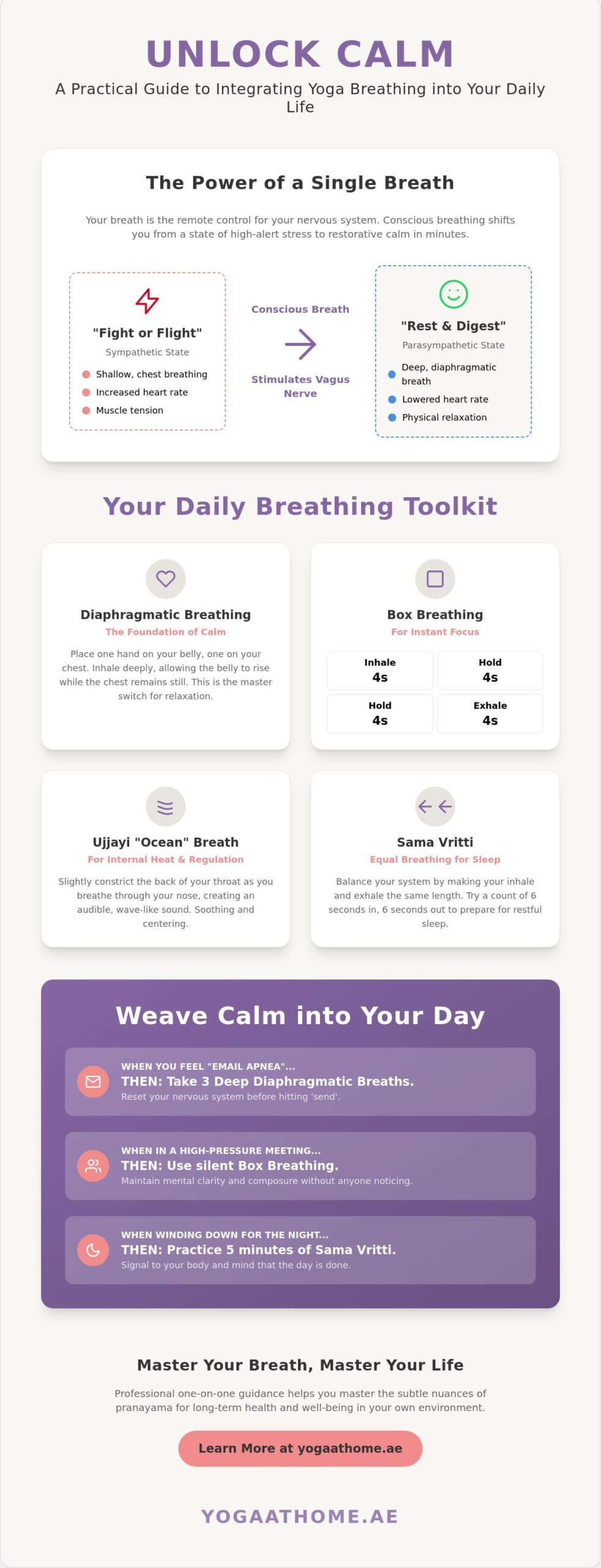
Your body is constantly listening to your breath to determine if you are safe or in danger. When you experience stress at work, your breathing often becomes shallow and confined to the upper chest. This restricted pattern sends an immediate distress signal to the brain, locking you into a “fight or flight” response. By consciously engaging the diaphragm, you stimulate the relaxation response that tells your system it’s time to “rest and digest.” The Vagus nerve acts as the primary sensory pathway between the brain and the body, regulating heart rate variability and signaling the nervous system to shift into a state of calm. Modern survival breathing keeps us in a state of perpetual tension. Ancient thriving breathwork allows us to reset our internal chemistry in seconds.
The Ancient Philosophy of Prana
The wisdom of yoga teaches that we are sustained by more than just oxygen. We are fueled by Prana, or life force energy, which flows through us with every conscious inhale. In traditional yoga lineages, breathwork was never seen as a separate exercise. It was the central pillar of the practice. Once the body is strengthened through asanas, the practitioner moves toward internal breath mastery to quiet the mind. This transition from the external to the internal is what creates lasting tranquility. When you focus on your breath, you aren’t just performing a wellness task; you’re tapping into a reservoir of mental clarity. Integrating yoga breathing into daily life is a grounded way to bring spiritual balance into a busy schedule. Peace is always just one exhale away.
Practical Techniques for Daily Micro-Meditation
True wellness is found in the small, consistent choices we make throughout a busy afternoon. You don’t need a yoga mat, specialized leggings, or a quiet studio to begin integrating yoga breathing into daily life. These techniques are designed to be used in the middle of a board meeting, while waiting for your coffee, or during the frantic minutes before a school run. By shifting your focus to the breath, you reclaim control over your internal environment. It’s a simple, effective way to anchor yourself in the present moment without pausing your productivity.
One of the most powerful tools for immediate focus is Box Breathing. You simply inhale for a count of four, hold for four, exhale for four, and hold the lungs empty for four. This rhythmic square pattern is remarkably effective for clearing mental fog during high-pressure moments. For those seeking internal heat and better nervous system regulation, Ujjayi breath, often called the “ocean breath,” involves a slight constriction at the back of the throat to create a soothing, audible sound. At the end of the day, Sama Vritti, or Equal Breathing, helps prepare the body for restful sleep. Inhale and exhale for an identical count, such as six or eight, to signal to your brain that the day’s work is done.
The Foundation: Diaphragmatic Breathing
Most people are “chest breathers,” using only the top portion of their lungs when stressed. To check your breath quality, place one hand on your heart and the other on your belly. As you inhale, the hand on your belly should rise while the hand on your heart stays relatively still. The diaphragm is the primary driver of the relaxation response, acting as a physical toggle for the autonomic nervous system. You can practice this while sitting at your desk or standing in a queue to lower your heart rate instantly. If you find these techniques challenging to master alone, exploring Hatha Yoga in a personalized setting can help refine your practice.
Nadi Shodhana for Mental Equilibrium
Nadi Shodhana, or Alternate Nostril Breathing, is a sophisticated technique for emotional balance. Use your right thumb to close your right nostril, inhale through the left, then close the left with your ring finger and exhale through the right. This practice helps balance the left and right hemispheres of the brain, making it ideal before making a big decision. Research into the science of yogic breathing suggests these patterns significantly improve focus. Please avoid this technique if you have severe nasal congestion to prevent unnecessary strain.
Integrating Breath into High-Stress Scenarios
Most of us live in a state of unconscious “Email Apnea.” This phenomenon occurs when we instinctively hold our breath or take shallow, jagged sips of air while responding to a mounting inbox or typing urgent reports. This biological habit keeps the nervous system in a constant state of low-level alarm, which eventually leads to burnout and fatigue. By integrating yoga breathing into daily life, you can break this cycle without ever stepping away from your computer. Instead of waiting for a dedicated class, you learn to use your existing environment as a series of cues to return to a state of calm. Your breath becomes the steady anchor in the middle of a digital storm.
The Mindful Commute
Your daily journey to the office is an ideal laboratory for breath mastery. Use the tactile sensation of your hands on the steering wheel as a gentle reminder to soften your shoulders and expand your ribs. Soft-focus breathing, where you maintain awareness of your periphery while keeping a steady gaze on the road, significantly reduces travel anxiety and road rage. If you walk to work, try synchronizing your steps with your breath; inhale for four paces, then exhale for six. Maintaining a tall, proud spine in your car seat or while walking is essential. It creates the physical space necessary for full lung expansion and prevents the slumped posture that signals stress to the brain.
Breath in the Boardroom
High-stakes corporate negotiations often trigger a physiological “freeze” response that clouds your judgment. You can remain the most composed person in the room by using silent breathing techniques that are entirely invisible to your colleagues. Follow the “exhale longer than inhale” rule to instantly lower the spike of public speaking anxiety. As you speak, ground yourself by feeling the weight of your feet on the floor and consciously softening your jaw. A steady, rhythmic breath naturally leads to more authoritative and measured communication. It projects a quiet confidence that commands respect without the need for aggression or tension.
Transitioning from “work mode” to “family mode” can be as simple as taking three deep, conscious breaths at your front door. This ritual clears the mental residue of the office, ensuring you don’t bring the day’s frustrations into your home sanctuary. This practice is also a vital tool for managing the physical toll of a modern career. For those dealing with chronic tension from desk work, targeted breathwork helps relax the muscles surrounding the spine. This makes it a foundational component of yoga for back pain, providing relief that lasts long after the workday ends. Peace isn’t a destination; it’s a state of being you breathe into existence during your most demanding moments.
Tailoring Breathwork for Life’s Different Stages
True wellness is not a one-size-fits-all solution. It’s a fluid practice that evolves alongside our changing physical needs and life circumstances. Successfully integrating yoga breathing into daily life requires an understanding of your body’s current season, whether you’re navigating the golden years of retirement or the transformative journey of motherhood. By adapting ancient techniques to fit your specific physical reality, you ensure that your practice remains a source of vitality rather than a cause of strain. This bespoke approach allows the breath to act as a restorative partner throughout every chapter of your life.
Support for Seniors and Mobility
As we age, maintaining respiratory health becomes a foundational pillar of overall longevity. Gentle seated breathwork is an excellent way to enhance oxygenation and boost energy levels without putting undue pressure on the joints. By focusing on the soft expansion of the lower ribs, older practitioners can maintain lung elasticity and cultivate a deep sense of quiet presence. Specific instruction in yoga for seniors prioritizes respiratory health as a foundation for overall longevity. These simplified pranayama techniques also help manage the discomfort often associated with restricted mobility, promoting better sleep and a more peaceful state of mind.
Prenatal and Post-natal Calm
For expectant mothers, the breath serves as a powerful connection between parent and child. The “Golden Thread” breath, which involves a slow, steady exhale through slightly parted lips, is an essential tool for managing anxiety and preparing for labor. This conscious breathing creates a serene internal environment that benefits the baby’s development while keeping the mother’s nervous system grounded. After birth, gentle exhales help new mothers safely reconnect with the pelvic floor and support core recovery. Managing the inevitable sleep deprivation of early parenthood becomes more sustainable when you use Yoga Nidra-inspired breathing to access deep states of rest during short breaks.
Those dealing with chronic physical challenges also find immense relief through targeted breathwork. When you’re managing persistent discomfort, the body tends to bracing itself, which only increases tension. Gentle, directed breathing helps release this deep-seated muscular guarding, making it a vital component of Yoga for back pain. Because every body has unique requirements, receiving professional guidance is the most effective way to ensure your practice is both safe and transformative. Our mentors provide the supportive, individualized instruction needed to master these subtle internal shifts in the comfort of your own home.
Elevating Your Practice with Professional Guidance
Mastery of the breath is a journey that requires both patience and precision. While self-guided practice is a wonderful starting point, there comes a moment where the subtle nuances of pranayama require the discerning eye of a mentor. Transitioning from basic exercises to integrating yoga breathing into daily life as a permanent lifestyle habit is often the most rewarding stage of your wellness journey. Professional guidance ensures that you aren’t just performing the actions, but truly harmonizing your internal systems for long-term health and mental clarity.
Why Private Home Instruction Wins
The sanctuary of your own home is the most effective environment for learning the delicate art of breathwork. Public studios often inadvertently create a sense of performance anxiety, where practitioners might hold their breath or strain to keep up with a group. In a private setting, you can let go of external comparisons and focus entirely on your internal landscape. A dedicated mentor can spot subtle, unconscious breath-holding patterns that you might miss on your own. This individualized attention allows for techniques to be customized to your unique health history, ensuring every inhale and exhale serves your specific goals. By integrating yoga breathing into daily life through these bespoke sessions, you create a sustainable wellness habit that respects your personal growth. The convenience of a professional arriving at your doorstep or office respects your schedule, making wellness a seamless part of your day rather than another chore to manage.
The Yogaathome Approach to Holistic Wellness
Our team brings a wealth of expertise through REPS UAE and Yoga Alliance certified instructors who understand the profound link between physiology and peace. We specialize in providing ladies-only sessions with female trainers, creating a space of ultimate comfort and trust for our clients. This professional reliability is at the heart of our practice, whether we are teaching Hatha Yoga or developing specialized programs like yoga for back pain. We believe that your time is valuable. Our commitment to punctuality ensures that your path to restoration is as stress-free as the practice itself.
Choosing to work with an expert mentor is an investment in your future self. It’s the difference between a temporary stress-relief tool and a lifelong foundation of calm. We invite you to experience this restorative transformation, moving beyond the physical to find the internal balance you deserve. Your journey toward a more mindful, vibrant life begins with a single, guided breath in the comfort of your own home.
Embrace Your Path to Lasting Serenity
True wellness isn’t found in a single hour of exercise, but in the steady, conscious rhythm of your breath throughout the day. By identifying modern triggers like “Email Apnea” and utilizing your commute as a space for restoration, you reclaim control over your nervous system. Integrating yoga breathing into daily life transforms these small moments into a powerful foundation for mental clarity and physical ease. Whether you’re navigating the demands of a high-pressure career, the unique needs of pregnancy, or the vitality of your senior years, your breath is your most reliable partner.
Mastering these subtle techniques is most effective when guided by those who respect your personal journey and your schedule. Our REPS UAE and Yoga Alliance certified instructors specialize in creating tailored experiences through ladies-only and senior programs delivered directly to your home or office. This bespoke approach ensures your technique is safe and perfectly aligned with your health history. It’s time to move beyond survival breathing and step into a life of thriving wellness.
Begin your journey to serenity with a personalized private yoga session. You deserve a life defined by tranquility, and peace is always just one conscious exhale away.
Frequently Asked Questions
Is yoga breathing safe for everyone to practice daily?
Most gentle breathing techniques are safe for daily practice and provide a steady foundation for mental health. However, advanced pranayama involving long breath retentions should be approached with caution if you have high blood pressure or heart conditions. It’s always wise to consult a medical professional before starting a new routine if you have underlying health concerns. Practicing under the guidance of a certified mentor ensures that you’re using the right intensity for your body.
Can I practice these breathing techniques if I have asthma or respiratory issues?
You can certainly use specific techniques to support respiratory health, as they often help strengthen the diaphragm and improve lung capacity. While these practices are beneficial, they’re intended to complement your existing medical treatment rather than replace prescribed medications or inhalers. Always practice in a comfortable, dust-free environment and stop if you feel any strain or shortness of breath. A personalized approach helps you find the most supportive rhythm for your needs.
How long does it take to feel the benefits of yoga breathing?
You’ll often feel an immediate shift in your nervous system after just three to five minutes of conscious breathing. The physiological response, such as a lowered heart rate and reduced cortisol, happens almost instantly. For long-term benefits like improved sleep quality and reduced baseline anxiety, consistency is key. Most practitioners notice a significant transformation in their mental clarity after integrating yoga breathing into daily life for at least two to four weeks.
What is the best time of day to practice pranayama for maximum effect?
The early morning hours are traditionally considered the best time for dedicated practice because the mind is quiet and the stomach is empty. However, the true power of these techniques lies in their incredible versatility. You can use energizing breaths to clear morning fog or calming exhales to decompress after a long workday. The best time is whenever you feel the need to return to your center and reclaim your internal peace.
Do I need to be a yoga expert to start integrating these techniques?
You don’t need any prior experience or physical flexibility to begin. Breathing is a fundamental human function that we’re simply learning to refine and direct with greater intention. These techniques are designed to be accessible to everyone, regardless of their fitness level or history with yoga. Starting with simple diaphragmatic breathing is a perfect first step toward a more mindful and grounded lifestyle that respects your current ability.
What happens if I feel dizzy while practicing alternate nostril breathing?
If you experience dizziness, stop the technique immediately and return to your natural breathing rhythm. This sensation often occurs if you’re forcing the breath or holding it for too long, which can cause a temporary imbalance in oxygen levels. It’s a clear sign to slow down and reduce the intensity of your practice. Working with a certified mentor can help you find a comfortable pace that respects your body’s capacity and ensures your safety.
How much does a private home yoga session cost in the UAE?
Rates for private instruction in the UAE vary depending on the duration of the session, the instructor’s expertise, and your specific location. Since our services are highly customized to meet individual needs, we recommend contacting us directly for a bespoke quote. This allows us to pair you with the right mentor for your goals, whether you’re seeking prenatal support, corporate wellness, or specialized care for seniors in your own environment.
Can kids and seniors benefit from the same breathing exercises?
Both groups benefit immensely from conscious breathing, though the approach is tailored to suit their specific developmental and physical needs. For children, the focus is often on emotional regulation and focus through engaging, simplified techniques. For older practitioners, the priority shifts toward maintaining lung vitality and managing physical discomfort. Integrating yoga breathing into daily life provides a shared path to tranquility that can be enjoyed by every member of the family, regardless of age.