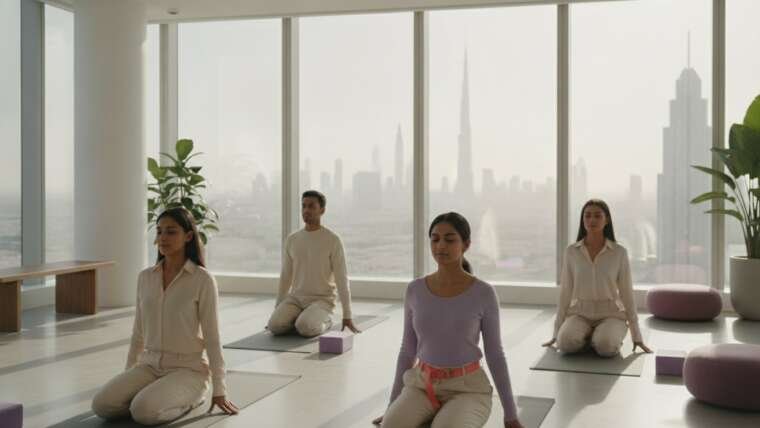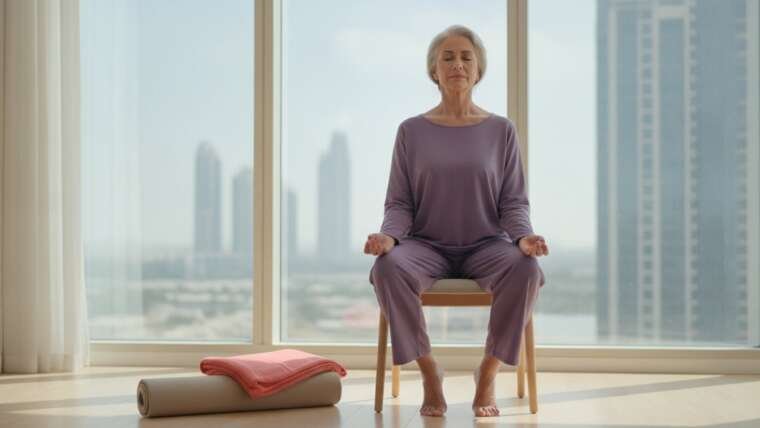
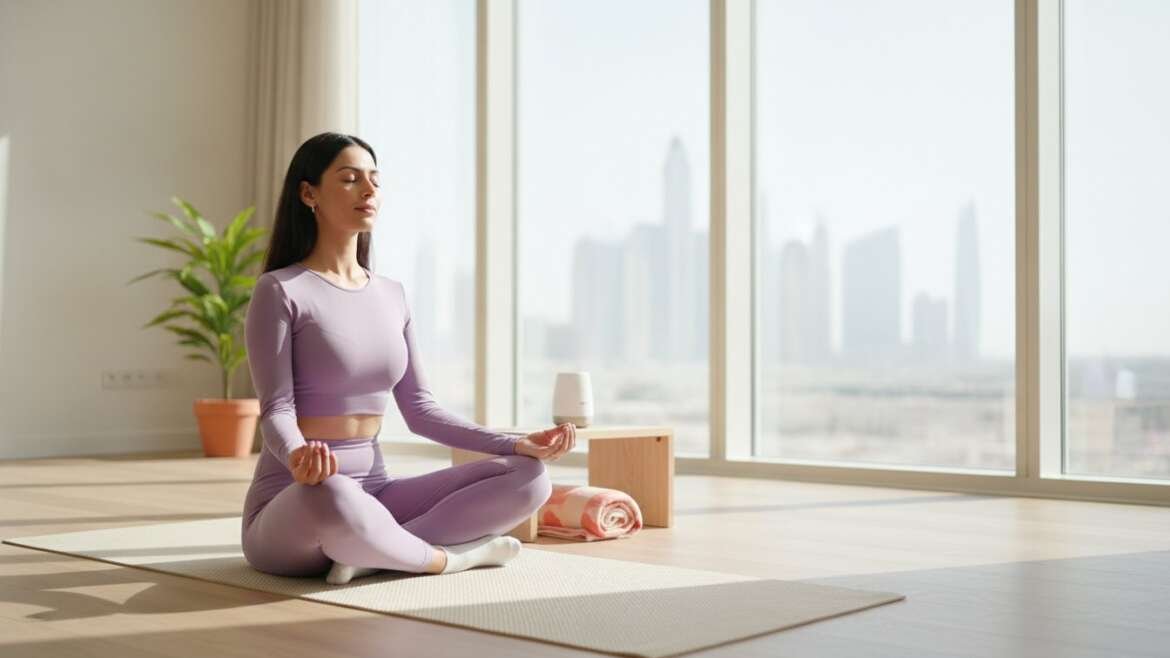
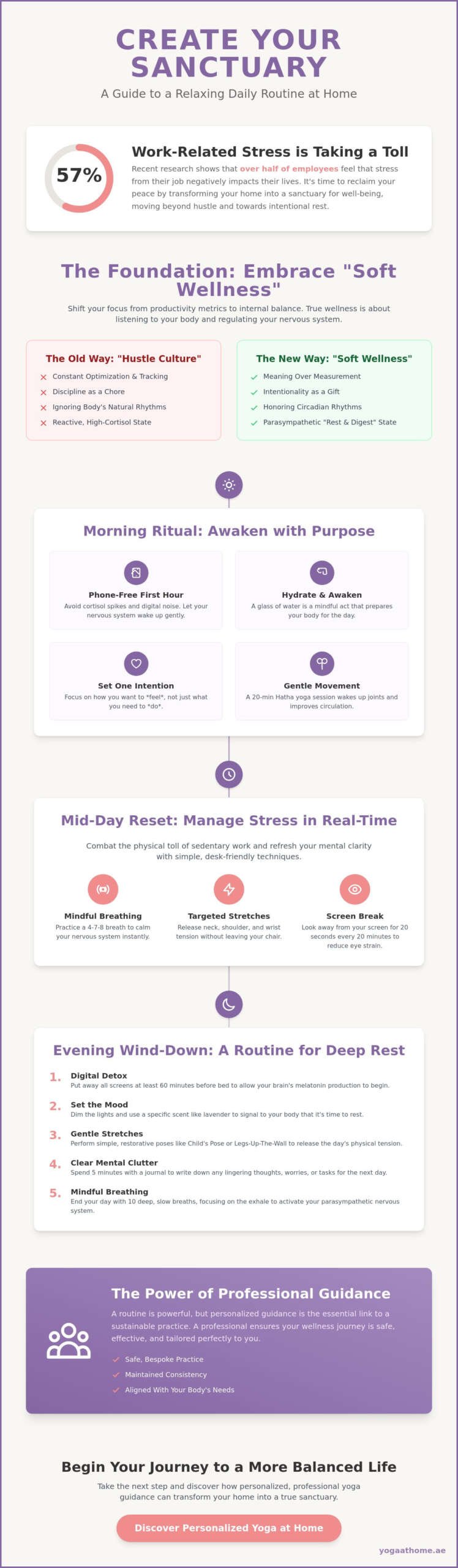
Recent research from November 2025 reveals that 57% of employees feel work-related stress is negatively impacting their lives. You’ve likely felt this yourself; that lingering tension in your shoulders or the restless mind that refuses to quiet down after the laptop closes. Creating a relaxing daily routine at home shouldn’t feel like another chore on your to-do list. Instead, it’s about reclaiming your space and your peace. We understand that your time is precious. Your home should be a sanctuary, not an extension of the office.
True health is a quiet, internal balance that begins the moment you decide to prioritize your own peace. This guide provides a harmonious blend of ancient wisdom and modern expertise to help you build a personalized ritual that balances gentle movement with intentional rest. We’ll explore the shift toward “soft wellness” and show you how professional guidance can help you improve flexibility and regulate your nervous system without ever leaving your front door. It’s time to move beyond the hustle and embrace a more sustainable, holistic approach to your well-being.
Key Takeaways
- Learn how to regulate your nervous system and align with your body’s natural rhythms by creating a relaxing daily routine at home that serves as a personal sanctuary.
- Discover the benefits of a phone-free morning and how gentle movement can awaken your joints while preventing early cortisol spikes.
- Identify simple, desk-friendly techniques to combat the physical toll of sedentary work and refresh your mental clarity during the afternoon slump.
- Explore a structured evening wind-down process designed to clear mental clutter and signal your body for deep, restorative sleep.
- Understand why personalized professional guidance is the essential link for maintaining a safe, bespoke wellness practice within your own environment.
The Foundation of a Relaxing Daily Routine at Home
True wellness is the quiet alignment of our internal state with the environment we inhabit. When we focus on creating a relaxing daily routine at home, we’re moving away from the “hustle culture” that demands constant optimization and data-heavy tracking. Instead, we’re building a series of intentional acts designed to regulate the nervous system. Our bodies follow a natural circadian rhythm, an internal clock that governs our energy levels, hormone production, and sleep patterns. By honoring this rhythm with home rituals, we shift from a mindset of productivity to one of restorative presence. Your home becomes a sanctuary where health is practiced, not just a place where you recover from work.
In 2026, many people are experiencing a backlash against over-optimization. They’re seeking “meaning over measurement,” choosing to listen to their bodies rather than their devices. This shift toward “soft wellness” emphasizes gentler, more mindful approaches that prioritize nervous system regulation. This holistic approach is exemplified by Face Up, which focuses on the deep connection between somatic bodywork and facial health. When your home environment is a tool for wellness, it ceases to be a source of stress. You aren’t just “getting through the day”; you’re moving through it with a sense of grace and internal balance.
Why Intentionality Beats Discipline
Many people mistake a wellness routine for another to-do list. The difference lies in intentionality. While discipline often feels like a burden or a chore, a soul-nourishing ritual feels like a gift you give to yourself. Small, consistent actions can lead to profound neurological shifts in how you respond to daily stressors. By consciously engaging the parasympathetic nervous system, you tell your body it’s safe to rest and digest. Incorporating various relaxation techniques, such as rhythmic breathing or mindful movement, helps lower cortisol levels over time. This isn’t about achieving a perfect performance. It’s about being present and allowing your body the space it needs to find its natural equilibrium.
Setting Your Sacred Space
Your physical environment serves as the silent partner in your wellness journey. You don’t need a vast studio or expensive equipment to practice mindfulness; you only need a corner that feels sacred and intentional. Simple acts, like clearing a small area of floor space for Hatha Yoga or dimming the overhead lights, can immediately transform a room’s energy. Sensory cues are vital for anchoring your new habits. A specific scent, like lavender or sandalwood, or the soft glow of a lamp can signal to your brain that it’s time to switch off from professional demands. To protect this mental sanctuary, make it a habit to leave digital devices in another room. When you remove the noise of the outside world, creating a relaxing daily routine at home becomes a natural, life-long expression of self-care.
Morning Rituals: Awakening with Serenity and Purpose
Health begins with how we greet the morning sun. Most people reach for their phones immediately upon waking, triggering a spike in cortisol that sets a frantic, reactive tone for the day. By committing to a phone-free first hour, you protect your mental clarity and allow your nervous system to wake up gradually. This simple boundary is a cornerstone of creating a relaxing daily routine at home. Instead of digital noise, choose hydration. Drinking a glass of room-temperature water is more than a biological necessity; it’s a mindful act of self-love that awakens your internal systems with kindness and prepares your body for the day ahead.
Instead of scanning a list of daunting tasks, take a moment to set a single daily intention. This isn’t a goal to be achieved but a quality of being to be maintained. Ask yourself how you want to feel rather than what you want to do. This shift in perspective helps you manage the stress in your life before it even begins. It anchors your actions in purpose rather than reaction, ensuring that your energy remains focused on what truly matters. When you prioritize your internal state, the external world feels far less overwhelming.
Gentle Morning Movement
Awakening the body requires a gentle touch. Incorporating Hatha yoga principles into your morning allows you to wake up the joints and improve circulation without the jarring impact of a frantic workout. Grounding poses, such as Tadasana (Mountain Pose), provide a sense of stability that carries through your entire schedule. These postures teach you to find your center, even when the world outside feels chaotic. A focused, 20-minute guided session is far more effective for long-term health than a rushed exercise routine. If you find it difficult to maintain this consistency alone, our experts offer personalized Ladies Yoga sessions tailored to your specific physical needs, ensuring your alignment is safe and your practice is restorative.
Mindful Breathing and Stillness
Breath is the bridge between the mind and the body. Simple pranayama techniques, like alternate nostril breathing, help oxygenate the brain and steady the heart rate. Spend a “quiet minute” in stillness before you dive into your responsibilities. Observe your thoughts like clouds passing in the sky without judgment. This practice ensures that when you transition to your day’s activities, you do so with a calm heart and a focused mind. Creating a relaxing daily routine at home is about these small pockets of silence that build a foundation for a more peaceful, balanced life.
The Mid-Day Reset: Managing Stress in Real-Time
The rhythm of a balanced life requires us to acknowledge the natural ebb and flow of our internal energy. While the morning begins with intention, the middle of the day often brings a different set of challenges. By the time 2:00 PM arrives, many of us feel the familiar weight of the afternoon slump pressing against our focus. Instead of reaching for a third cup of coffee, view this dip as a physiological signal from your body. It’s an invitation to pause. Creating a relaxing daily routine at home means building in these small, real-time resets that prevent stress from accumulating into burnout by evening.
Maintaining mental clarity when the day feels chaotic is a skill that grows with practice. One of the most effective ways to protect your peace is a strict digital detox during your lunch hour. Stepping away from your screen isn’t just about resting your eyes; it’s about reclaiming your attention from the endless stream of notifications. Use this time to return to your senses. When you eat with awareness, you aren’t just fueling your body; you’re engaging in a meditative act that improves digestion and stabilizes your energy levels for the remainder of the afternoon.
Movement for Physical Relief
Sedentary work takes a silent toll on the body, often manifesting as tension in the neck, shoulders, and lower back. Shifting your physical state is the fastest way to shift your mental state. You don’t need to change into athletic gear to find relief. Simple, desk-friendly movements can decompress the spine and release the “fight or flight” energy stored in your muscles. Integrating specific principles of yoga for back pain into a ten-minute break can significantly reduce discomfort. These gentle stretches encourage circulation and remind your nervous system that it’s safe to let go of the day’s tension. Consistency in these small movements is what truly transforms your home into a sanctuary of health.
Mindful Nutrition and Hydration
Internal balance is deeply connected to how we nourish ourselves throughout the day. Hydration is often the missing link in cognitive focus; even mild dehydration can lead to brain fog and irritability. Beyond just drinking water, consider creating a “tea ritual” as a brief meditative pause. The act of boiling the water, choosing your leaves, and feeling the warmth of the cup serves as a sensory anchor. This ritual provides a transition point between high-intensity tasks and focused work. When you approach creating a relaxing daily routine at home as a series of these small, soul-nourishing acts, wellness becomes an effortless part of your identity rather than a chore on your list.
Evening Wind-Down: A 5-Step Routine for Deep Rest
The transition from a busy day to a night of deep rest is a sacred bridge that requires intentional crossing. When we focus on creating a relaxing daily routine at home, the evening wind-down is perhaps the most critical component for long-term health. It begins with a “brain dump.” This simple act of writing down every lingering task or worry clears the mental clutter that often keeps the mind racing long after you’ve climbed into bed. Once the mind is quiet, you must signal your biology that the day is over. Dimming the lights in your living space mimics the natural setting of the sun, encouraging your body to begin its production of melatonin. This isn’t just about comfort; it’s about honoring your body’s internal clock.
Creating a sleep-conducive environment involves both physical and mental preparation. A slightly cooler room, ideally around 18 degrees Celsius, helps your body reach the lower core temperature required for deep sleep. Finally, close your day with a moment of gratitude. Acknowledging three positive things from your day shifts your focus from what was left undone to the abundance that already exists. Creating a relaxing daily routine at home concludes not with a screen, but with a peaceful heart and a body that feels truly safe to rest.
Restorative Poses for Sleep
Low-impact, restorative movement is the final physical release your body needs before bed. Engaging in gentle stretches or Yin yoga allows the nervous system to shift fully into its “rest and digest” mode. Poses like “Legs up the Wall” are exceptionally effective for evening relaxation. They reverse the effects of gravity on your circulation and soothe a tired lower back after a day of sitting. While these movements appear simple, professional guidance ensures you’re finding the right poses for your specific body type. For those seeking a deeper level of customization, our Ladies Yoga sessions provide the expert support needed to practice safely within your own sanctuary.
The Digital Sunset
Protecting your sleep requires a firm, non-negotiable boundary against digital intrusion. Implementing a “digital sunset” at least 60 minutes before bed is essential for nervous system regulation. Blue light from screens suppresses melatonin and interferes with your ability to reach deep REM sleep, leaving you feeling groggy the next morning. Replace scrolling with reading a physical book or practicing a guided meditation. This intentional choice transforms your bedroom into a sanctuary of stillness rather than an extension of the digital world. When you remove the noise of the outside world, you allow your internal wisdom to take over, leading to a more profound and restorative rest.
The Power of Professional Guidance in Your Home Sanctuary
Health is a lifelong commitment that flourishes under the right mentorship. While the previous sections have outlined the steps for creating a relaxing daily routine at home, the most significant catalyst for transformation is often personalized, professional instruction. It’s the missing link that bridges the gap between intention and long-term success. Practicing alone can be a beautiful starting point, but without an expert eye, it’s easy to fall into misalignments that cause physical strain. A certified professional doesn’t just teach poses; they monitor your unique anatomy to ensure every movement is safe, effective, and tailored to your current state of being.
The psychological impact of accountability shouldn’t be underestimated. When a teacher arrives at your door, the mental barrier to entry vanishes. You no longer have to motivate yourself to start; you simply have to show up in your own space. This supportive partnership turns creating a relaxing daily routine at home from a solitary effort into a shared journey of growth. It provides the structure necessary to move past the initial hurdles of a new habit and into a state of sustainable, internal balance. This grounded approach respects your schedule as much as your personal growth.
Bespoke Wellness for Every Life Stage
Every body tells a different story, and every life stage requires a specific approach to movement. For those in their golden years, yoga for seniors focuses on maintaining mobility and joint health with a gentle, protective touch. Similarly, prenatal and post-natal home sessions provide the specialized care needed during the delicate transition into motherhood. Many women find that private ladies yoga sessions offer a level of comfort and privacy that simply can’t be found in a public setting. This bespoke service ensures that your practice evolves as you do, respecting your physical needs while nurturing your mental clarity.
Making the Routine Stick
The greatest challenge in any wellness journey is the “beginner’s hurdle.” It’s the moment when the novelty fades and the old habits of stress begin to return. A professional instructor acts as a grounded mentor who helps you navigate these plateaus. In our busy modern lives, the convenience of home-delivered wellness is a necessity rather than a luxury. It respects your time and your environment. By bringing the expertise to your sanctuary, you take the first definitive step toward a more balanced, serene version of yourself. Your home is already your refuge; now, let it become the foundation for a life lived with intention and grace.
Your Path to Lasting Serenity Starts Within
True health is found in the small, consistent choices we make within our own four walls. By embracing phone-free mornings, mid-day resets, and intentional evening wind-downs, you’ve already begun the process of creating a relaxing daily routine at home. These rituals aren’t just habits; they’re the foundational pillars of a life lived with presence and internal balance. Your home environment is more than a physical space. It’s the sanctuary where your transformation takes root and your nervous system finds its natural equilibrium.
You don’t have to walk this path alone. Our Certified REPS UAE and Yoga Alliance instructors bring professional wellness directly to your doorstep. We offer specialized ladies-only and senior programs that respect your schedule and your personal growth. This bespoke approach ensures your journey is safe, grounded, and deeply restorative. Begin your journey to serenity with a personalized private yoga session at home. Your sanctuary is ready, and we’re honored to support your path toward a more peaceful, balanced version of yourself. Embrace the quiet wisdom of your own body today.
Frequently Asked Questions
How long does it take to establish a new daily routine at home?
It typically takes between 21 and 66 days to form a new habit, depending on the complexity of the action. When you’re creating a relaxing daily routine at home, consistency is more important than duration. Start with small, manageable rituals that don’t feel like a burden. Over time, these actions become second nature and require less mental effort to maintain.
Do I need a lot of equipment to start a relaxing home routine?
You don’t need expensive equipment to begin a wellness practice. A quiet space, a comfortable mat, and a small cushion are enough to start most home-based rituals. Focus on the quality of your presence rather than the quantity of your gear. As your practice evolves, you might choose to add simple tools like blocks or straps to support your alignment and comfort.
Is it better to do yoga in the morning or the evening for relaxation?
Both times offer unique benefits, so the choice depends on your personal energy cycle. Morning sessions awaken the body and set a serene intention for the day ahead. Evening sessions, particularly restorative or Yin styles, help release the day’s tension and prepare the nervous system for deep sleep. Listen to your body and choose the time that feels most nourishing for your soul.
Can I create a relaxing routine if I have a very busy work schedule?
Yes, even the busiest schedule has room for small pockets of restoration. Creating a relaxing daily routine at home is about quality, not quantity. A five-minute breathing exercise or a ten-minute stretching session can significantly lower your stress levels. Integrating these brief moments throughout your day prevents the accumulation of tension and keeps your mind clear during high-pressure tasks.
How can I stay consistent with my home routine on weekends?
Maintain your routine by keeping the same foundational anchors even when your schedule shifts. While you might sleep in or have different activities, keep your morning hydration or evening wind-down rituals consistent. This provides a sense of continuity that signals to your body that your wellness is a priority every day. Flexibility is key; allow your weekend routine to be a softer version of your weekday practice.
What are the best yoga poses for beginners to include in a daily routine?
Beginners should focus on foundational poses that encourage stability and gentle opening. Mountain Pose is excellent for grounding, while Child’s Pose offers immediate nervous system relief. Cat-Cow stretches are perfect for spinal mobility, and a gentle Forward Fold helps release tension in the hamstrings and lower back. These simple movements build a safe foundation for a life-long practice that respects your body’s limits.
Is private home yoga better than following a video online?
Private instruction offers a level of safety and customization that pre-recorded videos cannot provide. A certified professional monitors your alignment in real-time, preventing injuries and tailoring the practice to your specific physical needs. This personalized attention helps you progress faster and ensures that your home routine is truly restorative. It turns a generic exercise session into a bespoke wellness experience designed specifically for you.
How does a relaxing routine help with long-term anxiety and stress?
A consistent routine trains your nervous system to return to a state of calm more efficiently. By regularly engaging the parasympathetic nervous system through mindful movement and breathing, you lower your baseline stress levels over time. This creates a psychological buffer against anxiety. You aren’t just managing stress in the moment; you’re building a more resilient and peaceful internal environment for the future.