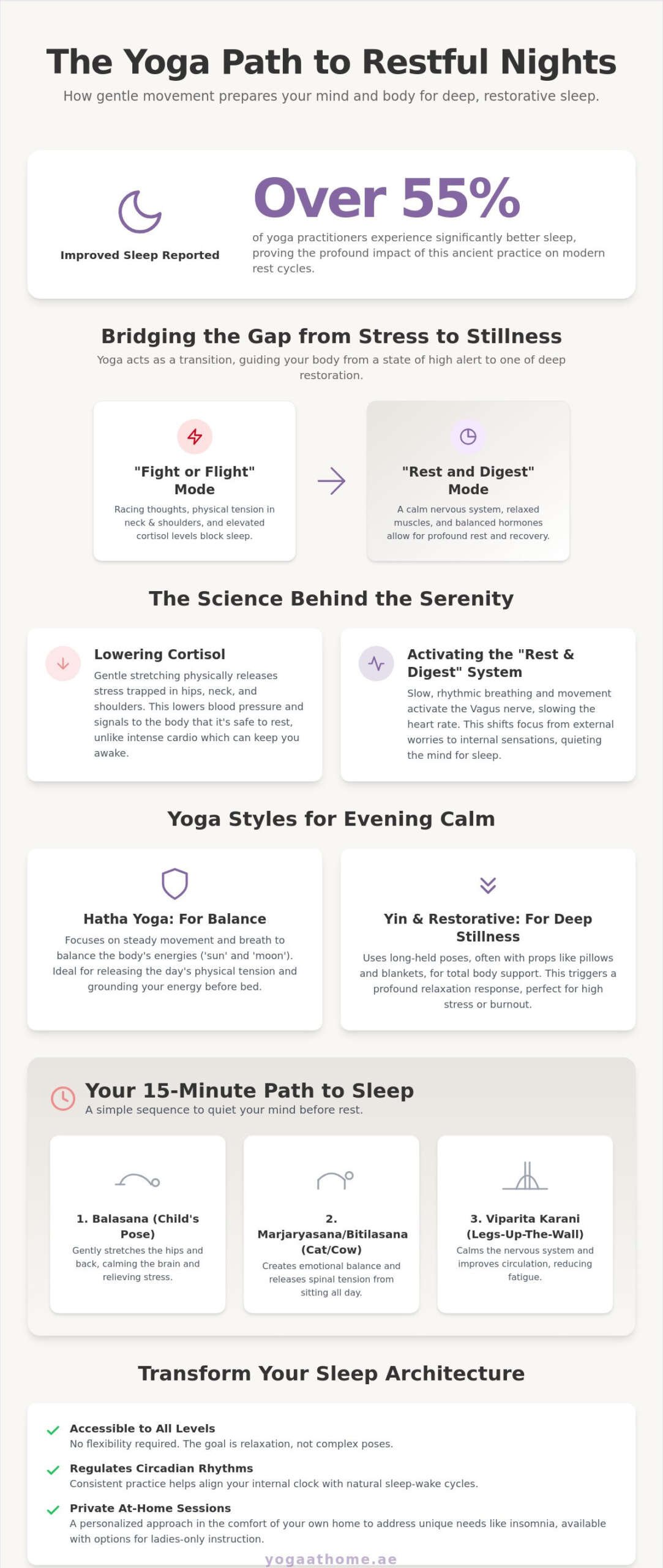
What if the secret to deep, restorative rest isn’t found in a bottle or a gadget, but in the quiet movements of your own body? You’re likely familiar with the exhausting cycle of feeling completely drained yet unable to switch off your racing thoughts once the lights go out. It’s a common struggle where physical tension in your neck and shoulders mirrors the mental clutter of a busy day. Practicing yoga to improve sleep quality offers a gentle, evidence-based pathway to quiet the mind and prepare the nervous system for recovery. Over 55% of people who practice yoga report better sleep, according to recent research, proving that this ancient wisdom has a profound impact on our modern nocturnal needs.
In this guide, you’ll discover how specialized techniques can help you establish a reliable bedtime routine that leads to improved mental clarity and mornings where you feel truly energized. We’ll explore the specific styles, such as Hatha Yoga, that lower the barriers to relaxation for practitioners of all levels. By moving beyond mere exercise, you can embrace a way of life that prioritizes internal balance and holistic transformation. Let’s look at how a personalized approach to movement can become your most trusted partner in achieving the deep, healing sleep you deserve.
Key Takeaways
- Understand how gentle movement bridges the gap between daily stress and the restorative parasympathetic state to lower cortisol levels.
- Discover why incorporating specific styles like Hatha yoga to improve sleep quality is essential for balancing your physical and mental state before bed.
- Learn how just 15 minutes of evening practice can transform your sleep architecture, regardless of your current level of flexibility.
- Master a calming sequence of restorative poses, including the grounding Balasana (Child’s Pose), designed to quiet your mind before rest.
- Explore the unique benefits of private at-home sessions and ladies-only instruction to address personal needs like insomnia or physical tension.
The Science of Yoga to Improve Sleep Quality
True health is a state of internal harmony that begins with the quality of our rest. For many, the transition from a frantic day to a peaceful night feels like an impossible leap. Using yoga to improve sleep quality acts as a bridge, guiding the body from the high-alert “fight or flight” mode into the restorative parasympathetic state. This biological shift isn’t just a feeling; it’s a measurable physiological process. By engaging the Vagus nerve, the body’s longest cranial nerve, yoga signals the brain to slow down, lower the heart rate, and begin the vital work of cellular repair. Through consistent mindfulness, yoga regulates the circadian rhythm by aligning our internal awareness with the natural cycles of day and night.
Lowering Cortisol Through Mindful Movement
Physical tension often traps stress in the body’s primary “fight or flight” centers, such as the hips, neck, and shoulders. When we carry this tension to bed, our cortisol levels remain elevated, acting as a chemical barrier to deep sleep. Gentle stretching and Hatha Yoga work to physically release these blockages, which helps to lower blood pressure and improve heart rate variability. Unlike high-intensity workouts that can spike adrenaline and keep you awake, yoga provides a low-impact way to exhaust physical restlessness without overstimulating the nervous system. This is why choosing yoga to improve sleep quality is more effective than late-night cardio; it prepares the body for stillness rather than action.
Activating the Parasympathetic Nervous System
The parasympathetic nervous system is often called the “Rest and Digest” mode. It’s the only state in which the body can truly recover from the day’s demands. Slow, rhythmic movements and deep breathing signal safety to the brain, allowing it to let go of external vigilance. This transition is essential for anyone struggling with insomnia or racing thoughts. As you move through a sequence, your focus shifts from external worries to internal sensations, creating a sanctuary of quiet within the mind. This meditative state is closely related to Yoga nidra, a practice often described as “yogic sleep” that helps practitioners reach a state of consciousness between waking and sleeping. By intentionally slowing down, you give your brain permission to switch off the day’s narrative and enter a cycle of profound, uninterrupted rest.
The Best Yoga Styles for Better Sleep
Choosing the right style is just as vital as the practice itself. If you’re physically restless, you need a different approach than if you’re mentally exhausted. According to Johns Hopkins research on yoga for sleep, styles that focus on relaxation and slow breathing are particularly effective for calming the nervous system. By selecting a practice that mirrors your current state, you can more effectively use yoga to improve sleep quality. It’s about meeting your body where it is and guiding it toward the stillness it craves.
Hatha Yoga for Evening Balance
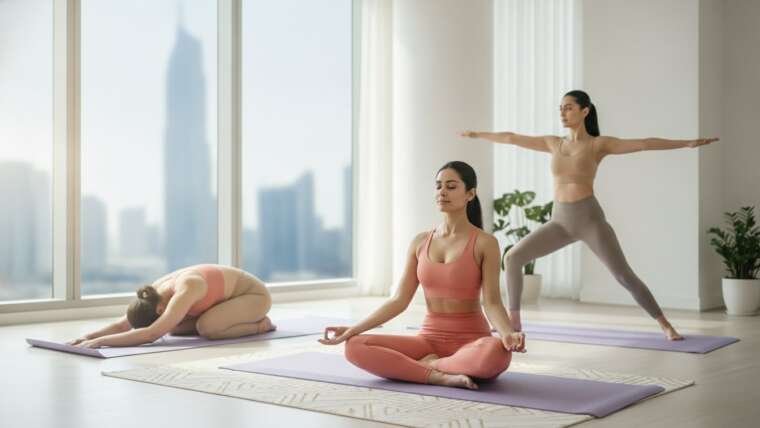
Hatha Yoga serves as the foundational practice for achieving physical and mental equilibrium. The name itself reflects the union of ‘Ha’ (sun) and ‘Tha’ (moon), representing the balance between active and receptive energies. In the evening, the goal is to quiet the ‘sun’ energy of the day and invite the cooling ‘moon’ energy. Utilizing specific hatha yoga dubai techniques allows practitioners to ground their energy through steady movement. This includes intentional Pranayama, such as Nadi Shodhana (alternate nostril breathing), which balances the hemispheres of the brain. Simple flows and standing poses held with a steady breath help release the day’s physical baggage. This ensures you don’t carry the weight of your desk or the stress of your commute into your bed.
Yin and Restorative Practices
While Hatha focuses on balance, Yin and Restorative yoga dive deeper into the body’s internal stillness. Yin yoga involves long-held poses that target the fascia and joints. This provides a deep tissue release that’s often missed in more active styles. Restorative yoga takes this a step further by using props like pillows, bolsters, and blankets to fully support the body. This total support triggers a profound relaxation response, making it the ultimate sleep aid for those dealing with high stress or burnout. These practices are especially beneficial for Yoga for Seniors or individuals with limited mobility, as they emphasize comfort and accessibility over physical exertion. The goal isn’t to stretch the muscles, but to allow the body to feel completely safe and supported.
Matching your practice to your energy level ensures that your time on the mat is truly restorative. If you’re ready to experience this transformation, our private yoga sessions bring these specialized techniques directly to the comfort and privacy of your home. By integrating these specific styles into your evening, you create a dedicated space for your body to transition into a night of deep, healing rest.
Overcoming Barriers to a Bedtime Yoga Practice
Wellness is a journey of self-compassion, not a series of rigid requirements. Many people believe they must be naturally limber or have hours of free time to see results, but these are simply misconceptions that keep us from the rest we deserve. Using yoga to improve sleep quality is about recovery, not performance. It’s a gentle tool designed to shed the day’s weight, making it a supportive partner in your nightly routine rather than another chore on your to-do list. When we shift our perspective from “doing” to “being,” the mat becomes a sanctuary instead of a hurdle.
Flexibility is Not a Prerequisite
Yoga is about meeting your body exactly where it is in this moment. If you feel your muscles are tight or your joints are stiff, that is often the clearest signal that your body needs movement the most. You don’t need to touch your toes to experience the benefits of a quiet mind. Every pose can be modified using household items like pillows or chairs, ensuring that the practice is inclusive for everyone, including those looking for Yoga for Seniors. As highlighted by Johns Hopkins Medicine on yoga for sleep, the focus remains on the breath and the internal state rather than the physical depth of the stretch. Stiff muscles are not a barrier; they are the very reason to begin the process of letting go.
Creating a Sacred Sleep Space at Home
Your environment plays a significant role in how quickly your brain can transition into a restorative state. By establishing a small corner of your home as a dedicated relaxation zone, you create a psychological anchor for rest. This doesn’t require a large studio space. A simple mat or a soft rug near your bed is enough to signal to your brain that the day’s work is over. When you practice in the same environment where you sleep, your mind begins to associate that space with tranquility and safety. To minimize distractions, try dimming the lights, using a calming scent like lavender, and keeping your phone in another room. These small adjustments help you reclaim your time and focus on the internal stillness required for deep recovery.
Even a brief, 15-minute session can significantly alter your sleep architecture. By lowering your heart rate and calming the nervous system before your head hits the pillow, you encourage a smoother transition through the vital stages of sleep. Home-based sessions are incredibly efficient because they eliminate the stress of travel, allowing you to move directly from your mat to your bed. This seamless flow preserves the “Rest and Digest” state you’ve worked to cultivate, ensuring that the benefits of yoga to improve sleep quality carry through your entire night. Consistency in this small window of time yields greater results than sporadic, longer sessions, making it a sustainable choice for even the busiest schedules.
A Gentle Evening Routine: Poses for Restorative Sleep
Rest is an active choice that begins long before your head hits the pillow. A well-structured evening sequence acts as a physical and mental decompression, slowly stripping away the layers of daily stress. Practicing yoga to improve sleep quality involves more than just stretching; it’s a deliberate descent into stillness. This journey begins with grounding movements and ends in total quiet, signaling to every cell in your body that it’s safe to let go. By following a rhythmic flow, you create a predictable ritual that your nervous system recognizes and welcomes.
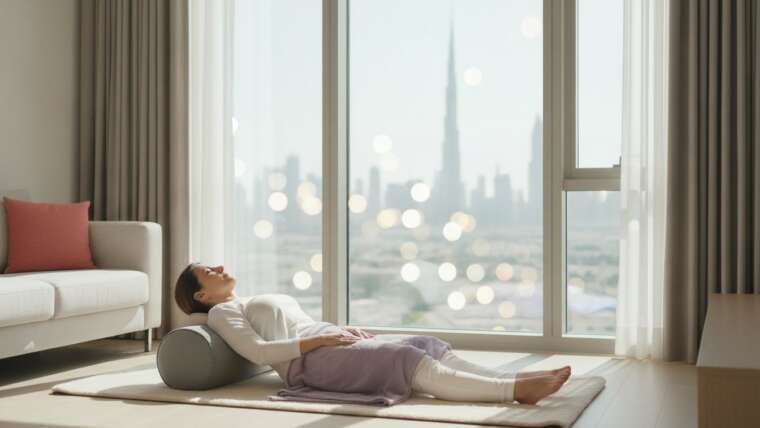
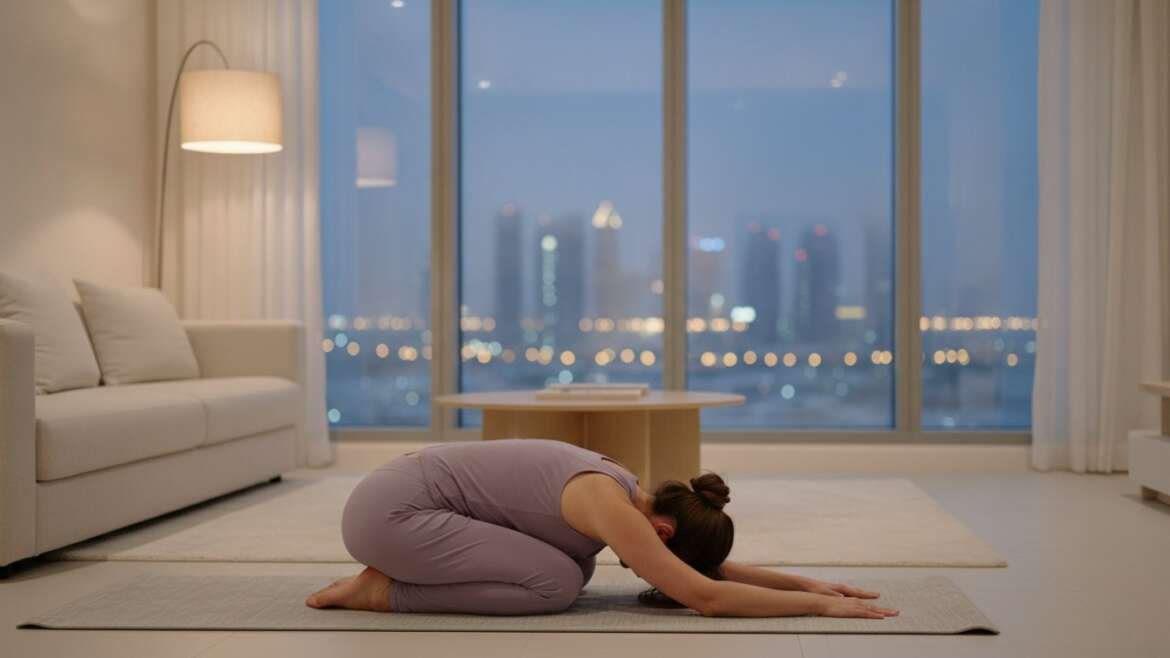
Start your routine with Child’s Pose (Balasana). This foundational posture provides immediate grounding by folding the body inward, which naturally quiets the mind and protects your energy from external distractions. From there, transition to Legs-Up-The-Wall (Viparita Karani). This passive inversion is a powerful tool for lymphatic drainage and reducing the physical heaviness often felt in the legs after a long day. It encourages blood flow back toward the heart, effectively lowering your heart rate. Finally, Savasana (Corpse Pose) acts as the essential final transition to sleep, allowing the benefits of your practice to settle deep within your consciousness.
Poses to Release Physical Tension
Physical discomfort is a primary barrier to deep rest, especially for those carrying the weight of a sedentary workday. Addressing the lower back is crucial, and you can utilize the best yoga poses for back pain to create space in the lumbar spine. For desk workers, neck and shoulder releases are vital to undo the “forward slump” that traps tension in the upper body. Incorporating gentle twists further decompresses the vertebrae while improving digestion, ensuring that physical restlessness doesn’t interrupt your sleep cycle. These movements shouldn’t feel like a workout; they should feel like a slow, intentional unraveling of the day’s knots.
The Power of Pranayama (Breathing)
The breath is the most direct link we have to the autonomic nervous system. By shifting from shallow chest breathing to deep, diaphragmatic patterns, you can manually override the “fight or flight” response. Techniques such as Box Breathing or the 4-7-8 method provide a structured rhythm that anchors the mind. When racing bedtime thoughts begin to spiral, returning to the count of the breath provides a steady point of focus. This breath control signals the brain to release melatonin and lower cortisol, creating the perfect chemical environment for recovery. If you’re ready to master these techniques in a personalized environment, you can book a private session to tailor these routines to your specific needs.
Why Private At-Home Yoga is the Ultimate Sleep Solution
True wellness is an intimate journey that flourishes most when the environment is tailored to your specific needs. While digital resources offer a starting point, they often lack the nuanced adjustment required to address complex sleep challenges. Engaging in private yoga to improve sleep quality allows for a practice that’s entirely focused on your biological and emotional state. Whether you’re navigating the restless energy of insomnia or the physical discomfort of Restless Leg Syndrome (RLS), a dedicated mentor provides the precise modifications needed for deep recovery. This personalized approach ensures that every movement serves the singular goal of preparing your body for the restorative rest it deserves.
Personalized Guidance for Maximum Results
A customized plan far exceeds the benefits of a generic video because it evolves alongside your progress. A professional instructor ensures that every pose is performed safely, which is particularly vital for those practicing Yoga for Seniors or Pre-natal Yoga. Rather than guessing if your alignment is correct, you receive real-time feedback that maximizes the relaxation response. This relationship with a mentor creates a sense of accountability and trust, transforming yoga from a solitary task into a supportive partnership. By focusing on your unique physical needs, you can more effectively use yoga to improve sleep quality without the risk of overexertion or injury.
For many women, the sanctuary of the home provides the ideal setting for this transformation. Our Ladies Yoga sessions offer the comfort and privacy of working with highly qualified female trainers in your own space. This level of exclusivity removes the self-consciousness often felt in public settings, allowing you to sink deeper into the meditative aspects of the practice. When you feel entirely safe and unseen by the outside world, your nervous system can finally transition from a state of vigilance to one of profound peace.
The Convenience of Doorstep Wellness in the UAE
The transition to sleep should be a gentle descent, not a hurdle to clear after a stressful commute. By choosing home-based instruction, you eliminate the friction of navigating traffic or rushing to a studio after a long workday. We provide experts who hold certifications from REPS UAE and Yoga Alliance, bringing professional-grade expertise directly to your doorstep. This convenience preserves the “Rest and Digest” state you cultivate during your session, as you can move straight from your final Savasana to your bed. Taking the first step toward a restorative lifestyle is a matter of reclaiming your time and space. If you’re ready to master your nocturnal recovery, you can book your private session today and experience the tranquility of professional guidance in the place you feel most at ease.
Embrace the Path to Restorative Rest
Rest is the silent foundation of a vibrant, balanced life. Throughout this guide, we’ve seen how the strategic use of yoga to improve sleep quality can shift your nervous system from a state of constant alert to one of profound recovery. By moving beyond generic routines and embracing styles like Hatha or Yin, you allow your body to shed the day’s physical and mental baggage. The transition to deep sleep becomes a natural, predictable ritual when you honor your body’s specific needs within the sanctuary of your own home.
Transformation begins when you prioritize your well-being with professional, personalized support. Book your private restorative yoga session with Yogaathome today to experience the difference that expert guidance makes. Our team consists of REPS UAE and Yoga Alliance certified instructors who bring bespoke wellness directly to your doorstep. For those seeking extra privacy, we provide ladies-only sessions led by professional female trainers. You don’t have to navigate your journey to better sleep alone. Take this step toward a more energized and clear-headed version of yourself; the deep, healing rest you’ve been searching for is well within your reach.
Frequently Asked Questions
How long before bed should I practice yoga for the best sleep results?
Aim to finish your practice approximately 30 to 60 minutes before you intend to sleep. This window allows your heart rate and body temperature to settle after movement, even when the poses are gentle. If you’re performing very still, restorative poses, you can practice right before getting into bed. The goal is to create a peaceful buffer between the day’s active demands and your nocturnal recovery.
Can I do yoga for sleep even if I have chronic back pain?
Yes, you can practice, and specialized Yoga for back pain is often highly beneficial for improving rest. Chronic discomfort frequently keeps the body in a state of high alert, which prevents you from reaching deeper sleep stages. A qualified instructor will guide you through specific modifications that decompress the spine without causing strain. This helps resolve the physical restlessness that often accompanies long-term back issues.
Is it better to do a long session once a week or 10 minutes every night?
Consistency is far more effective than intensity for this goal. Practicing for 10 to 15 minutes every night is superior to a single long session once a week. Short, daily sessions help train your nervous system to recognize the transition to rest. This regular rhythm builds a reliable “muscle memory” for relaxation, making it much easier to switch off racing thoughts over time.
Do I need special equipment to start a bedtime yoga routine?
You don’t need professional gear to begin your journey toward better rest. While a yoga mat is helpful for grip, you can easily use household items like pillows, blankets, or even a sturdy chair for support. Restorative practices focus entirely on your comfort, so a soft rug and a couple of bed pillows often suffice. The most important requirement is a quiet space where you feel safe.
Is yoga safe for seniors who have trouble sleeping?
Yoga is exceptionally safe and beneficial for older adults when approached with professional care. Our specialized Yoga for Seniors focuses on gentle, low-impact movements that improve circulation and joint mobility without any risk of overexertion. By addressing the physical stiffness and anxiety that often lead to insomnia in later life, seniors can achieve a much deeper and more reliable sleep cycle through regular practice.
Can breathing exercises alone improve my sleep quality without the poses?
Pranayama, or breathwork, is a powerful standalone tool for relaxation and mental quiet. Techniques like the 4-7-8 breath directly influence the Vagus nerve to signal the body to enter a “rest and digest” state. While physical poses help release deep-seated tension, breathing exercises are often the most efficient way to use yoga to improve sleep quality when you feel too exhausted for movement.
Why is a private instructor better than following a sleep yoga app?
A private instructor provides real-time form correction and a customized plan that a generic app simply cannot offer. Apps use one-size-fits-all sequences that might not address your specific physical needs or previous injuries. A certified mentor ensures your practice is safe and effective, building a personalized routine that evolves as your sleep patterns improve. This human connection adds a layer of accountability that digital tools lack.
What should I wear for a late-night home yoga session?
Wear loose, breathable clothing that allows for a full range of motion without any restriction. Natural fabrics like cotton are ideal because they help regulate your body temperature as you cool down. Since the ultimate goal is rest, you can even practice in your pajamas. Just avoid anything with tight waistbands or zippers that might dig into your skin during seated or reclining poses.