Did you know that regular meditation for sleep can improve the quality of your rest by as much as 50 percent? Even with this knowledge, many people still spend their nights tossing and turning, worried about the fog of chronic fatigue that awaits them tomorrow. It’s common to feel that traditional mindfulness is too difficult or that your mind is simply too loud to ever find true silence. You deserve a path to rest that feels natural and supportive rather than like another task on your to-do list.
We’re here to help you quiet that internal chatter and master the science of sleep meditation to transform your nightly routine into a source of holistic healing. This 2026 guide provides a clear roadmap to falling asleep within fifteen minutes and waking up with genuine energy. We will explore how to move beyond generic audio clips to embrace a practice that lowers daily stress and nurtures your mental clarity. It’s time to reclaim your nights and discover a level of restorative rest that leaves you feeling balanced and refreshed.
Key Takeaways
- Understand how transitioning from Beta to Alpha brainwaves activates your parasympathetic nervous system for effortless rest.
- Master specific techniques like Yoga Nidra and Body Scanning to release the physical tension that keeps your mind racing.
- Learn why a personalized approach to meditation for sleep is more effective than generic apps for those with chronic fatigue or anxiety.
- Create a restorative nightly ritual by pairing gentle physical release with a curated sleep environment.
- Discover how private, expert guidance in the comfort of your own home can turn wellness into a sustainable way of life.
The Science of Slumber: How Meditation Rewires Your Brain for Sleep
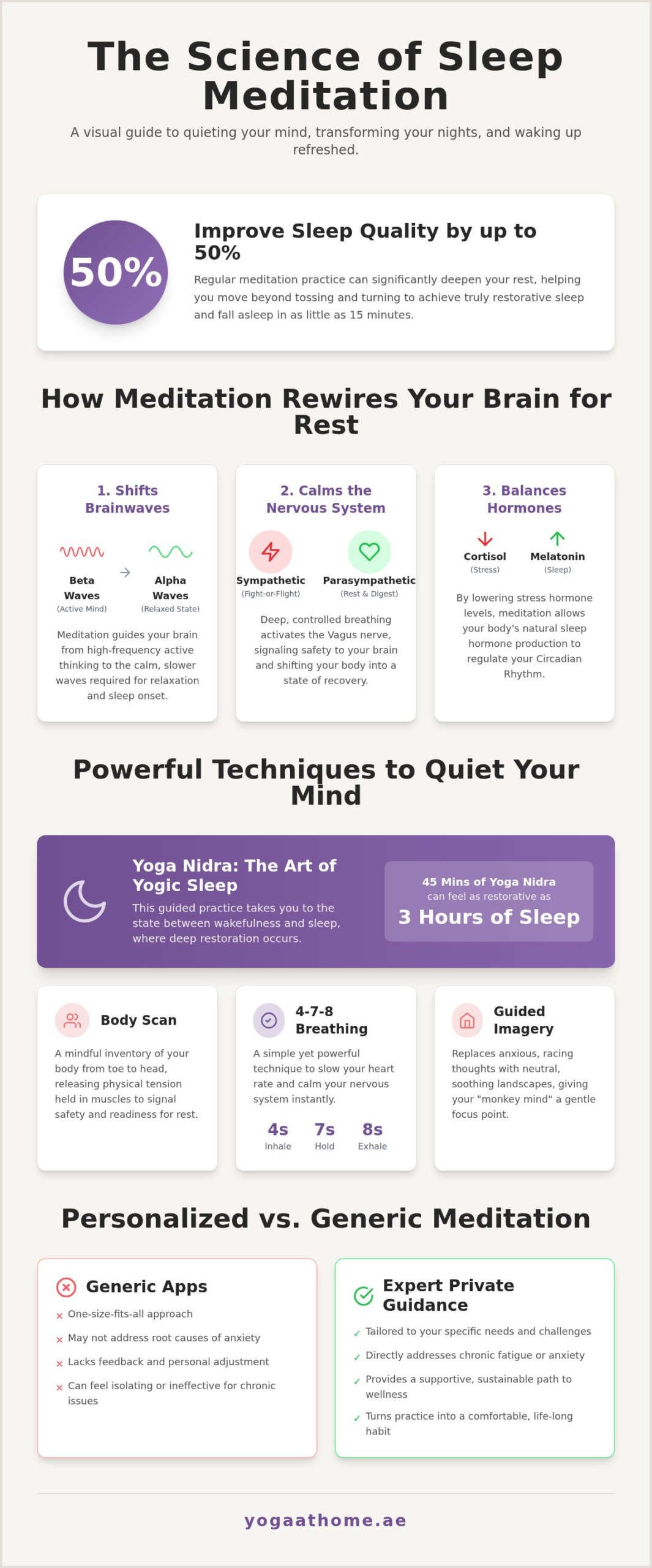
Deep, restorative rest is the foundation upon which a vibrant life is built. In our modern world, we often view sleep as a passive state, yet it is actually an active neurological transition that requires the right internal conditions. Effective meditation for sleep serves as the essential bridge for this journey, facilitating a shift from high-frequency Beta brainwaves, which characterize our active daily thinking, to the slower, calmer Alpha waves that signal the beginning of relaxation. The practice of meditation isn’t just about seeking silence; it’s about shifting the very frequency of your mind to prepare for the deep healing work of the night.
This mental shift triggers a profound chemical reorganization within the body. While the stress of the day often leaves us with elevated cortisol, regular meditation helps regulate this hormone, allowing your natural melatonin production to take center stage. Your Circadian Rhythm is an internal biological clock that regulates the sleep-wake cycle based on environmental cues and remains highly sensitive to the mental activity you engage in during the evening hours. By quieting the mind, you align your internal biology with the natural rhythm of the Earth, making meditation for sleep a powerful tool for long-term wellness.
From Fight-or-Flight to Rest-and-Digest
Many of us spend our days in a state of high alert, where the sympathetic nervous system remains locked in a “fight-or-flight” response. This chronic tension makes it nearly impossible to drift off peacefully. The Vagus nerve acts as the physical bridge to relaxation, connecting the brain to the heart and lungs. When you engage in controlled, deep breathing during meditation, you send an immediate signal of safety to your brain. This activates the parasympathetic nervous system, shifting your body into a “rest and digest” state where true recovery can finally begin.
The Problem with the Modern “Monkey Mind”
As soon as the lights go out, the brain often begins to ruminate on past conversations or future anxieties. This “monkey mind” is a common barrier to rest. Psychology identifies this as the “ironic process theory,” where the more effort you put into trying to fall asleep, the more elusive sleep becomes. Rather than fighting these thoughts, meditation teaches you the art of gentle observation. You learn to acknowledge the racing thoughts without becoming entangled in them. This shift from suppression to awareness removes the pressure to perform, allowing sleep to arrive as a natural consequence of a quieted spirit.
Effective Meditation Techniques to Quiet Nighttime Anxiety
True stillness is not found by force, but through the gentle application of time-honored methods. When you struggle with nighttime anxiety, your body needs a specific set of instructions to let go. Using meditation for sleep isn’t just a mental exercise; it’s a physical surrender. Techniques like the 4-7-8 breathing method provide an immediate physiological reset by slowing the heart rate and stabilizing the nervous system. Similarly, guided imagery replaces the vivid, stressful scripts of your daily life with neutral, soothing landscapes that occupy the mind without overstimulating it. Learning how to do sleep meditation correctly allows you to step out of the cycle of worry and into a state of readiness for rest.
The Body Scan technique is another essential tool for those who feel their mind racing as soon as their head hits the pillow. It involves a slow, mindful inventory of the physical self, starting at the toes and moving to the crown of the head. This practice helps you identify where you’re holding onto the consequences of daily stress, such as a tight chest or a clenched brow. By bringing awareness to these areas, you allow the muscles to soften, which tells the brain that the environment is safe for rest. This somatic awareness is a foundational step in mastering meditation for sleep.
Yoga Nidra: The Art of Conscious Relaxation
Often called the gold standard of relaxation, Yoga Nidra translates to “Yogic Sleep.” This practice guides you into the space between wakefulness and slumber, a state where the body rests deeply while the mind remains slightly aware. Practitioners often find that 45 minutes of this systematic relaxation can feel as restorative as three hours of ordinary sleep because it accesses deeper brainwave states. The process begins with a Sankalpa, or a heartfelt intention, followed by a journey through the senses. This method is ideal for those who feel they “cannot meditate” because it provides a constant point of focus, making it a cornerstone of our private hatha yoga sessions.
Somatic Release and Breathwork
Physical tension often hides in the jaw, shoulders, and hips, acting as a silent anchor for anxiety. Progressive Muscle Relaxation (PMR) involves tensing and then releasing these specific muscle groups to physically drop the day’s burden. When you pair this with Box Breathing, a technique used to stabilize the heart rate through equal counts of inhalation, holding, and exhalation, the body receives a clear signal that the day is over. Focusing on the breath provides a reliable anchor for a wandering mind. By returning to the sensation of air moving through the body, you create a rhythmic flow that naturally leads to the quietude required for a deep, restorative night.
Beyond the App: Why Personalized Meditation Outperforms Generic Tracks
True wellness is an individualized journey that cannot be fully captured by a standard algorithm. While digital tools have made mindfulness accessible, many find that a recording simply doesn’t solve their sleeplessness. It’s frustrating to invest time in an app only to feel more awake than when you started. Generic background music or certain vocal frequencies can be overstimulating for some, creating a barrier to the very rest you seek. Effective meditation for sleep requires a cadence that matches your unique nervous system. A professional mentor provides real-time adjustments, softening the tone or slowing the pace based on your immediate physiological feedback and mental state.
The Limitations of Digital Sleep Aids
Modern technology is often the very thing keeping us awake. Setting up a guided bedtime meditation on a smartphone exposes you to blue light, which inhibits melatonin production. With 32.7 percent of practitioners citing distractions as their primary obstacle in 2026, the buzzing of a phone notification can shatter the very peace you’re trying to build. There’s also the issue of accountability. It’s incredibly easy to switch off a recording, but much harder to ignore the presence of a dedicated instructor. Many users find that “sleepcasts” become a crutch. They listen every night but never actually learn the skill of self-soothing, which keeps them dependent on a device rather than empowering them to quiet their own mind.
The Power of Bespoke Wellness
Bespoke instruction allows you to address the specific stressors of your life with precision. Whether it’s the pressure of a corporate role or the physical demands of parenthood, a personalized session adapts to your needs. This individualized approach is a core part of our yoga classes in UAE, where we combine movement with mental stillness to prepare the body for rest. Over time, you build a robust skill set that allows you to access tranquility without any external aid. By linking meditation for sleep to broader lifestyle factors, you create a sustainable foundation for health. This ensures that wellness isn’t just a nightly task but a way of living that feels natural, grounded, and deeply restorative.
The Ideal Nightly Ritual: Combining Movement and Stillness
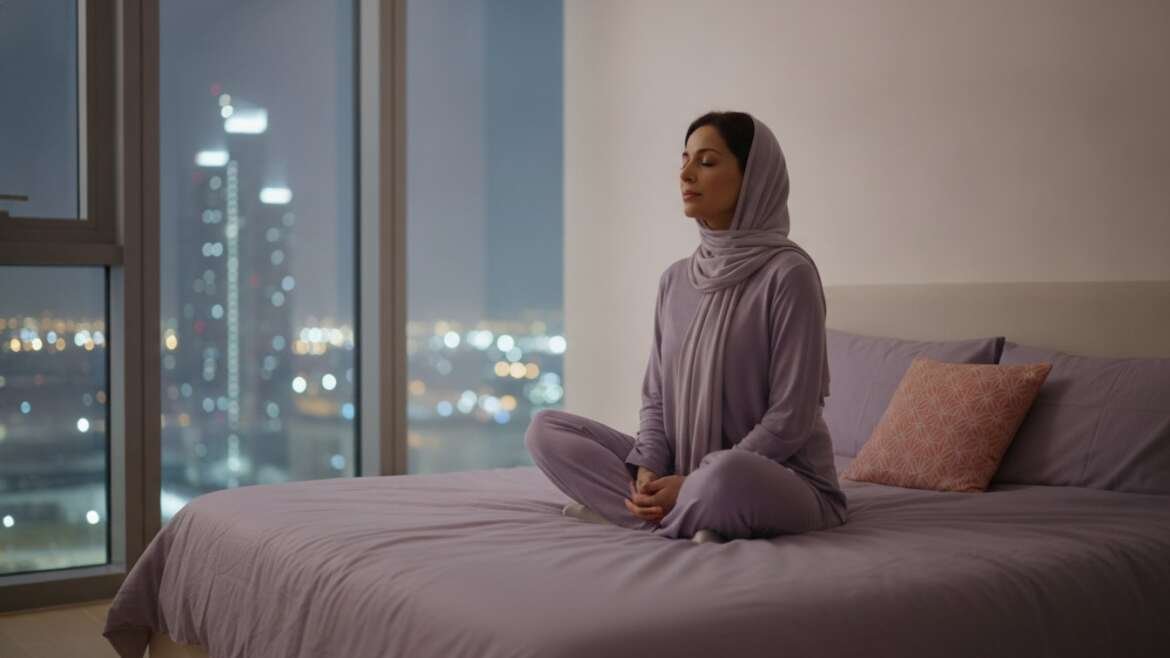
A successful night of rest doesn’t happen by accident; it’s the result of a deliberate transition. Many people try to jump straight from a high-stress workday into meditation for sleep, only to find their mind still buzzing with unresolved tasks. A cohesive ritual bridges this gap by addressing the body first, then the environment, and finally the mind. This holistic approach ensures that by the time you close your eyes, your entire being has already accepted that it’s safe to let go. By treating the hour before bed as sacred time, you transform sleep from a chore into a source of deep, internal healing.
Restorative Yoga Poses for Bedtime
Physical preparation is the often-overlooked first step in any effective nightly routine. Moving through gentle postures helps release the “somatic armor” we build up during the day. We recommend starting with Viparita Karani, or Legs-up-the-wall pose. This simple inversion is excellent for heart rate reduction and encourages lymphatic drainage, shifting the body out of its upright, active mode. Following this, settle into Balasana, known as Child’s Pose. This posture provides a profound sense of security, turning the senses inward and stretching the lower back. For those whose rest is disrupted by physical discomfort, incorporating the best yoga poses for back pain can prevent aches from interrupting your cycle, allowing for a smoother transition into stillness.
Creating a Sacred Sleep Sanctuary
Your surroundings are as important as your state of mind. Creating a “sacred sleep sanctuary” tells your brain that this specific space is for recovery only. This starts with the “digital sunset” rule: all screens should be powered down at least 60 minutes before your ritual begins to protect your melatonin levels. Optimization of the environment also includes:
- Lighting: Use warm, low-level lamps rather than harsh overhead lights.
- Temperature: Keep the room slightly cool, which naturally aids the body’s sleep onset.
- Scent: Use aromatherapy like lavender or sandalwood to anchor the relaxation response through the olfactory system.
The psychological impact of a dedicated meditation corner or a ritualized bed space cannot be overstated. It acts as a mental trigger, signaling that the day’s demands are officially over.
Once the body and space are prepared, use gentle breathwork to bridge the gap between movement and your final meditation for sleep. This leads naturally into the guided practice itself, where you can focus on the techniques discussed earlier, like the body scan or Yoga Nidra. The final step is the silent transition. Don’t rush to check your phone or plan for tomorrow. Simply drift from the meditative state into slumber, allowing the silence to carry you into the night. If you’re ready to build a personalized ritual that works for your lifestyle, our experts can help you schedule a private session at home today.
Restore Your Inner Balance with Professional Guidance
True health begins with the recognition that your well-being is worth a dedicated investment. While self-guided practice is a noble start, the nuanced path of meditation for sleep often requires the steady hand of a knowledgeable mentor. Professional guidance provides the clarity and structure needed to turn a struggling nightly routine into a source of profound restoration. By choosing to work with a dedicated instructor, you move beyond the frustration of trial and error. You begin a journey of genuine, holistic transformation that respects your individual needs. This isn’t just about closing your eyes; it’s about learning to navigate your internal landscape with confidence and grace. When you have a professional by your side, the barrier to entry dissolves, leaving room for deep, restorative rest.
Private Instruction for a Personalized Journey
A certified instructor brings a level of expertise that goes beyond what any digital interface can offer. They possess the keen ability to identify physical blocks or subtle tensions that you might not even notice yourself. For ladies seeking a truly comfortable environment, the option of working with a female trainer ensures a space of total relaxation and safety. This level of emotional and physical comfort is essential for the nervous system to fully downshift. Similarly, our specialized programs for seniors focus on adapting traditional techniques to accommodate mobility or specific health concerns. This ensures that the practice of meditation for sleep remains accessible, safe, and effective for every stage of life. Personalized instruction means your practice grows with you, adapting to your progress and your challenges.
Holistic Transformation at Your Doorstep
Yogaathome is committed to providing professional, safe, and serene guidance in the environment where you feel most secure. We believe the home is the ultimate sanctuary for healing; it removes the external stressors of travel, parking, and public settings. Our instructors hold industry-standard certifications from REPS UAE and the Yoga Alliance, ensuring your practice is grounded in professional expertise and decades of collective experience. This level of reliability allows you to focus entirely on your restorative process without distraction. Viewing sleep as a pillar of health worth professional investment is the first step toward reclaiming your life. By inviting a mentor into your space, you create a dedicated time for your own growth and recovery. Prioritize your rest today to rediscover the balance and vitality you deserve.
Embrace the Path to Sustainable Vitality
The journey toward restorative rest is a fundamental act of self-care that ripples through every aspect of your daily life. By understanding the neurological shift from active thinking to deep stillness, you empower yourself to bypass the limitations of generic digital tools. A structured nightly ritual that pairs gentle movement with intentional meditation for sleep creates the sanctuary your body needs to heal and recharge. True wellness is not a solitary struggle; it’s a collaborative process built on professional expertise and personal comfort.
At Yogaathome, our REPS UAE and Yoga Alliance certified instructors specialize in delivering this holistic transformation directly to your doorstep. We provide the serene, private environment necessary for total relaxation, offering bespoke ladies-only sessions and specialized programs for seniors. It’s time to move beyond the fog of daytime fatigue and reclaim the clarity that comes with genuine, high-quality rest. Book your private in-home meditation session today to begin your journey toward internal balance. You deserve a life defined by tranquility, grounded energy, and deep peace.
Frequently Asked Questions
Is it okay to fall asleep during meditation?
Falling asleep during your practice is perfectly acceptable and often encouraged when your primary goal is rest. While traditional mindfulness focuses on maintaining alertness, meditation for sleep is specifically designed to facilitate the transition into slumber. If you drift off, it simply means your body has successfully shifted into a state of deep relaxation and safety, allowing the parasympathetic nervous system to take over.
How long should I meditate before bed to see results?
A session of 10 to 20 minutes is the most common length for effective results. Data from 2026 suggests that daily consistency is far more important than the duration of a single session. Even a short, ten-minute practice can significantly lower cortisol levels and prepare your mind for a restorative night. This rhythmic habit helps your brain recognize the signal that it’s time to power down.
What is the best position for sleep meditation?
Lying on your back in Savasana, or Corpse Pose, is generally the most effective position for sleep-focused practices. This posture allows for symmetrical relaxation and open, unobstructed breathing. You can use a pillow under your knees to support your lower back or a small cushion for your head to ensure you aren’t holding any physical tension that might distract you from the practice.
Can meditation replace actual sleep if I am short on time?
Meditation cannot replace the biological necessity of sleep, but it can improve the quality of the rest you do manage to get. While deep states like Yoga Nidra can feel as restorative as several hours of slumber, your brain still requires the full cycles of REM and deep sleep for cognitive health and physical repair. It’s a tool for enhancement, not a total substitute for sleep cycles.
Do I need special equipment to start meditating for sleep?
You don’t need any specialized equipment to begin your journey toward better rest. A quiet, comfortable space and a genuine commitment to the practice are the only essentials. Some practitioners find that a simple eye mask or a bolster for leg support enhances their comfort, but these are optional additions. The most important “equipment” is your own breath and a willingness to be still.
What should I do if my mind keeps wandering during the practice?
Gently acknowledge the wandering thought and return your focus to your breath without any self-judgment. It’s natural for the mind to drift; the practice isn’t about stopping thoughts but about changing your relationship with them. Each time you return to your anchor, you’re strengthening your ability to find stillness. This process of returning is actually where the mental rewiring occurs.
Is sleep meditation safe for everyone, including seniors and pregnant women?
Yes, meditation for sleep is a gentle, non-invasive practice that is safe for almost everyone. We provide specialized programs for seniors and ladies, including pre-natal yoga and post-natal yoga, to ensure every session is tailored to specific physical needs. These practices focus on comfort and safety while providing the mental clarity needed for rest, regardless of your current life stage.
Can I meditate for sleep if I have chronic back pain?
Meditation is highly beneficial for those with chronic back pain as it helps lower the perception of pain through deep relaxation. Pairing your meditation with targeted yoga for back pain can release the physical tension that often makes sleep elusive. By calming the nervous system, you reduce the “pain-stress” cycle that keeps you awake, making it easier to drift into a restorative state.