Trikonasana is not about touching the floor; it’s a foundational geometric alignment that unlocks spinal health and mental equilibrium. Health is wealth, peace of mind is happiness, Yoga shows the way. If you’ve ever felt a sharp pinch in your hip or felt frustrated by stiff hamstrings while reaching downward, you’re not alone. Many practitioners fear that improper alignment might lead to injury rather than relief. Since 61% of people begin their practice to improve flexibility, it’s vital to approach trikonasana with both wisdom and precision. You deserve a practice that nurtures your body instead of causing more stress.
This guide promises to help you master this essential pose safely at home, allowing you to strengthen your core and find a deep sense of inner tranquility. With 67% of practitioners now choosing to roll out their mats in their own living rooms, having a clear, professional roadmap is essential for your healing journey. We’ll explore the exact physical cues that reduce back pain and provide the mental clarity you seek. We’re going to break down the common confusion caused by conflicting online advice to ensure your practice remains a source of lifelong vitality and balance.
Key Takeaways
- Learn how the geometric foundation of the Triangle Pose creates stability and expansion through its ancient Sanskrit principles.
- Master the “Hip Hinge” secret to protect your spine and ensure correct alignment every time you practice trikonasana.
- Discover the holistic benefits of this asana, including spinal decompression and targeted strengthening for the lower body.
- Explore practical modifications using props to ensure that your practice remains safe, nurturing, and accessible for your unique body.
- Understand the advantages of tailored, at-home instruction for identifying subtle alignment errors that group classes often miss.
What is Trikonasana? Understanding the Triangle Pose
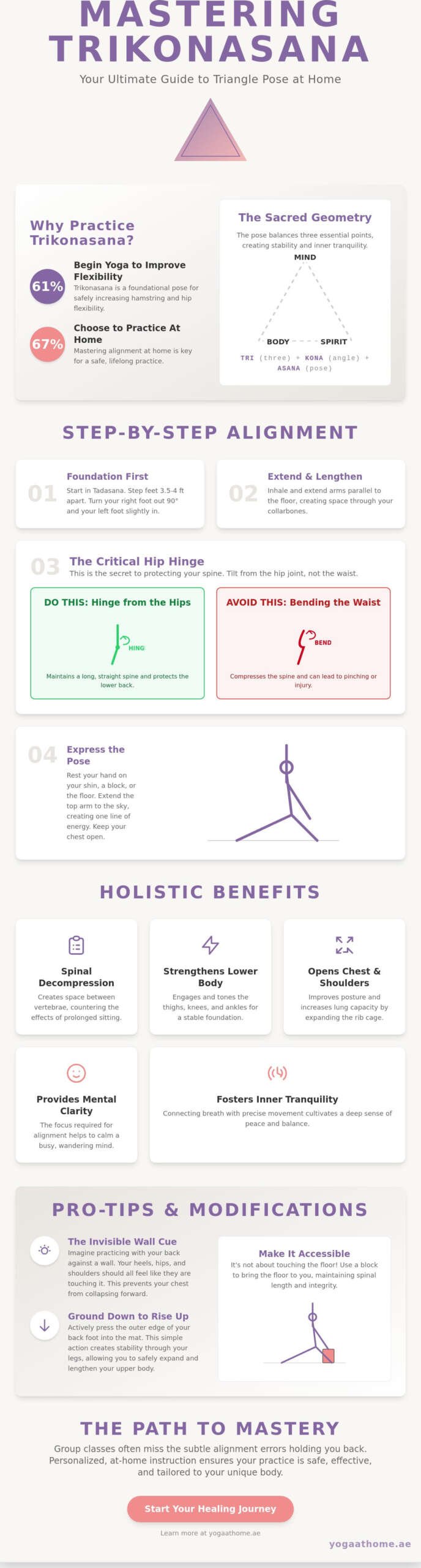
Health is wealth, and the physical body is the vessel through which we experience this abundance. Within the vast library of yogic wisdom, Trikonasana stands as a foundational standing asana that creates a unique harmony between stability and expansion. The name originates from the ancient Sanskrit words ‘Tri’, meaning three, ‘Kona’, meaning angle, and ‘Asana’, meaning posture. While a beginner might see it as a simple lateral stretch, a dedicated practitioner recognizes it as a complex study in physical and energetic alignment.
The philosophy of the triangle is deeply rooted in the balance of three essential points: the body, the mind, and the spirit. When you step into this pose, you aren’t just stretching your hamstrings. You’re aligning these three aspects of your being to find a state of inner tranquility. This asana is a staple in both Sivananda and Hatha Yoga traditions because it builds a strong foundation for more advanced practices. It’s a reliable professional standard for assessing a student’s range of motion and core strength, making it a perfect starting point for any healing journey.
The Geometry of the Body
Your body is a masterpiece of structural integrity, and trikonasana highlights this through a series of intersecting angles. As you reach toward the sky and ground into the earth, your legs and the floor form a large, stable triangle, while your torso and arms create smaller, supporting geometric shapes. It’s essential to find ‘Utthita’, or extended length, in the side of the torso to avoid collapsing into the lower back. Trikonasana serves as a vital bridge between grounding your energy into the earth and expanding your awareness toward the infinite.
Triangle Pose in Modern Wellness
Modern life often traps us in sedentary patterns, leading to compressed spines and tight hips. By 2026, the global yoga market is projected to reach $68.15 billion, reflecting a massive shift toward holistic health as an antidote to our digital lifestyles. This pose is the perfect remedy for the physical toll of office work because it decompressess the vertebrae and opens the chest. In a personalized private yoga session, a certified instructor can tailor the alignment of this pose to your specific needs, ensuring you receive the maximum benefit without the risk of injury. This bespoke approach allows the ancient wisdom of the triangle to meet your modern wellness goals with precision and care.
How to Practice Trikonasana: A Step-by-Step Alignment Guide
A stable body is the foundation for a peaceful mind. To master trikonasana, we must begin with the earth beneath our feet. True mastery isn’t found in how low you can reach, but in the integrity of your alignment. Proper form ensures that energy flows freely through your limbs, turning a simple stretch into a profound healing experience. A detailed Musculoskeletal analysis of Trikonasana reveals that this pose is a sophisticated interaction of bone and muscle that requires mindful participation from every part of your body.
Step-by-Step Execution
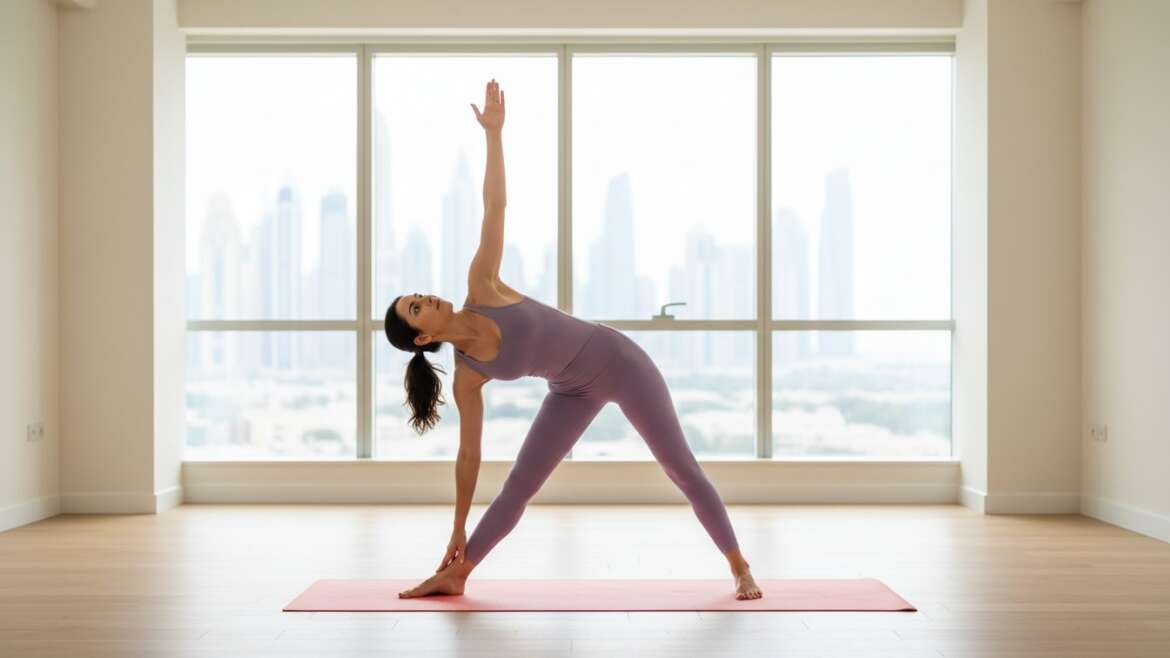
Begin by standing in Tadasana, finding your center and your breath. Step your feet apart to a wide, stable stance, roughly three and a half to four feet. Turn your right foot out 90 degrees and pivot your left foot slightly inward. As you inhale, extend your arms parallel to the floor with your palms facing down. The secret to a safe trikonasana is the hip hinge; you must reach forward with your torso and tilt from the hip joint rather than bending at the waist. This distinction protects your lower back and maintains the length of your spine. Rest your right hand on your shin, a block, or the floor, while reaching your left arm toward the sky to create a single, radiant line of energy.
Internal Alignment Cues for Home Practice
Practicing at home without a mirror requires you to develop a keen sense of internal awareness. To ensure your body is in the correct plane, imagine you’re performing the pose against a flat, invisible wall. Your heels, hips, and shoulders should all feel as though they are touching this surface. If you feel your chest collapsing toward the floor, you’ve likely reached too far. Back off slightly until your heart feels open and your breath flows easily. Press the outer edge of the back heel firmly into the mat. This simple action provides the grounding necessary to expand your upper body safely. Keep your gaze soft, looking up at the thumb if your neck feels comfortable, or straight ahead to maintain tranquility.
To exit the pose, engage your core muscles and inhale as you press through your feet to rise. Never rush this transition; your safety depends on the strength of your center. If you find yourself struggling with these subtle cues, a private home instructor can provide the personalized guidance needed to perfect your form. They can spot the minor errors that a mirror might hide, ensuring your practice remains a source of vitality rather than strain.
The Holistic Benefits: Why Your Body Needs Trikonasana
Health is wealth, and the vitality of our physical form is the foundation of a happy life. The practice of trikonasana offers much more than a simple stretch; it’s a holistic tool for total rejuvenation. By engaging the entire body from the soles of the feet to the crown of the head, this asana builds a bridge between physical strength and mental stillness. For those seeking a deeper dive into form, this Triangle Pose step-by-step guide provides excellent visual cues to complement your home practice.
One of the most profound physical advantages is the targeted strengthening of the lower body. As you ground through your feet, you develop resilience in the thighs, knees, and ankles. This stability is essential for maintaining mobility as we age. Beyond the legs, the lateral extension of the torso provides significant spinal decompression. This makes it a vital component of yoga for back pain, as it creates space between the vertebrae and relieves the pressure that accumulates during long hours of sitting. The unique lateral stretch also massages the abdominal organs, stimulating digestion and supporting the body’s natural detoxification processes.
Physical Transformation and Flexibility
In many modern professional environments, we spend our days hunched over desks and digital devices. This sedentary lifestyle leads to chronic tightness in the hamstrings and groins, which eventually pulls the pelvis out of alignment. Trikonasana acts as a corrective force, opening these tight areas to restore your natural posture. By lengthening the side body and opening the hips, you can also find relief from the sharp discomfort of sciatica. This asana gently stretches the piriformis muscle and creates the necessary space in the hip joint to reduce nerve irritation, helping you move with a renewed sense of freedom.
Mental and Emotional Rejuvenation
The benefits of yoga are never limited to the physical layer. When you open your chest in the triangle pose, you’re physically countering the “closed” posture associated with stress and anxiety. This expansion signals the nervous system to move into a state of calm. By fixing your gaze, or Drishti, on your upward-reaching thumb, you build a powerful sense of concentration and mindfulness. This steady focus quiets the “monkey mind” and allows you to find inner tranquility. Through rhythmic breathing during the hold, you achieve a deep peace of mind that lingers long after you’ve stepped off your mat.
Trikonasana Modifications: Yoga for Every Body
Yoga is Possible for Anyone. This inclusive philosophy is at the heart of everything we do, ensuring that the healing benefits of trikonasana are accessible to every practitioner, regardless of their current level of flexibility or life stage. You don’t need to reach the floor to experience the profound sense of expansion and vitality this pose offers. Modifications aren’t just for beginners; they’re essential tools for honoring your body’s unique needs on any given day. Using props like blocks or chairs allows you to maintain the geometric integrity of the pose without straining your muscles or joints.
Props act as a bridge between your current ability and the full expression of the asana. For instance, placing a yoga block under your bottom hand brings the floor to you, allowing you to keep your torso long and your chest open. This prevents the common mistake of collapsing the ribcage just to touch the ground. If a block feels too low, a sturdy chair can provide even more height and stability. These tools ensure that your practice remains a nurturing journey toward tranquility rather than a struggle for depth.
Modified Triangle for Seniors and Beginners
For seniors and those with sensitive joints, stability is the primary concern. Practicing against a wall is a highly effective way to find your alignment while feeling completely supported. By pressing your heels, hips, and shoulders against the flat surface, you gain a reliable sense of where your body is in space. This “imaginary wall” technique, now made physical, helps correct postural imbalances without the fear of falling. Using a chair for the bottom hand also reduces the depth of the lateral bend, allowing you to focus on rhythmic breathing and vitality. At this stage of life, the goal is to maintain mobility and ease, not to push past your natural boundaries.
Safe Prenatal and Post-natal Variations
During pregnancy, your body undergoes significant changes that affect your center of gravity and joint stability. To maintain balance and create space for the growing belly, we recommend widening your stance significantly. This adjustment provides a more stable base and prevents compression in the abdominal area. Keeping your top hand on your hip instead of reaching for the sky helps avoid overstraining the core muscles and maintains a sense of groundedness. It’s essential to seek professional guidance for safe prenatal yoga to ensure every movement supports both mother and baby. After birth, these same modifications can help you gently rebuild strength and find mental clarity during the post-natal period.
If you’re looking for a practice that respects your body’s unique journey, our personalized home yoga sessions offer the expert guidance you need to modify every pose safely. Our certified instructors will help you find the perfect version of each asana for your specific needs.
The Path to Mastery: Why Private Home Instruction Wins
Health is wealth, peace of mind is happiness, Yoga shows the way. While there are over 300 million yoga practitioners worldwide, the journey to mastering a complex posture like trikonasana is often lost in crowded public settings. In a large group, an instructor cannot possibly monitor every student’s alignment. They might miss the subtle lift of a back heel or the slight rounding of a lower spine. These minor errors can turn a healing asana into a source of physical strain. True mastery requires a more intimate, personalized approach that respects your body’s unique structural needs.
The shift toward bespoke wellness is accelerating, with the U.S. yoga industry projected to reach $18.90 billion by 2026. This growth reflects a growing desire for quality over quantity. Currently, 67% of yoga practitioners engage in home practice, yet many struggle with the confusion of conflicting online instructions. Our doorstep delivery service bridges this gap by bringing a certified “Wise Mentor” directly to you. This one-on-one attention ensures that your practice is both safe and effective, allowing you to focus on your healing journey without the distractions or “hustle” of a traditional gym.
Individualized Guidance for Safe Progress
One-on-one sessions are significantly superior for preventing long-term injury. When you work with a dedicated instructor, they can spot the specific postural imbalances that a mirror might hide. If you’re practicing yoga for back pain relief, precision is your best friend. A certified professional can tailor the sequence to your health goals, ensuring you apply the correct internal cues we’ve explored. This professional support is punctual and reliable, providing a structured yet fluid experience that adapts to your energy levels each day. It’s not just about the pose; it’s about building a sustainable, life-long approach to well-being.
Creating Your Sanctuary at Home
Your living space is more than just a house; it’s a potential center for holistic wellness. By choosing home-based instruction, you transform your environment into a nurturing sanctuary. This is particularly beneficial for our ladies’ yoga sessions, where a comfortable and private atmosphere allows for a deeper emotional and spiritual release. You don’t have to navigate traffic or worry about travel fees, which can often add an extra $10 or more to the cost of a session. Instead, you can step right from your daily life into a state of tranquility. Yoga is Possible for Anyone, and your home is the perfect place to start.
Ready to begin your journey? Book your private yoga session today and discover the difference that personalized attention makes for your vitality.
Embrace Your Path to Holistic Well-being
Health is wealth, peace of mind is happiness, Yoga shows the way. You’ve discovered that true mastery of trikonasana lies in the balance between structural integrity and mental stillness. By focusing on mindful alignment and utilizing the modifications that honor your body’s unique needs, you’ve taken a significant step toward a pain-free and vibrant life. Yoga is Possible for Anyone, and your dedication to this practice is the foundation of your healing journey.
Our mission is to support your transformation with reliable professionalism and ancient wisdom. With over 20 years of experience, our instructors are certified by REPS UAE and the Yoga Alliance to ensure your safety and progress. We offer specialized sessions for seniors, expectant mothers, and private ladies-only classes with female trainers to provide a nurturing environment right in your living room. You don’t have to navigate the confusion of conflicting advice when you have a wise mentor by your side.
Experience the benefits of personalized yoga at home with Yogaathome. Your sanctuary for inner tranquility is just a doorstep away. Step onto your mat with confidence, knowing that each breath brings you closer to a life of rejuvenated vitality and lasting peace.
Frequently Asked Questions
Is Trikonasana good for back pain?
Yes, this pose is excellent for relieving back pain because it decompresses the spine and stretches the lower back muscles. By creating lateral extension, you release the tension that often accumulates from sitting for long periods. It’s vital to maintain a long torso rather than rounding your back to reach the floor. This therapeutic approach ensures the spine remains supported while you build the strength needed for long term relief.
Can I practice Triangle Pose if I have high blood pressure?
You can practice this pose with modifications, specifically by keeping your gaze directed toward the floor rather than the upward hand. Looking down helps maintain your balance and prevents sudden shifts in blood pressure that might cause discomfort. It’s also essential to keep your breath steady and rhythmic. Avoiding any breath retention ensures that your heart rate remains stable throughout the movement, making the practice safe and serene.
What should I do if I can’t reach the floor in Trikonasana?
Use a yoga block or a sturdy chair to bring the floor closer to your hand. Reaching for the floor at the expense of your alignment is a common mistake that can lead to unnecessary strain. Rest your hand on your shin or a prop to maintain the extended length in your side body. This ensures you receive the full benefits of trikonasana without compromising your form or risking a lower back injury.
How long should I hold the Triangle Pose?
Hold the pose for 30 to 60 seconds on each side, which is roughly five to ten deep breaths. Quality is always more important than duration in any asana. If you feel your breath becoming shallow or your muscles shaking excessively, you should exit the pose mindfully. Consistent, shorter holds with perfect alignment are far more beneficial for your healing journey than forcing a longer, strained hold.
Is Trikonasana safe during the third trimester of pregnancy?
Yes, it is safe if you widen your stance and use a wall or chair for extra stability. Widening the distance between your feet creates the necessary space for your growing belly and helps you maintain balance as your center of gravity shifts. You should also keep your top hand on your hip to avoid overstraining the abdominal area. Seeking professional guidance ensures that you’re moving in a way that nurtures both you and your baby.
Why do I feel dizzy when I look up at my hand in this pose?
Dizziness often occurs due to neck strain or a sudden shift in your equilibrium when the head is turned upward. If looking up causes instability, simply keep your head in a neutral position or look down at your front foot. This adjustment keeps the cervical spine aligned and helps you maintain a sense of groundedness. Finding tranquility and comfort in the pose is far more important than the direction of your gaze.
What are the common mistakes to avoid in Triangle Pose?
The most frequent errors include locking the knees, rounding the spine, and letting the chest collapse toward the floor. To avoid these, keep a micro-bend in the front knee and focus on the hip hinge technique. Many practitioners also forget to ground the outer edge of the back heel. Correcting these subtle points ensures that your trikonasana practice remains a source of vitality rather than a cause of physical strain or discomfort.
How often should I practice Trikonasana to see results?
Practicing two to three times per week will yield noticeable improvements in your flexibility and core strength within a month. Consistency is the key to unlocking long term benefits like reduced back pain and improved mental focus. For those with a busy lifestyle, even a few minutes of focused practice each morning can help counteract the physical toll of office work. Regular engagement with the pose allows the body to open and rejuvenate naturally over time.