What if the key to unwavering self-assurance isn’t found in a self-help book, but through the quiet rhythm of your own breath? It’s natural to feel a sense of hesitation when considering a new practice, especially if you’re struggling with physical stiffness or the nagging feeling that you aren’t “fit enough” to begin. These internal doubts often show up in our posture and energy levels, making us feel small in a world that demands we stand tall. Understanding how yoga builds self-confidence starts with the realization that your body is a profound gateway to your inner strength.
We believe that the journey to self-belief should be gentle and inclusive rather than intimidating. In this guide, you’ll discover the transformative power of yoga as we explore the physical, mental, and spiritual pathways to lasting self-esteem. We’re going to look at how specific movements can improve your physical presence and provide you with practical mental tools to manage social anxiety. By the end, you’ll have a clear roadmap to achieving a sense of mastery over your own body and a grounded confidence that carries into every aspect of your life.
Key Takeaways
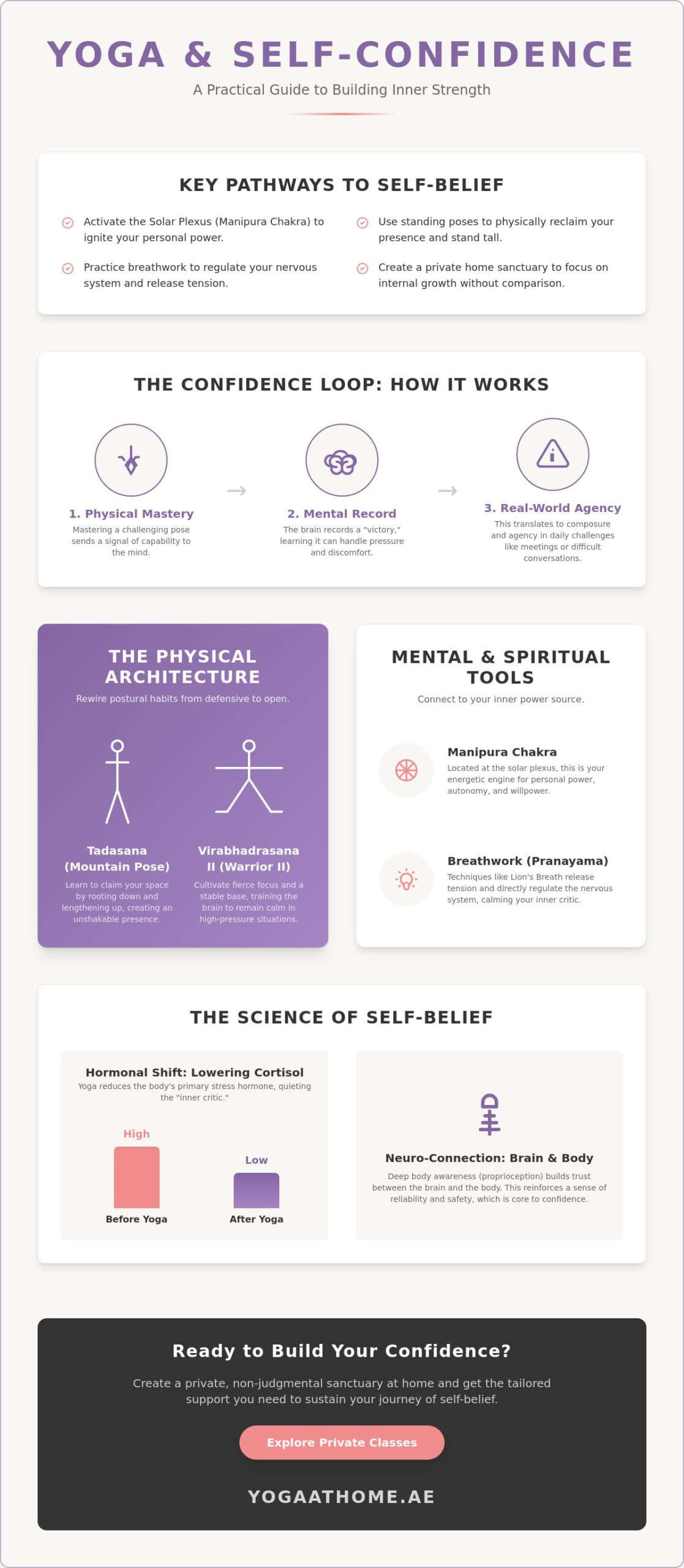
- Learn how to activate the Solar Plexus (Manipura Chakra) to ignite your internal fire and reclaim your personal power.
- Discover how yoga builds self-confidence through the physical architecture of standing tall and reclaiming your presence in any room.
- Practice specific techniques like Lion’s Breath to regulate your nervous system and release the tension that stifles your authentic voice.
- Create a private, non-judgmental sanctuary at home to focus on your internal growth rather than comparing yourself to others.
- Understand how personalized mentorship provides the professional validation and tailored support needed to sustain your journey of self-belief.
Exploring the Spiritual and Scientific Link Between Yoga and Confidence
True health begins with the understanding that the body and mind are not separate entities; they’re a single, flowing conversation. When you step onto the mat, you aren’t just stretching muscles or working on flexibility. You’re actively reshaping your self-perception. This is fundamentally how yoga builds self-confidence. By aligning your physical frame, you send a direct signal to your nervous system that you’re safe, grounded, and present. This physical stability creates a foundation for psychological resilience, allowing you to face external challenges with a steady heart.
We call this the “Confidence Loop.” It’s a feedback system where the physical mastery of a challenging pose informs the mind that it’s capable of handling pressure. When you hold a balance despite a slight wobble, your brain records a victory. These small, repeated successes on the mat translate into a sense of agency in your daily life. You start to realize that if you can find stillness in a difficult posture, you can find composure during a stressful meeting or a difficult conversation.
This process is supported by a significant shift in your internal chemistry. As you move through a sequence, your body naturally reduces its production of cortisol, the hormone associated with the stress response. High cortisol levels often fuel the “inner critic,” that nagging voice of doubt that tells you you’re not enough. By lowering these levels through intentional movement, you create a quiet space where your true strength can emerge. You aren’t just ignoring the critic; you’re removing its biological fuel.
The Manipura Chakra: Your Internal Sun
Located in the solar plexus, just above the navel, the Manipura Chakra serves as the body’s energetic engine. In the tradition of Hatha Yoga, this third chakra is the seat of personal power and autonomy. When energy flows freely here, you feel a natural surge of self-assurance and direction. Blockages in this area often manifest as persistent indecision or a feeling of being “stuck.” The Manipura chakra is the source of willpower and transformation.
Neuroscience Meets Asana: Why the Brain Trusts the Body
Proprioception, or deep body awareness, builds a profound sense of agency. As you master various asanas, your brain begins to trust your physical form’s reliability. This trust is reinforced by the Vagus nerve, which plays a critical role in emotional regulation and social confidence. Practicing Mindful Yoga shifts your focus from how a pose looks to how it feels. This connection illustrates how yoga builds self-confidence by moving you from seeking external validation to recognizing your own internal capability.
Empowering Asanas: The Physical Architecture of Self-Esteem
The way we carry our physical frame is a silent declaration of how we feel inside. If you’ve ever felt the urge to shrink in a crowded room, you know that low self-esteem often manifests as rounded shoulders and a downcast gaze. Through the practice of specific asanas, we can intentionally rewire these physical habits. This structural shift is a primary way how yoga builds self-confidence, turning a defensive posture into one of quiet strength and openness. By mastering the geometry of your own body, you begin to change the narrative of your mind.
In Tadasana, or Mountain Pose, we learn the art of claiming space. It’s more than just standing; it’s about rooting the four corners of the feet into the earth and lengthening the spine toward the sky. This simple act of standing tall creates a sense of unshakable presence. When we move into the Virabhadrasana (Warrior) series, we tap into a different frequency. These poses require a fierce focus and a stable base, cultivating the energy of a protector. Research into the therapeutic effects of yoga suggests that these physical postures can significantly lower anxiety and improve our internal sense of safety.
Standing Poses for Grounding and Stability
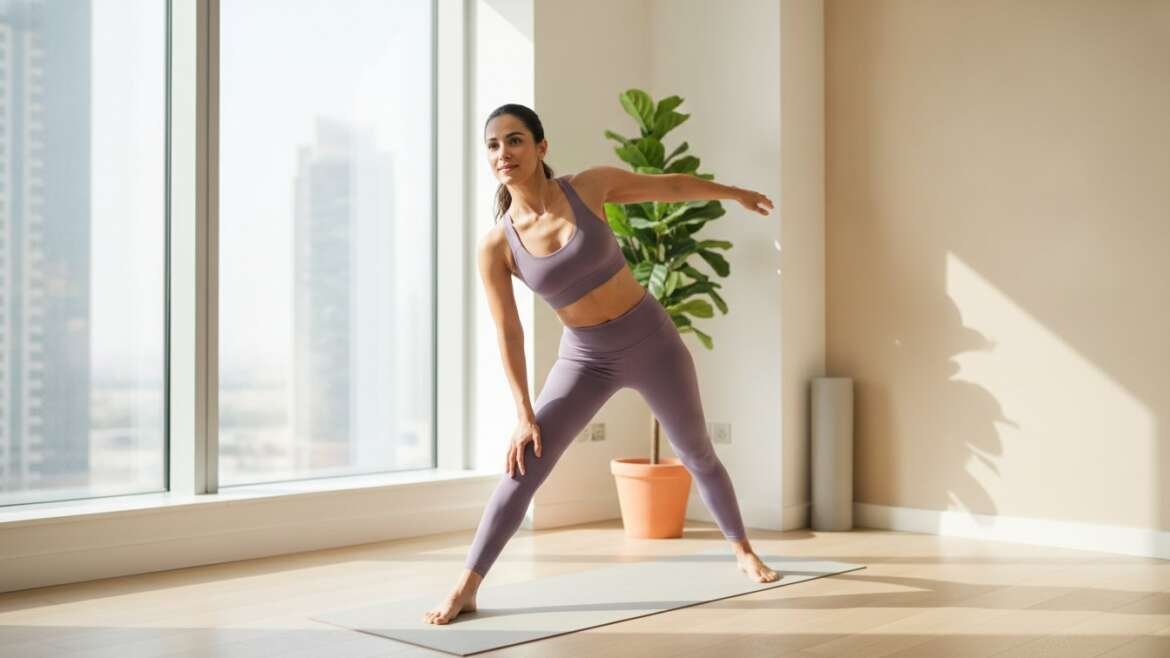
Warrior II is a masterclass in mental endurance. As the thighs begin to burn and the arms feel heavy, the practice becomes about staying present in the discomfort. By holding a strong, wide stance, you’re training your brain to remain calm in high-pressure situations. This physical resilience builds a foundation of trust in your own body’s capabilities. It’s much easier to feel confident in a social setting when your body remembers the feeling of being grounded and immovable on the mat.
Heart Openers: Shifting from Shy to Shining
Rounded shoulders often signal a subconscious desire to protect the heart, a physical manifestation of submissiveness or fear. Heart openers like Urdhva Mukha Svanasana (Upward-Facing Dog) and Bhujangasana (Cobra) work to counter this by expanding the chest and throat. This expansion isn’t just physical; it’s an emotional release that fosters courage and vulnerability. A healthy spine is essential for this open posture, and practicing the Best Yoga Poses for Back Pain can ensure your physical foundation supports your mental growth. When the heart is open, you move from a state of “hiding” to a state of “shining.”
Finally, Balasana (Child’s Pose) teaches us that confidence isn’t always about outward displays of power. Sometimes, the greatest strength is found in self-reflection and knowing when to seek quiet recovery. It’s in these moments of stillness that we integrate our progress. If you’re ready to explore these movements in a supportive environment, our Hatha Yoga sessions offer a personalized way to build this inner architecture.
The Mind-Body Bridge: Breathwork and Meditation as Tools for Resilience
Inner peace isn’t the absence of a storm but the ability to remain steady within it. While physical postures provide the architecture of strength, your breath is the tether that keeps your mind from drifting into self-doubt. This internal work is a vital component of how yoga builds self-confidence. By learning to regulate your breathing, you gain direct access to your nervous system. You move from a state of reactive “fight or flight” to a place of conscious, calm action. This shift allows you to approach life’s challenges with a sense of quiet authority rather than frantic anxiety.
One of the most potent techniques for vocal empowerment is Simhasana, or Lion’s Breath. This practice involves a deep inhale followed by a forceful exhale while opening the mouth wide and stretching the tongue out. It might feel silly at first, but that’s exactly the point. Simhasana helps you release the tension held in the jaw and throat, physically clearing the path for your authentic voice. It teaches you to let go of the need to look perfect or “composed” in every moment. This willingness to be seen in your raw, powerful state is a profound exercise in building genuine self-esteem.
Mindfulness and affirmations further bridge the gap between the mat and the world. By integrating positive mantras into your physical movement, you begin a process of deep cognitive rewiring. Instead of identifying with the thought “I can’t do this,” you observe the thought as it passes, much like a cloud across a clear sky. You’re no longer at the mercy of your inner critic. You become the witness of your thoughts, choosing which ones to believe and which ones to let go.
Pranayama for Instant Calm in Social Settings
Sama Vritti, or Equal Breathing, is an invaluable tool for managing pre-event nerves or social anxiety. By making your inhalations and exhalations the same length, you signal to your brain that you’re safe. This diaphragmatic breathing lowers the heart rate and clears mental fog. When you’re in a difficult pose, follow these three steps to maintain composure:
- Soften the muscles in your face and jaw while maintaining the integrity of the pose.
- Inhale deeply through the nose for a count of four, directing the air into your lower belly.
- Exhale slowly for a count of four, feeling the tension leave your shoulders with the breath.
Meditation: Developing the ‘Witness’ Mind
Daily silence is the laboratory where self-assuredness is forged. Meditation helps you separate your true self from the self-limiting thoughts that often dictate your behavior. To strengthen your resolve, try visualizing your breath flowing directly into your solar plexus. Imagine a warm, golden light expanding with every inhale, reinforcing the internal sun we discussed earlier. Over time, this practice creates a grounded presence that people naturally respect. This is how yoga builds self-confidence from the inside out, ensuring your strength is not just a performance, but a way of being.
Building Your Sanctuary: A Step-by-Step Guide to a Confidence-Boosting Home Practice
Confidence thrives in the quiet spaces where you can be entirely yourself. For many beginners, the bright lights and mirrors of a public studio can feel more like a stage than a sanctuary, often triggering the “not enough” mindset. By establishing a home practice, you remove the temptation to compare your progress to the person on the next mat. This shift from external comparison to internal awareness is a fundamental way how yoga builds self-confidence. In your own space, there’s no ego to satisfy; there’s only the honest conversation between your breath and your body.
We often think that transformation requires intense, hours-long sessions. However, the brain and body respond far more effectively to consistency than to intensity. Fifteen minutes of focused movement every single day is significantly more powerful than a two-hour session once a week. This daily commitment creates a reliable rhythm of success. Each time you step onto your mat as promised, you’re proving to yourself that you are dependable and capable. This steady accumulation of small victories is exactly how yoga builds self-confidence over the long term.
Step 1: Define Your Safe Space
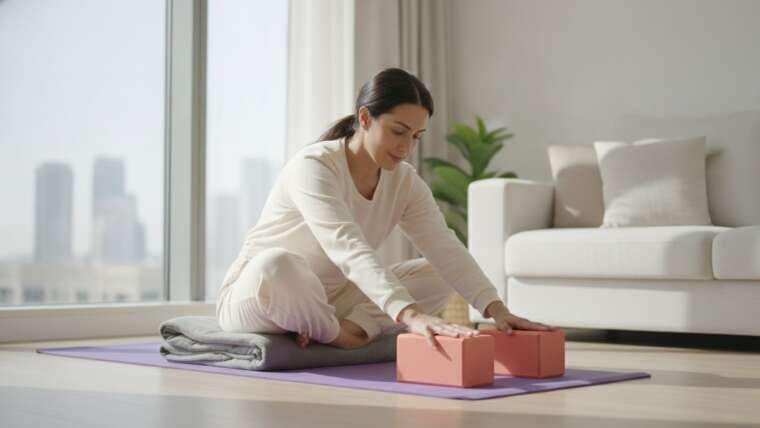
You don’t need a dedicated studio to begin. Choose a quiet corner of your home where you can move freely without interruption. Natural light is a wonderful addition, but the most important factor is the psychological benefit of returning to the same spot. Your brain begins to associate this specific area with peace and personal empowerment. Keep your equipment minimalist; a high-quality mat and perhaps a couple of blocks are all you need. By focusing on your body rather than expensive gear, you reinforce the idea that your strength comes from within, not from what you own.
Step 2: Sequence for Success
Structure your home practice to build “success momentum.” Start with familiar grounding poses like Child’s Pose or Mountain Pose to settle your nervous system. Once you feel centered, transition into more active postures like the Warrior series we discussed earlier. Ending your 20-minute flow with a few minutes of quiet reflection allows you to integrate the physical strength you’ve just cultivated. For those who find the prospect of starting alone daunting, exploring Yoga Classes in Dubai can provide the professional guidance needed to establish a safe and effective home routine.
If you’re ready to transform your living room into a place of restorative growth, our private Hatha Yoga sessions are designed to meet you exactly where you are, ensuring your journey toward self-assurance is both supported and sustainable.
Nurturing the Self: The Role of Personalized Mentorship in Your Yoga Journey
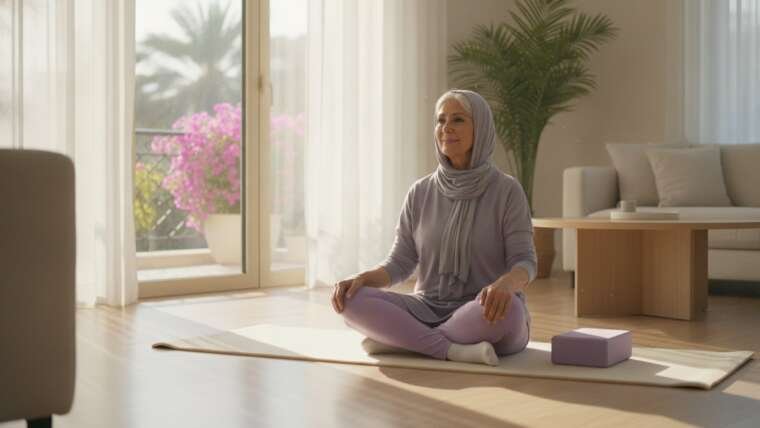
True mastery is rarely a solitary pursuit. While establishing a home sanctuary is a vital step toward independence, the presence of a dedicated mentor can significantly accelerate your progress. A personalized approach is especially essential for those navigating specific life stages or physical challenges, such as our practitioners of Ladies Yoga or Yoga for Seniors. In a group setting, it’s easy to feel lost or pressured to keep up with others, which can inadvertently reinforce feelings of inadequacy. Conversely, private instruction ensures every movement is tailored to your unique emotional and physical blocks, allowing you to build a foundation of trust that is entirely your own.
The mentor-student relationship offers a form of professional validation that is hard to find elsewhere. When an expert acknowledges your alignment or notices your increased breath capacity, it provides a powerful counter-narrative to self-doubt. This external confirmation eventually becomes an internal conviction. Understanding how yoga builds self-confidence involves recognizing that safety and expert guidance remove the paralyzing fear of injury. When you know you’re moving correctly, you move with more heart and less hesitation. You begin to trust your body because an expert has shown you exactly what it’s capable of achieving.
The Power of One-on-One Instruction
A private teacher acts as the mirror you need for precise alignment, helping you find the subtle adjustments that make a pose feel both stable and spacious. This bespoke attention means your instructor deeply understands your personal goals, whether you’re practicing Pre-natal Yoga or seeking Yoga for back pain. There’s also a profound serenity in having the practice come to you. Removing the stress of commuting and the distractions of a public studio allows you to remain in a restorative state long after the session ends. This convenience respects your schedule as much as your personal growth.
Yogaathome: Your Partner in Transformation
We bring the transformative power of a professional studio directly to your doorstep. Our team consists of highly qualified instructors, including those with REPS UAE and Yoga Alliance certifications, ensuring you receive the highest standard of care in the comfort of your own environment. Whether you’re looking for Hatha Yoga, Kids Yoga, or Post-natal Yoga, we’re here to support your journey. We invite you to begin this restorative process with a mentor who respects your pace and celebrates your growth. Your path to inner strength is a journey we’re honored to share. Explore our private yoga services today and take the first step toward a more confident you.
Step into Your Authentic Power
The journey toward lasting inner strength is a gradual unfolding of your own potential. We’ve explored how physical alignment in asanas and the steady rhythm of breathwork create a foundation for a resilient mind. By shifting your focus from external performance to internal awareness, you discover that true assurance is a state of being you can cultivate every day. This holistic process is fundamentally how yoga builds self-confidence, allowing you to stand tall in your own space and carry that presence into every social interaction with quiet authority.
You don’t have to navigate this transformative path alone. Our restorative home-delivery model brings the expertise of Certified REPS UAE and Yoga Alliance Instructors directly to your door, offering ultimate comfort and privacy. Whether you’re looking for Specialized Ladies-Only sessions or Senior Programs, we provide a supportive partnership tailored to your specific physical and emotional needs. Book your personalized private yoga session today and begin your journey to inner strength. Your most confident self is waiting to be discovered, and we’re here to guide you every step of the way.
Frequently Asked Questions
How often should I practice yoga to see an improvement in my self-confidence?
Consistency is the cornerstone of transformation. You’ll likely notice a shift in your self-perception by practicing for just 15 to 20 minutes daily rather than attending a single long session once a week. This steady rhythm helps reinforce the “Confidence Loop,” where small daily victories build into a profound sense of reliability and trust in your own body. Over time, these brief moments of daily dedication accumulate into a lasting sense of inner strength.
I’m a complete beginner. Is yoga for confidence too advanced for me?
Not at all; yoga for confidence is accessible to everyone regardless of their starting point. The practice isn’t about performing complex acrobatics but about developing a mindful connection with your breath and posture. We focus on foundational movements that meet you exactly where you are. This ensures that your journey remains non-intimidating and supportive as you explore how yoga builds self-confidence through gentle, intentional action rather than physical strain.
Can yoga help with social anxiety and public speaking?
Yes, yoga provides practical tools to manage the physical symptoms of social anxiety. Techniques like “Lion’s Breath” and “Equal Breathing” help regulate the nervous system and calm the “fight or flight” response before high-pressure events. By training your body to remain steady under the mild stress of a physical pose, you develop the mental tools to stay composed during public speaking or challenging social interactions in your daily life.
Is it better to practice yoga in a group or privately for building self-esteem?
Private instruction is often more effective for building self-esteem because it removes the pressure of external comparison. In a one-on-one setting, you receive the professional validation and personalized adjustments needed to feel secure in your movements. This focused mentorship allows you to address specific emotional or physical blocks in a private sanctuary, accelerating the process of internalizing your own strength without the distraction of a public class.
Does yoga for confidence involve a lot of difficult balancing poses?
The practice focuses more on grounding and heart-opening postures than on extreme balancing acts. While we may introduce simple balances to help build focus, the primary goal is to establish a sense of stability and presence. These poses are designed to be accessible, helping you feel capable and strong without the frustration of attempting movements that feel out of reach. We prioritize the feeling of being capable over the complexity of the pose.
Can I practice these confidence-boosting techniques during pregnancy?
Yes, our Pre-natal Yoga programs are specifically designed to support you during this transformative time. These techniques help you connect with your changing body and manage the anxieties that often accompany pregnancy. By focusing on gentle grounding and breathwork, you can maintain a sense of empowerment and inner calm. This specialized guidance ensures you’re practicing in a way that is safe and restorative for both you and your baby.
What should I do if I feel frustrated or ‘not good enough’ during my practice?
Acknowledge that frustration is a natural part of any growth process. When these feelings arise, try to adopt the “Witness Mind” we discussed, observing the thought without identifying with it. Remember that yoga is a restorative process rather than a competitive sport. Practicing self-compassion on the mat is a direct exercise in building the very self-esteem you’re seeking. It’s about progress, not perfection, within your own unique journey.
Do I need to follow a specific spiritual path to benefit from yoga’s confidence-building aspects?
No specific spiritual path is required to experience how yoga builds self-confidence. While we draw on ancient wisdom regarding the body’s energy centers, these concepts are balanced with a modern understanding of the nervous system. The benefits of improved posture, controlled breathing, and mental clarity are universal. This practice is accessible to everyone, regardless of their personal beliefs or background, focusing on the practical reality of feeling better in your own skin.