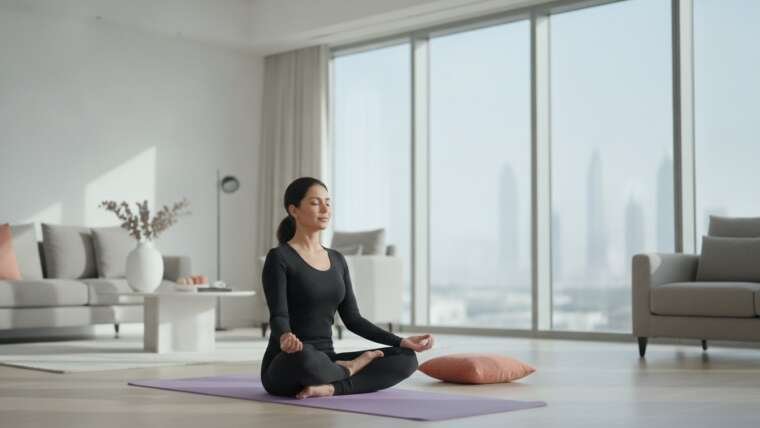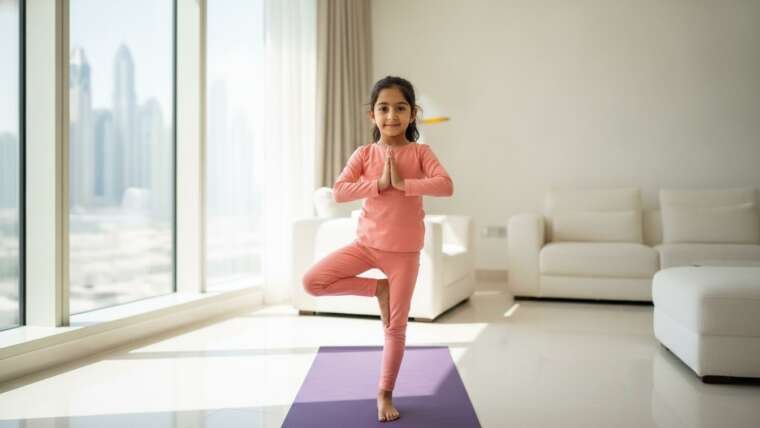
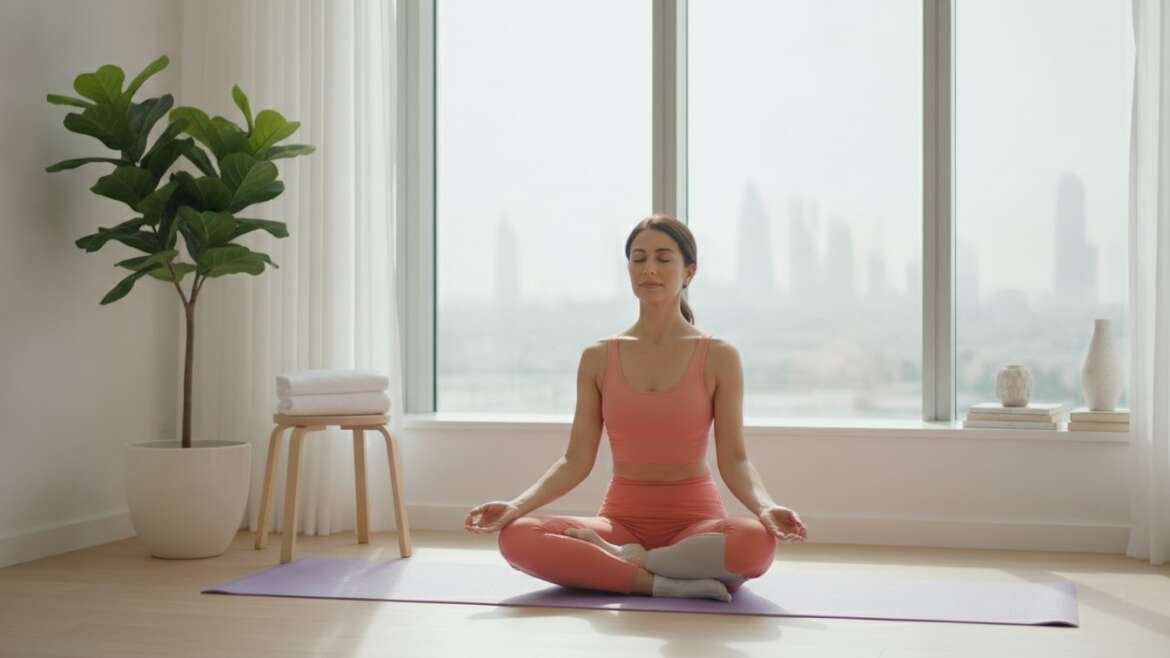
A yoga sanctuary isn’t a dedicated room; it’s a two-meter ritual of intention that exists only when you unroll your mat. For many, the challenge of creating a yoga space in a small apartment feels daunting when floor space is at a premium and daily clutter competes for your attention. You might feel that your home isn’t studio-ready or worry that a private teacher will see a messy living room rather than a place of peace. Since 56% of practitioners now turn to yoga specifically to manage burnout and mental stress, your home should be a source of relief, not another item on your to-do list.
This guide will show you how to transform the smallest corner of your home into a professional-grade sanctuary that stays organized and serene. We’ll explore the exact dimensions you need for safe movement and how to curate a beautiful environment that effectively blocks out the noise of urban living. By the time you’re finished reading, you’ll have a clear plan to build a restorative home practice that honors both your space and your well-being. Discover how to reclaim your environment and invite the tranquility of a professional studio into your private world.
Key Takeaways
- Learn how to redefine your living area as a professional sanctuary by mastering the psychology of “Set and Setting” within a limited footprint.
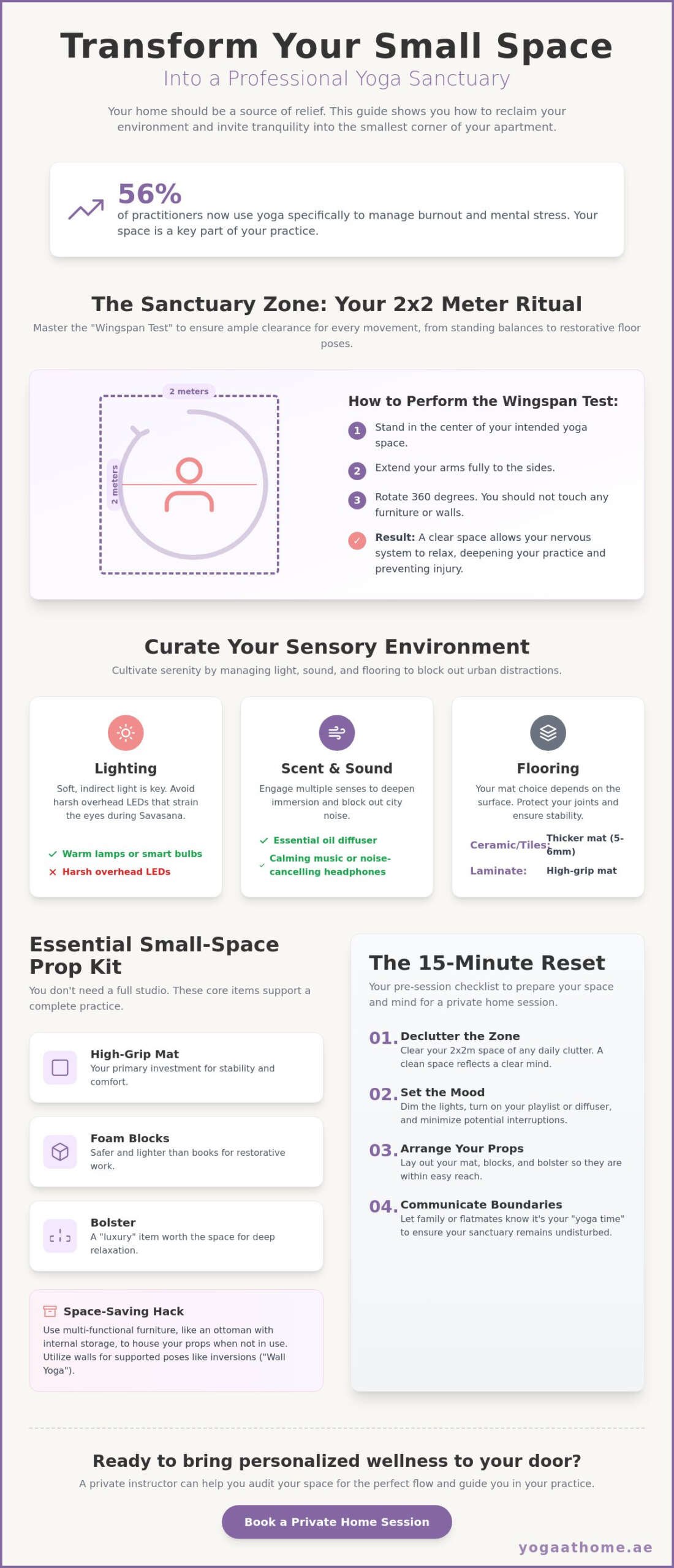
- Master the “Wingspan Test” to ensure your 2×2 meter zone provides ample clearance for every movement, from standing balances to restorative floor poses.
- Discover the art of scent-scaping and sound management to cultivate a serene environment that blocks out urban distractions and city noise.
- Follow a simple 15-minute reset checklist to prepare your home for a visiting instructor, ensuring a clutter-free and professional experience.
- Gain clarity on creating a yoga space in a small apartment that feels as expansive and welcoming as a dedicated studio for your private practice.
The Philosophy of the Small-Space Sanctuary
Wellness is an internal state that we invite into our physical surroundings through deliberate action. When you begin creating a yoga space in a small apartment, you’re doing more than arranging a mat; you’re establishing a portal for transformation. Your living room or bedroom doesn’t need to be a vast hall to be effective. In fact, a smaller environment often fosters a deeper sense of containment and focus. By redefining what a “studio” looks like, you remove the barriers that keep you from your practice. Your home becomes the perfect place for growth because it’s where your life actually happens.
The psychology of your environment plays a crucial role in your progress. We call this “Set and Setting.” In a confined apartment, your brain quickly learns to associate a specific corner with the rhythm of your breath and the stillness of your mind. This dedicated zone reduces the mental friction that often stops beginners from starting. It becomes a sanctuary that exists the moment you step into it. To maintain this peace, it’s essential to establish clear boundaries with family or flatmates. Simple communication about your “yoga time” ensures that your sanctuary remains undisturbed by the distractions of open-plan living.
Intentionality Over Square Footage
You don’t need a spare room to find your center. A 2×2 meter space is perfectly sufficient for a complete Hatha session or a restorative flow. The secret lies in the practice of “Drishti,” or the focused gaze. By training your eyes on a single point, you naturally filter out the apartment clutter and the reminders of daily chores. Within this framework, a Yoga Sanctuary is a mental state triggered by the physical cues of your mat, your props, and your breath.
Holistic Transformation in a Modern Home
True health is a holistic process that moves beyond physical flexibility to promise mental clarity. By looking into the history and philosophy of yoga, we see that the practice has always been about internal mastery rather than external grandiosity. Private home sessions bridge the gap between professional studio quality and the raw comfort of your own home. This approach allows you to align your immediate environment with your long-term spiritual goals. It’s about making wellness a seamless part of your lifestyle, ensuring that your home feels as serene as a professional sanctuary every time you step onto the mat.
Practical Layout: Maximizing Your 2×2 Meter Zone
Physical health begins with a foundation of safety. When you’re creating a yoga space in a small apartment, you must first measure your personal “wingspan.” Stand in the center of your intended zone and extend your arms fully. Can you rotate 360 degrees without hitting a bookshelf or a television? This test isn’t just about avoiding bruises. It’s about proprioception. Knowing you have clear space allows your nervous system to relax into the poses without the subconscious fear of impact. This mental freedom is what allows a small corner to feel like a vast sanctuary.
Strategic furniture placement is your best ally in a confined home. Rather than just pushing a coffee table aside, consider using multi-functional pieces. An ottoman with internal storage can house your blocks and straps when they’re not in use. Flooring also dictates your equipment choices. Modern apartments often feature ceramic tiles or laminate. Tiles are cold and unforgiving on the joints, making a thicker mat of at least 5mm or 6mm a necessity. Laminate can be slippery, so a high-grip polyurethane mat is essential for stability. These small adjustments maximize the health benefits of yoga by protecting your body from unnecessary strain.
The Essential Small-Space Prop Kit
You don’t need a warehouse of equipment to practice effectively. A high-grip mat is your primary investment. For blocks, heavy books work in a pinch, but professional foam blocks are lighter and safer for restorative work. A bolster is the one “luxury” item worth the space it occupies. It supports the spine during deep relaxation, which is vital for managing the mental stress of urban living. If you’re unsure how to arrange these items, a private home instructor can help you audit your space for the best possible flow.
Lighting and Vertical Space
Look upward. Walls are powerful props that require zero floor space. “Wall Yoga” provides excellent support for inversions and balance when your 2×2 meter zone feels tight. Lighting should be soft and indirect. Avoid harsh overhead LEDs that can strain the eyes during floor work or Savasana. Instead, use warm lamps or smart bulbs set to a sunset hue. Mirrors are optional. While they help with alignment, they can sometimes pull you out of your internal experience. If you use one, place it where you can check your form without losing the focus on your breath.
Sensory Design for Mental Clarity
Tranquility is not merely the absence of noise; it’s the presence of intentional sensory cues that guide the mind toward stillness. When you’re creating a yoga space in a small apartment, your senses act as the bridge between the frantic energy of the day and the restorative depth of your practice. Because small spaces can feel restrictive, we use scent, sound, and nature to expand the mental boundaries of the room. This approach transforms a simple corner into a professional-grade sanctuary that feels isolated from the stresses of urban life.
Temperature control is a specific challenge in modern apartment living, especially when balancing the “AC chill” against the natural warmth required for supple muscles. A draft directly from a vent can cause your body to tense during Hatha yoga or restorative poses. Aim for a “Goldilocks” zone of roughly 23 to 24 degrees Celsius. This allows your body to generate its own heat during movement without the sluggishness that comes from high humidity or stagnant air. Managing these invisible elements is just as important as the placement of your mat.
Creating an Olfactory Ritual
Your sense of smell is directly linked to the limbic system, the part of the brain responsible for emotion and memory. By using specific essential oils like sandalwood for grounding or lavender for relaxation, you signal an instant shift in your internal state. In a confined apartment, an ultrasonic diffuser is often superior to incense, as it provides a subtle, clean scent without the heavy smoke that can become overwhelming in small rooms. Selecting an energizing citrus blend for morning sessions and an earthy wood scent for evening practice helps anchor your routine.
Soundscapes for Urban Dwellers
City noise and the persistent hum of appliances are the primary enemies of a peaceful home practice. A simple Bluetooth speaker can be used to define your sanctuary’s borders by creating a consistent “sound bubble.” Playing the same curated playlist at the start of every session creates a Pavlovian response where your mind automatically shifts into a state of deep focus. For those in particularly loud open-plan buildings, high-quality noise-canceling earbuds can provide the total immersion needed for deep meditation or yoga for back pain sessions where concentration is key.
Finally, consider the life you bring into the space. Low-maintenance plants such as the Snake Plant or Pothos thrive in the indirect light of most apartments and serve as a living connection to the natural world. These “green companions” do more than just look beautiful; they improve air quality and provide a soft, organic focal point for your Drishti. By curating every sight, sound, and scent, you ensure your apartment remains a place of profound holistic transformation.
Preparing for Your Private Home Session
A private yoga session is a sacred appointment between your personal intentions and professional guidance. While much of the journey of creating a yoga space in a small apartment focuses on your own comfort, introducing a mentor into that environment requires a different level of preparation. You don’t need a grand hall to host a professional; you simply need a space that respects the collaborative nature of the practice. By preparing your home with the same care you bring to your breath, you ensure that every minute of your session is dedicated to growth rather than logistics.
One often overlooked element is the “Teacher Lane.” This is the narrow perimeter of about 50 centimeters around your mat that allows your instructor to move, observe your alignment from different angles, and provide safe physical adjustments. In a confined apartment, this might mean sliding a chair or a side table just a few inches further away. Clear communication is your most valuable tool here. If you’re worried about a tight corner, discuss these space constraints with your Yogaathome instructor beforehand. They’re experts at adapting to unique layouts and will help you find the most stable and serene configuration for your practice.
Once the space is physically clear, professional maintenance can ensure it remains a welcoming haven; for residents in New York, AlphaLux Cleaning offers specialized services to keep your yoga environment pristine and ready for your next session.
The Pre-Session Checklist
A simple 15-minute reset before the doorbell rings can significantly lower your stress levels and heighten your receptivity. Use this time to transition from the “home” mindset to the “studio” mindset:
- Clear the Path: Ensure the route from your front door to your yoga corner is free of shoes, bags, or clutter to provide a welcoming entrance for your teacher.
- Pre-Cool the Space: Set your AC to your preferred temperature at least 10 minutes early. This ensures the air is crisp and comfortable before you begin your movement.
- Gather Your Props: Place your mat, blocks, and water within arm’s reach so the flow of the session remains uninterrupted.
- Manage Distractions: Gently communicate your “yoga hour” to family members and ensure pets are in a separate, comfortable area to maintain a focused atmosphere.
Maximizing One-on-One Interaction
There’s a unique intimacy to practicing in a smaller room that can actually sharpen your focus. Without the distractions of a crowded studio, your ears become more attuned to your teacher’s voice and your own rhythmic breathing. Professional yoga classes in dubai are specifically designed to thrive in these bespoke settings, turning your apartment into a high-performance sanctuary. Whether you’re working through the best yoga poses for back pain or seeking mental clarity, the proximity of an expert ensures your safety and progress are never compromised by a lack of square footage.
Your home is already the perfect place for transformation because it’s where you’re most truly yourself. By taking these practical steps, you honor the time you’ve set aside for your well-being. If you’re ready to experience the profound benefits of a tailored practice, book your first private session today and let our mentors help you unlock the full potential of your home sanctuary.
Yogaathome: Personalized Wellness Delivered to Your Door
True wellness is a journey that begins within the home; our mission at Yogaathome is to ensure that journey is supported by the highest standards of professional care. While the physical act of creating a yoga space in a small apartment provides the foundation, our role is to fill that space with expert guidance that honors your unique physical needs. We bring the serenity of a world-class studio directly to your doorstep, removing the logistical friction that so often interrupts a consistent practice. By choosing a home-based model, you reclaim your time and invite a sense of sacredness into your daily environment.
We understand that privacy and comfort are paramount for a restorative experience. This is why we offer dedicated Ladies Yoga sessions led by certified female trainers who respect the sanctity of your home. Every instructor in our collective holds prestigious certifications from REPS UAE and the Yoga Alliance; this ensures that your health is managed by experts with deep knowledge of anatomy and philosophy. Whether you require specialized Yoga for back pain, the gentle support of Pre-natal Yoga, or Post-natal Yoga for recovery, our bespoke programming is tailored to your body and your specific environment. We also provide specialized Yoga for Seniors and Yoga for old age, ensuring that wellness remains accessible at every stage of life.
Why Private Instruction Beats the Studio
Studio environments often come with hidden stresses that can counteract the benefits of the practice. There’s no rush of the commute, no noise of crowded locker rooms, and no subtle pressure of “mat-envy” when you practice in your own sanctuary. Private instruction offers significant advantages over public classes or digital videos:
- Personalized Adjustments: Receive the kind of precise, tactile corrections that online videos simply cannot provide, ensuring your alignment is safe and effective.
- Bespoke Flow: Your session is designed around your energy levels and goals on that specific day, rather than a generic studio sequence.
- Long-term Mentorship: You build a relationship with a mentor who understands how your body moves and how your home sanctuary functions.
Your Journey Starts at the Doorstep
Starting your transformation is as simple as reaching out for an initial consultation. We’ll discuss your goals, any physical concerns, and how to best utilize your 2×2 meter zone. Our mobile service operates with strict time management across the UAE, respecting your schedule as much as your personal growth. Remember that creating a yoga space in a small apartment is only the first step toward a more balanced life; the real magic happens when that space is activated by professional expertise. Embrace tranquility today with a private session from Yogaathome and discover how our grounded, patient approach can help you achieve lasting holistic health.
Awaken the Potential of Your Personal Sanctuary
Your home is a reflection of your internal landscape. By mastering the “wingspan test” and intentional sensory design, you’ve learned that square footage never limits the depth of your practice. Creating a yoga space in a small apartment is a purposeful act of self-care that transforms a simple corner into a professional-grade sanctuary. Whether you’re managing urban noise or clearing a “teacher lane” for expert adjustments, these deliberate steps ensure your environment supports your holistic growth. Your space doesn’t need to be large to be life-changing; it only needs to be yours.
At Yogaathome, we’re honored to partner with you in this restorative process. With decades of experience in holistic home wellness, our certified REPS UAE and Yoga Alliance instructors bring specialized expertise directly to your doorstep. From specialized pre- and post-natal yoga programs to hatha sessions tailored for your specific layout, we provide the professional guidance your sanctuary deserves. Book Your Private Ladies Yoga Session with Yogaathome and begin your journey toward lasting tranquility today. Your mat is waiting, and so is the peace you deserve.
Frequently Asked Questions
Is my living room really big enough for a private yoga teacher?
Yes, most standard living rooms provide ample space for a private instructor to guide you effectively. As long as you can pass the wingspan test by extending your arms fully without touching walls or furniture, there’s enough room for a teacher to observe your form. Our instructors are experts at adapting their teaching style to your specific home layout, ensuring a professional experience even in cozy environments.
What is the absolute minimum floor space I need for a yoga mat?
The absolute minimum space required is approximately 2 meters by 2 meters to accommodate a standard mat and your full range of motion. This footprint ensures you can extend your limbs in standing and seated poses without restriction. When creating a yoga space in a small apartment, focusing on this specific zone allows you to maintain safety and proprioception throughout your practice without feeling cramped.
How can I hide my yoga equipment when I am not practicing?
You can seamlessly integrate your props into your decor using multi-functional furniture like storage ottomans or decorative wicker baskets. Rolling your mat and placing it in a tall, aesthetic vase or a dedicated closet shelf keeps your sanctuary organized and out of sight. This practice helps separate your restorative time from your daily living activities, maintaining the mental boundary of your home environment.
Can I do yoga on a carpeted floor, or do I need a hard surface?
You can practice on both surfaces, though each requires a different approach for stability. Hard surfaces like tile or laminate benefit from a thicker mat to protect your joints and provide cushioning. On carpeted floors, a thinner, firmer mat is often better to prevent the “squishiness” that can compromise your balance during standing poses. Stability remains the priority for a safe and focused session.
What should I do with my pets during a home yoga session?
It’s best to settle your pets in a separate, comfortable room before your session begins. While we love our animal companions, their presence can create unpredictable distractions or safety hazards during balance poses. Keeping them in a different area allows you to remain fully present in your breath and movement while ensuring the instructor can move freely around your mat to provide adjustments.
Do I need to buy expensive props before my first Yogaathome session?
You don’t need to purchase premium equipment before your first session with us. A basic mat is the only true essential; you can use household items like firm cushions or thick books as temporary blocks. Our instructors can guide you on which professional props are worth the investment based on your specific goals, such as Hatha Yoga or specialized restorative practice for back pain.
How do I manage the noise from my neighbors during meditation?
Managing external noise is best achieved through the use of consistent soundscapes or high-quality noise-canceling headphones. A Bluetooth speaker playing white noise or ambient music can create a “sound barrier” that masks neighbor activity and appliance hums. This auditory ritual helps you maintain mental clarity and prevents your focus from drifting toward the busy world outside your apartment walls during your dedicated hour.
Can I practice yoga on my apartment balcony in the UAE?
Practicing on a balcony is wonderful during the cooler UAE months, typically from November to March. However, you must be mindful of high humidity and direct sunlight, which can make your mat slippery or cause overheating. Ensure you have adequate privacy and a stable, flat surface before creating a yoga space in a small apartment balcony to maintain the serenity and safety of your practice.