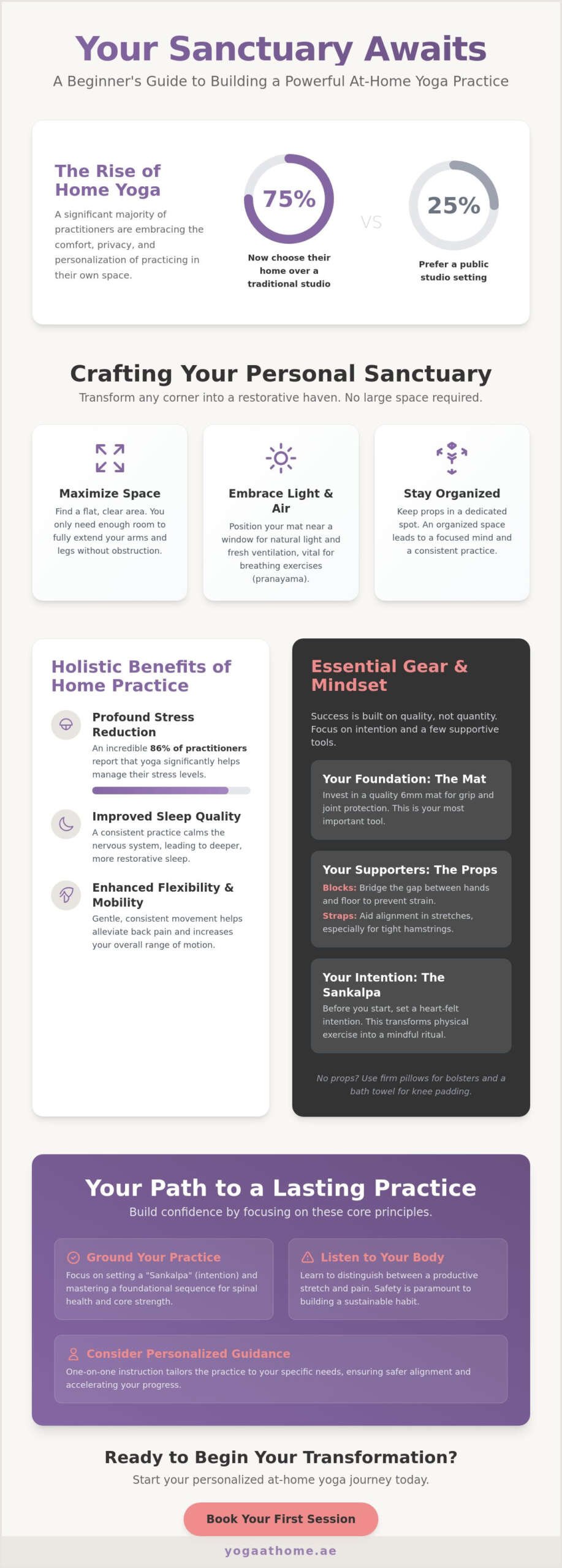
Did you know that nearly 75 percent of yoga practitioners in the U.S. now choose the sanctuary of their own homes over a traditional studio? True wellness begins when we create a sacred space for ourselves, and this shift reflects a desire for a more personal, tailored experience. You might feel that a lack of flexibility is a barrier, or worry that starting at-home yoga for beginners without a guide could lead to poor alignment. These feelings are a natural part of the journey, reflecting a deep respect for your body’s safety and your personal growth.
This guide will show you how to build a safe, serene, and sustainable practice that honors your unique needs. We’ll move past the overwhelm of complex poses to find a clear starting point for stress reduction and improved mobility. Since 86 percent of practitioners report that yoga helps manage stress, your path toward mental clarity is well-supported by both data and tradition. You’ll learn how to select the right tools and master foundational movements with quiet confidence. Let’s begin the restorative process of turning your home into a sanctuary for self-discovery and internal balance.
Key Takeaways
- Transform your personal environment into a restorative sanctuary where mental clarity and physical balance become a daily reality.
- Focus on quality essentials and the power of setting a “Sankalpa” to ground your practice without the need for excessive gear.
- Master a foundational sequence that prioritizes spinal health and core strength through a logical flow of centering and warming up.
- Build confidence in at-home yoga for beginners by learning to distinguish between productive sensations and potential injury risks.
- Understand how bespoke, one-on-one guidance can tailor the practice to your specific physical needs for safer and faster progress.
The Foundation of At-Home Yoga for Beginners
Health is the foundation upon which every meaningful experience is built. When you choose to begin at-home yoga for beginners, you aren’t simply starting a new exercise routine; you’re embarking on a restorative journey within the walls of your own life. This practice serves as a bridge between the physical body and a state of profound mental clarity. While many view yoga as a series of stretches, a deeper look at What is Yoga? reveals an ancient discipline designed to foster internal balance and spiritual connection. It’s a way of life that invites you to slow down and listen to your body’s innate wisdom.
Choosing to practice at home removes the subtle, often distracting pressure of comparison found in public studios. You don’t need to worry about the person on the mat next to you or whether your alignment matches a specific “ideal.” Instead, your home becomes a bespoke classroom where your progress is measured only by your own sense of peace. We stand as your supportive partner in this transformation, offering the expertise needed to turn a simple room into a center for life-long well-being. This approach ensures that your practice remains sustainable and deeply personal.
Creating Your Sacred Space
The first step in your journey involves identifying a corner of your home that feels quiet and free from clutter. This space doesn’t need to be large, but it should offer enough room for a standard 6mm mat. Consider these elements when setting up your area:
- A flat surface with enough clearance for your arms and legs to extend fully.
- Proximity to a window for natural light and fresh ventilation, which are vital for breathing techniques.
- A dedicated spot for your props so they’re always ready when you are.
You can further signal the start of your practice by adding sensory cues. A few drops of lavender essential oil or a steady, calming playlist helps transition your mind from the chaos of the day to a state of focused tranquility.
The Holistic Benefits of a Domestic Practice
A consistent home practice offers rewards that extend far beyond increased flexibility. Data shows that 86 percent of practitioners find that yoga significantly reduces their stress levels. By moving in your own space, you can immediately integrate this newfound peace into your daily activities without the jarring transition of a commute. This accessibility makes at-home yoga for beginners an ideal choice for all ages and physical abilities. Whether you’re seeking relief from back pain or looking for a way to improve your sleep, the domestic setting allows for a practice that is truly inclusive and grounded in your personal reality.
Essential Gear and Mindset for Your Practice
A successful practice is not defined by the price of your equipment but by the quality of your intention. For those beginning at-home yoga for beginners, the focus should shift from external aesthetics to internal alignment. You don’t need a room full of expensive gear to experience the profound benefits of a restorative practice. Instead, you need a few high-quality tools that support your safety and a mindset that honors your body’s current boundaries. Before you even step onto the mat, it’s helpful to set a “Sankalpa,” or a heart-felt intention. This small act of spiritual wisdom transforms a physical workout into a sacred time for self-care and mental clarity.
The Minimalist Equipment Checklist
Safety starts with the surface beneath you. A high-quality mat, such as a Gaiam Premium 6mm or a Manduka PRO, provides the necessary grip and cushioning to protect your joints during Beginner Yoga Poses. While the mat is the primary foundation, other tools act as extensions of your body. Props are not signs of weakness; they are bridges to better alignment. Consider these essentials:
- Yoga Blocks: These bridge the gap between your hands and the floor, ensuring you don’t strain your back to reach the ground.
- Yoga Straps: Ideal for those with limited flexibility, straps help you maintain proper alignment in seated or reclining stretches.
- Household Substitutes: If you’re not ready to invest, firm pillows can serve as bolsters, and a thick bath towel can provide extra padding for sensitive knees.
Proper attire is equally vital for a focused session. Choose breathable, stretchy fabrics that allow for a full range of motion without restriction or distraction. When your clothes move with you, your mind is free to focus on the breath rather than adjusting your waistband. If you find yourself struggling with alignment or feeling unsure about which props you need, a personalized session of Yoga can provide the professional guidance needed to set a strong foundation.
Cultivating the Right Internal State
The most important “gear” you bring to the mat is your mindset. In a domestic setting, it’s easy to fall into the trap of “performing” for an imaginary audience or pushing too hard to match a generic video. True growth comes from patience and sensory awareness. You must accept that every day on the mat will feel different. One morning your body may feel light and fluid; the next, it may feel stiff and tired. Both states are valid parts of the journey. By practicing in your own home, you learn to respect these boundaries rather than fighting them. This non-competitive approach is what makes the practice sustainable for a lifetime, turning a simple exercise into a grounded, life-long approach to well-being.
A Step-by-Step Guide to Your First Home Sequence
A sustainable practice is born when the internal rhythm of the breath meets the physical form of the body. While many starting at-home yoga for beginners feel tethered to a screen, the true power of the discipline lies in your ability to practice independently. This shift allows you to listen to your body’s subtle cues without the distraction of a digital guide or an external pace. By mastering a simple, logical flow, you transform your mat into a space of intuitive movement. The core of this transition is Pranayama, or rhythmic breathing, which acts as the anchor for every physical transition you make.
Before moving into complex shapes, you must understand the foundational architecture of the body. Tadasana is the blueprint for all standing poses. From this single point of stillness, every other movement unfolds with greater clarity and safety. This sequence focuses on building spinal health and functional strength, ensuring that your domestic practice is both restorative and physically empowering. By moving at your own pace, you honor your body’s unique needs while building the confidence to practice anywhere.
Foundational Poses for Beginners
Building a library of core movements allows you to navigate your practice with quiet confidence. Start with these three pillars to establish a strong base:
- Tadasana (Mountain Pose): This pose teaches you how to stand with intention. It establishes groundedness by aligning the feet, hips, and shoulders, creating a sense of tall, stable strength.
- Adho Mukha Svanasana (Downward-Facing Dog): This inverted V-shape builds significant upper body strength and length through the spine. It’s a foundational movement that helps improve circulation and overall mobility.
- Balasana (Child’s Pose): This is your essential sanctuary. Whenever a sequence feels too intense, Child’s Pose offers a physical and mental reset, allowing you to reconnect with your breath in a state of deep surrender.
Structuring Your 20-Minute Routine
A well-structured session ensures you receive the full spectrum of holistic benefits within a manageable timeframe. You don’t need hours to find balance; consistency is far more valuable than duration. Follow this simple framework for a balanced experience:
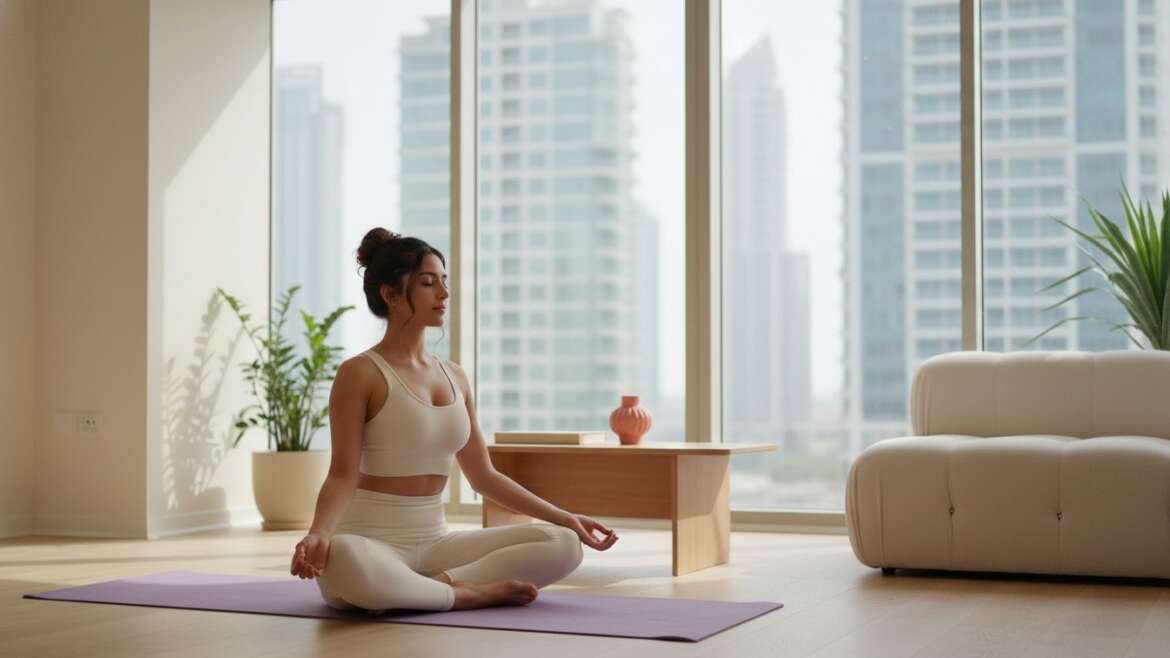
- Opening (3 mins): Begin in a comfortable seated position. Focus on gentle breathing and setting your heart-centered intention, or Sankalpa, to ground your energy.
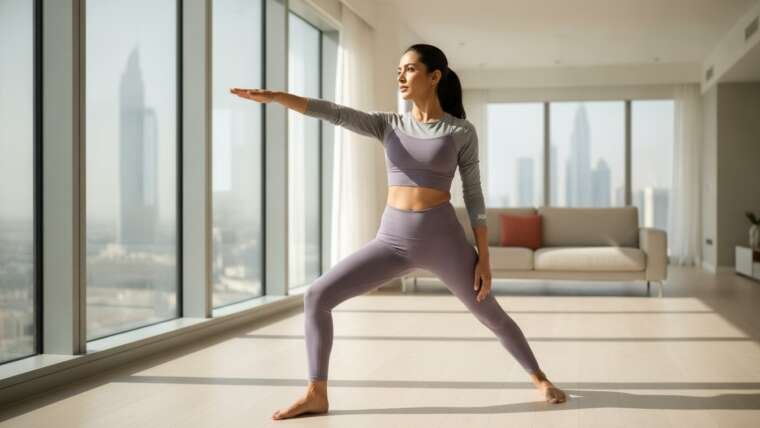
- Active Flow (12 mins): Move through basic standing poses or gentle sun salutations. Focus on the rhythmic connection between your breath and each movement.
- Closing (5 mins): End in Savasana, or Corpse Pose. This period of restorative stillness allows your nervous system to integrate the work you’ve done, leaving you with a sense of profound mental clarity.
Ensuring Safety and Building Lasting Habits
A sustainable practice is built upon the foundation of non-violence toward oneself. For many starting at-home yoga for beginners, the primary hesitation is the fear of improper alignment leading to injury. It’s a valid concern that reflects a deep respect for your physical vessel. Without the immediate feedback of a teacher, you must become your own most attentive guide. True safety doesn’t come from forcing a shape; it comes from the quiet wisdom of knowing when to deepen a stretch and when to find stillness. This self-awareness is especially vital for maintaining spinal health and relief, where subtle adjustments make the difference between strain and restoration.
Patience is a cornerstone of any restorative journey. You aren’t competing with a screen or a past version of yourself. Instead, you’re learning to communicate with your body in a language of sensation rather than force. By prioritizing safety and consistency over performance, you transform your mat into a reliable sanctuary for long-term health. If you are concerned about specific physical limitations or existing discomfort, our specialized sessions for Yoga for back pain provide the expert supervision needed to practice with complete peace of mind.
The Golden Rule: Listening to Your Body
Distinguishing between productive effort and potential harm is a skill that develops over time. A “good” sensation feels like a warm, expansive stretch or a gentle muscular engagement. Conversely, sharp, stabbing, or electric pains are red flags that signal you’ve gone too far. If you experience joint pinching or find yourself breathless, it’s a sign to back off immediately. Remember that “less is more” when building your initial physical foundation. Use micro-movements, like a slight bend in the knees or a shift in weight, to find a version of the pose that feels stable and spacious. Your practice should leave you feeling revitalized, not depleted.
Overcoming the Consistency Hurdle
The greatest challenge in any domestic practice is not the difficulty of the poses, but the regularity of the habit. Life is often filled with professional and family commitments that can easily crowd out your time on the mat. To combat this, embrace the “5-minute rule.” On days when your energy is low or your schedule is packed, commit to just five minutes of gentle movement or breathing. More often than not, once you begin, you’ll find the motivation to continue. Schedule your practice as a non-negotiable appointment for self-care in your calendar. Track your progress by how you feel, noting improvements in your sleep quality or stress levels, rather than focusing solely on mastering complex postures.
Personalizing Your Practice with Professional Guidance
Health is a deeply personal expression of one’s lifestyle and history. While the journey of at-home yoga for beginners often starts with curiosity and a simple mat, there comes a point where generic digital guidance may no longer suffice. Every body carries a unique story, from the subtle curves of the spine to the specific needs of a developing pregnancy. Generic videos, while accessible, lack the sensory awareness to notice a misaligned hip or a strained breath. Transitioning to professional, bespoke instruction ensures that your practice remains a safe and restorative process rather than a source of hidden strain. It’s about moving from a general routine to a practice that truly understands you.
Choosing a mentor with REPS UAE and Yoga Alliance certification provides a layer of professional reliability that a screen cannot replicate. These credentials signify a deep understanding of human anatomy and the ancient traditions of Hatha Yoga. By inviting a certified professional into your space, you receive the benefit of decades of experience tailored specifically to your physical boundaries. This level of customization is the hallmark of a truly sustainable well-being strategy. It allows you to build a foundation that is physically sound and mentally grounding, reflecting the brand’s commitment to your personal evolution.
When to Transition to Private Instruction
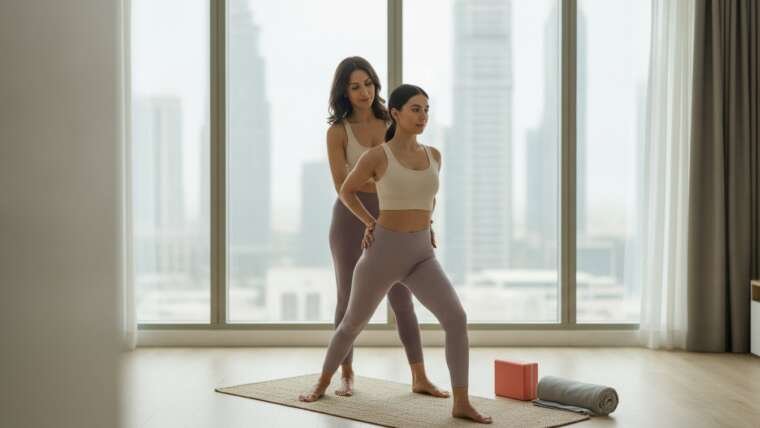
Specific life stages and physical conditions require a higher degree of specialized care. If you’re seeking yoga classes in Dubai, the convenience of a home visit allows you to focus entirely on your progress without the distractions of a public setting. Real-time alignment corrections are essential for those managing chronic discomfort or preparing for childbirth through Pre-natal Yoga. A professional mentor identifies subtle red flags before they become injuries, ensuring that every movement supports your long-term mobility. This one-on-one attention accelerates your progress, turning foundational poses into powerful tools for holistic transformation.
The Yogaathome Approach to Beginner Wellness
Our philosophy is rooted in the belief that wellness should be accessible, non-intimidating, and deeply respectful of the individual. We bring a serene, professional practice directly to your doorstep, making your own environment the center of your growth. For many, privacy is a vital component of tranquility. We offer dedicated Ladies Yoga sessions with female trainers to ensure a comfortable and inclusive atmosphere. Whether you’re exploring Yoga for Seniors or seeking Post-natal Yoga to reconnect with your strength, our mentors tailor every breath to your unique body. This bespoke approach ensures that your practice isn’t just an activity, but a restorative way of life that honors your schedule and your personal growth.
Embrace Your Path to Lasting Tranquility
True wellness is a lifelong commitment that begins with a single, intentional breath in the comfort of your own environment. By establishing a sacred space and mastering foundational movements, you’ve taken the most significant steps toward internal balance. You now understand that at-home yoga for beginners is more than just a physical routine; it’s a bespoke sanctuary for self-discovery and restorative health. Whether you’re focusing on spinal safety or cultivating a patient, non-competitive mindset, your domestic practice serves as the foundation for a more grounded and resilient self.
While independent practice is a beautiful starting point, professional mentorship can deepen your connection to the discipline and accelerate your progress. Our team of certified REPS UAE and Yoga Alliance instructors is dedicated to bringing this expertise directly to your doorstep. We provide specialized support through ladies-only home sessions, as well as tailored programs for seniors and prenatal care, ensuring every movement respects your unique body. You’re invited to begin your journey with a personalized private yoga session today. Transformation is a shared process, and we’re honored to be your partner in this sustainable, life-long approach to well-being.
Frequently Asked Questions
Is at-home yoga effective for complete beginners?
Starting at-home yoga for beginners is an exceptionally effective way to cultivate a foundation of wellness. It allows you to move at your own pace while fostering a deep sense of internal balance and self-awareness without the pressure of a public studio. By practicing in a familiar environment, you can focus entirely on the rhythmic connection between your breath and your body’s unique movements.
What equipment do I really need to start yoga at home?
A high-quality, non-slip mat is the only absolute essential for a safe and stable practice. While professional props like blocks and straps are helpful for bridging the gap in flexibility, you can often substitute them with household items like firm pillows or thick towels. Focus on quality over quantity to ensure your joints are protected during foundational poses like Downward-Facing Dog.
How often should a beginner practice yoga at home?
Practicing two to three times per week is an ideal starting point for most newcomers. Consistency is far more valuable than the length of a single session; even a five-minute daily commitment to gentle movement or breathing can yield significant results. This steady rhythm helps reduce stress and improves your overall mobility over time without leading to physical exhaustion.
Can I learn yoga at home without a teacher?
You can certainly learn foundational poses independently through structured guides and mindful, self-paced practice. However, for those with specific health concerns or those seeking rapid progress, personalized professional instruction is invaluable. A certified mentor provides real-time alignment corrections that a pre-recorded video cannot offer, ensuring your journey remains safe, restorative, and tailored to your unique anatomy.
What are the best yoga poses for beginners with back pain?
Cat-Cow, Child’s Pose, and gentle spinal twists are among the most effective movements for soothing back discomfort and improving spinal health. These poses encourage mobility and help release tension in the lower back muscles through soft, rhythmic motion. Always prioritize a “less is more” approach, focusing on sensations of warmth and expansion rather than pushing through sharp or pinching pain.
How do I know if I am doing a yoga pose correctly by myself?
Correct alignment is primarily felt through internal sensory awareness and the steady quality of your breath. If you can breathe deeply and feel a gentle stretch without sharp or electric sensations, you are likely in a safe position. Using a mirror or recording your session can also help you compare your form to foundational blueprints like Tadasana to ensure your posture is balanced.
Is yoga safe during pregnancy if I practice at home?
Yoga is remarkably safe and beneficial during pregnancy when you focus on specialized Pre-natal Yoga techniques. It’s vital to avoid deep abdominal twists, lying flat on your stomach, or any movement that causes breathlessness. For maximum safety and comfort, many expectant mothers choose a private session with a certified female instructor who can tailor every movement to their specific trimester.
How long should a beginner yoga session be?
A session lasting 15 to 20 minutes is perfect for building a sustainable habit when starting at-home yoga for beginners. This duration allows enough time for centering, a gentle active flow, and a restorative closing without feeling overwhelming for your schedule or your body. As your strength and focus grow, you may naturally choose to extend your time on the mat.