
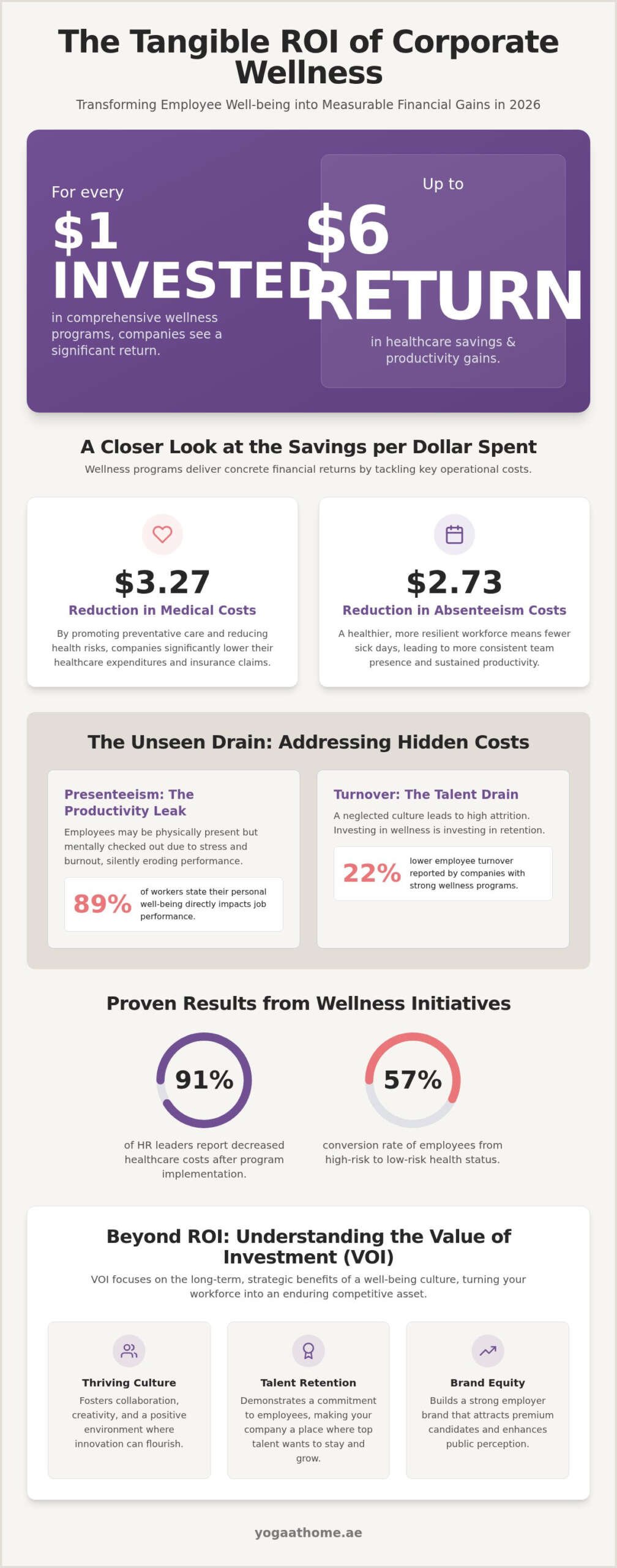
Could your organization really see a six-fold return for every dollar spent on employee health? As we move into 2026, the data is clear. For every $1 invested in comprehensive well-being, companies can see up to $6 in healthcare savings and productivity gains. Understanding the ROI of corporate wellness programs is no longer a luxury for the few. It’s a vital strategic pillar for any leadership team facing the rising costs of burnout and silent productivity leaks like presenteeism.
You likely recognize that your team is your most precious resource, yet measuring the soft benefits of a happy office often feels like trying to catch the wind. We understand the challenge of balancing a serene work culture with the firm demands of a balance sheet. This guide will show you how to transform those intangible feelings into concrete financial data. You’ll discover how to lower medical costs by an average of $3.27 and reduce absenteeism costs by $2.73 for every dollar you commit to your staff’s vitality. We’ll explore a clear framework for measuring success, from reducing turnover by 22 percent to revitalizing your employer brand through mindful, restorative interventions delivered right to your office.
Key Takeaways
- Identify the hidden economic drain of presenteeism and learn how addressing mental clarity can stop silent productivity leaks within your team.
- Master a balanced framework for measuring the ROI of corporate wellness programs by tracking both immediate insurance savings and long-term employee engagement.
- Shift your strategic perspective toward the Value of Investment (VOI) to understand how a restorative culture serves as your most enduring competitive asset.
- Discover why low-overhead, high-impact interventions like Corporate Yoga are essential for integrating mindfulness into a high-performance professional environment.
- Follow a practical guide to conducting a baseline health audit, ensuring your wellness initiatives are bespoke and specifically tailored to your workforce’s needs.
The Hidden Economic Burden of Employee Burnout and Stress
A thriving business is a living organism, and its health is only as strong as the vitality of the people who sustain it. True health serves as the foundation upon which every successful enterprise is built. When we look at the financial health of an organization, we must look beyond the ledger to the human energy powering the work. A team that feels supported and balanced is a team that performs with clarity and purpose.
Many leaders struggle to measure the ROI of corporate wellness programs because they focus only on what is visible. They track absenteeism, yet they often overlook the “silent” drain of presenteeism. This phenomenon occurs when employees remain at their desks while they’re unwell, stressed, or mentally exhausted. They’re present in body, but their focus is fractured. Research indicates that 89 percent of workers believe their personal wellness directly impacts their job performance. When this connection breaks, productivity evaporates, creating a hidden economic burden that persists long before an employee ever calls in sick.
The Cost of Doing Nothing
Choosing to ignore employee well-being creates a significant financial leak. High attrition rates are often the final symptom of a neglected culture. Because companies with strong wellness programs report up to 22 percent lower employee turnover, the decision to invest is a decision to retain your best talent. In 2026, burnout is no longer viewed as a personal failing; it’s a recognized organizational risk that demands a strategic response. Mental fatigue leads to error-prone work and a lack of creative problem-solving. While the cost of replacing a single talented team member is staggering, the cost of keeping a disengaged, exhausted workforce is often even higher.
Physical Health and the Bottom Line
The physical body is the vessel for all professional output. Hours of sedentary desk work take a heavy toll on spinal health and deplete natural energy levels. This physical stagnation leads directly to mental fog and reduced daily output. Implementing targeted interventions, such as practicing the best yoga poses for back pain, can drastically reduce physical-related downtime and restore focus. Comprehensive corporate wellness programs provide the necessary tools to reverse these trends. By addressing the physiological effects of stress through movement and breath, you aren’t just offering a perk. You’re protecting your most valuable capital and ensuring the long-term resilience of your organization.
Quantifying the ROI of Corporate Wellness Programs: Hard vs. Soft Savings
True stewardship is the art of seeing both the visible and the invisible. When evaluating the ROI of corporate wellness programs, leaders must look beyond the immediate balance sheet to understand the full spectrum of financial recovery. Hard ROI provides the concrete data of healthcare savings and insurance premiums. Soft ROI captures the ethereal but vital gains in morale, creativity, and the collaborative energy that fuels innovation. Together, they form a complete picture of organizational health.
The true power of a well-being initiative is often found in the “Multiplier Effect.” When one employee finds internal balance and physical relief, their serenity influences the entire team’s productivity. This collective shift lowers the barrier to effective communication and reduces the friction of workplace conflict. A calm mind is a creative mind, and a creative team is a company’s most significant competitive advantage. By investing in the individual, you’re essentially compounding the interest on your human capital.
Measuring Healthcare Cost Reductions
Measurable financial returns start with the reduction of medical claims. Data from 91 percent of HR leaders shows a significant decrease in healthcare costs after implementing structured wellness initiatives. For every dollar invested, medical costs can fall by approximately $3.27, while absenteeism costs drop by about $2.73. This tangible return is largely driven by a 57 percent conversion rate from high-risk to low-risk health status among participating staff. Preventative care is always more cost-effective than reactive medical intervention; it’s the difference between tending a garden and repairing a storm-damaged roof. To truly design for impact, leadership must prioritize these preventative measures as a core business strategy.
The Productivity Dividend
A focused mind is a productive mind. Even a 1 percent increase in employee engagement and focus leads to substantial gains in annual output. We define the Productivity Dividend as the profit recovered from lost time, reclaimed through faster and more accurate decision-making. Stress reduction techniques allow practitioners to navigate complex tasks with a steady hand and a clear perspective. When employees aren’t distracted by physical discomfort or mental fatigue, they can dedicate their full energy to the mission at hand. Many organizations find that integrating Corporate Yoga into the workday provides the perfect vehicle for this recovery. This restorative approach ensures that the return on your investment is felt in every meeting, every project, and every successful milestone.
The Value of Investment (VOI): Culture, Retention, and Brand Equity
A company’s culture is its most enduring competitive advantage and its greatest asset. It’s the soil in which all professional growth happens, and its quality determines the resilience of the entire organization. While we often focus on the direct ROI of corporate wellness programs, a broader and more holistic metric has emerged for the visionary leader: Value of Investment (VOI). VOI recognizes that the true worth of a program isn’t only found in immediate medical savings but in the intangible strength of the organization’s spirit. It measures the ripple effect of employee satisfaction, collaborative energy, and the quiet confidence that comes from knowing an employer truly values the person behind the professional.
A critical Harvard study on wellness program ROI suggests that short-term health outcomes may sometimes appear modest when viewed through a narrow lens. However, this perspective often overlooks the profound impact on talent retention and brand equity. In a professional landscape where 74 percent of organizations are increasing their wellness spend, those who fail to see the VOI risk losing their most valuable contributors to more empathetic competitors. High-performing teams are built on trust, and nothing signals trust more clearly than a commitment to the team’s long-term vitality.
Building a Culture of Resilience
Shared wellness activities, such as practicing Corporate Yoga together, foster stronger interpersonal team bonds that transcend typical office interactions. These moments of collective breath and focus create a sense of psychological safety. When staff feel their well-being is a priority, they’re more likely to engage deeply with their work and their colleagues. By positioning wellness as a core value rather than a peripheral benefit, you build a resilient foundation. This internal stability allows your team to navigate challenges with grace and collective focus.
Employer Branding and Talent Attraction
The 2026 workforce prioritizes vitality and internal balance over traditional corporate perks. A ‘Wellness-First’ brand acts as a powerful differentiator in a crowded and competitive recruitment market. When your current staff experience genuine transformation, they naturally become your most effective advocates. This organic advocacy significantly reduces recruitment costs by improving internal loyalty. Companies that prioritize these programs report up to 22 percent lower employee turnover, ensuring that your human capital remains both stable and inspired for the journey ahead.
Design for Impact: How to Maximize the Financial Returns of Wellness
Excellence in well-being is achieved through careful intention, not by accident. To truly maximize the ROI of corporate wellness programs, a leadership team must move beyond generic perks toward bespoke solutions that address the unique needs of their workforce. A program that feels distant or difficult to access will inevitably fail to gain traction. Instead, you should focus on a structured path that honors the individual while serving the organization’s financial goals.
The journey toward a high-impact strategy begins with a baseline health and engagement audit. You can’t improve what you haven’t measured. Once you understand the specific stressors your team faces, you can select high-participation, low-barrier interventions. On-site sessions, for instance, remove the friction of travel and scheduling. Finally, ensure every session is led by certified experts and track clear KPIs to validate your progress. By following these steps, you ensure that wellness becomes a sustainable business strategy rather than a fleeting initiative.
Choosing the Right Wellness Interventions
Accessibility is the primary driver of participation rates. While many organizations offer wellness benefits, only about one-third of employees typically use them. To bridge this gap, mobile, office-based delivery is essential. Bringing the practice to the team’s own environment maximizes engagement and minimizes disruption to the workday. For those managing regional teams, consulting experts for yoga classes in dubai ensures that your standards for professional, on-site instruction are consistently met across all locations.
The Role of Professional Certification
Professional Credibility is the assurance that a wellness provider possesses the verified expertise to guide others toward health safely. In the corporate world, this isn’t just a matter of quality; it’s a matter of safety and liability. REPS UAE and Yoga Alliance certifications are essential benchmarks for any instructor entering your workspace. Uncertified instruction carries the risk of injury and poor employee engagement, which can quickly negate any financial gains. When you prioritize certified professionals, you protect your staff and your investment simultaneously. Ready to bring expert-led, restorative sessions to your office? Discover how our Corporate Yoga workshops can revitalize your team’s focus and health today.
Holistic Corporate Yoga: A Strategic Investment in Human Capital
Yoga is the ancient art of harmonizing the body’s energy with the mind’s focus, creating a state of tranquil alertness. It acts as a foundational pillar for any professional environment, offering a technology for internal balance that transcends the physical. In a high-stakes corporate setting, this harmony becomes a strategic asset. When a team breathes together, they build a collective resilience that shields them from the chaotic pressures of the modern market. This practice is not merely about flexibility; it’s about fostering the mental clarity required to lead with wisdom and composure.
Mindfulness and breathing techniques directly combat the physiological effects of stress by regulating the nervous system and lowering cortisol levels. This internal shift allows employees to regain the focus needed for complex problem-solving and creative innovation. Such restorative practices are essential components in protecting the ROI of corporate wellness programs. By providing these tools, you’re empowering your staff to manage their own energy, which leads to a more sustainable and vibrant work culture.
The versatility of the practice allows it to meet any team exactly where they are. From high-energy Hatha Yoga that invigorates the spirit to restorative meditation workshops that soothe a tired mind, the options are as varied as your workforce. Yogaathome serves as your national partner for professional corporate wellness, bringing these transformative experiences directly to your workspace. We believe that wellness is a way of life that should be accessible and non-intimidating for everyone, regardless of their previous experience or physical ability.
Bespoke Programs for Diverse Needs
True inclusivity means recognizing that every employee has different physical needs and comfort levels. We offer tailored sessions for various demographics, including Ladies Yoga and Yoga for Seniors, ensuring that every practitioner feels respected and included. Integrating mindfulness into the workday enhances focus and creativity at every level, turning a standard office into a sanctuary of productivity. The convenience of doorstep and office delivery for national UAE businesses means your team can transition from a high-pressure meeting to a restorative session without the stress of travel. This location-specific service makes wellness a natural, seamless part of the professional day.
The Path Forward to 2026 Excellence
A resilient, healthy workforce is the most reliable engine for long-term financial growth and organizational stability. By shifting from reactive healthcare to proactive wellness, you protect the ROI of corporate wellness programs while securing your company’s future. The path to 2026 excellence is paved with intentional, restorative practices that honor the human element of your enterprise. Taking this proactive step today ensures that your team remains grounded, inspired, and ready for the challenges of tomorrow. Elevate your team’s performance with Yogaathome’s corporate programs.
Cultivating a Resilient Future for Your Organization
Health is the foundational pillar upon which every successful enterprise is built. As we look toward 2026, the ROI of corporate wellness programs is clearly reflected in reduced healthcare expenses and the recovery of profit from silent productivity leaks. By choosing bespoke interventions led by REPS UAE and Yoga Alliance certified instructors, you ensure that your investment is both safe and profoundly effective. A resilient workforce isn’t just a business goal; it’s a sustainable way of life that secures your company’s long-term competitive advantage in a demanding market.
True transformation begins when you prioritize the holistic well-being of the person behind the professional. We invite you to transition from reactive medical spending to a proactive culture of vitality and internal balance. Our restorative approach combines mindful postures and meditation to restore mental clarity through convenient on-site delivery across the UAE. This commitment to your team’s vitality will resonate through every project and interaction.
Transform your workplace culture with bespoke corporate yoga sessions from Yogaathome.
We’re honored to act as your supportive partner in this restorative process. Together, we can create a workplace that is as grounded and serene as it is productive.
Frequently Asked Questions
What is a typical ROI for a corporate wellness program?
Organizations typically see a return of up to $6 for every $1 invested in comprehensive health initiatives. This total includes a reduction in medical claim costs by approximately $3.27 and a decrease in absenteeism expenses by about $2.73 for every dollar spent. These figures demonstrate that the ROI of corporate wellness programs is both measurable and substantial when your strategy is holistic and well-executed.
How do you measure the ROI of employee wellness?
Measuring success requires tracking both hard and soft metrics over a multi-year period. You should analyze changes in healthcare premiums, workers’ compensation claims, and the frequency of sick leave. Additionally, evaluating shifts in employee turnover rates and engagement scores provides a clearer picture of the financial recovery. Using a baseline audit allows you to quantify the transition from high-risk to low-risk health status.
What is the difference between ROI and VOI in wellness?
ROI focuses on direct financial savings, such as reduced insurance premiums and medical costs. In contrast, Value of Investment (VOI) measures the broader impact on organizational health, including improved employee morale, brand equity, and talent attraction. While ROI justifies the budget, VOI highlights how a wellness-first culture serves as an enduring competitive advantage for your brand and long-term stability.
How long does it take to see financial returns from wellness programs?
Financial returns typically become significant between two and five years after the initial implementation. While immediate improvements in team morale and focus occur quickly, the deep-seated changes in chronic health risks and insurance claim patterns require consistent participation over time. Patience is a vital part of the process as you move from reactive medical spending to a proactive state of organizational vitality.
Can corporate yoga really improve employee productivity?
Yes, integrating Corporate Yoga directly addresses the physiological effects of stress that lead to mental fatigue. By utilizing breathing techniques and physical postures, employees can clear mental fog and improve their decision-making speed. This restorative practice helps reclaim lost time by reducing presenteeism, ensuring that the team remains present and focused during high-pressure professional tasks while maintaining internal balance.
Is a corporate wellness program worth the investment for small businesses?
Small businesses often feel the impact of a single employee’s burnout more acutely than larger corporations. Investing in wellness is highly cost-effective for smaller teams because it protects their most vital human capital. Low-overhead interventions, such as on-site yoga workshops, provide a high-impact way to reduce turnover and build a resilient culture without requiring the extensive infrastructure of a large-scale health plan.
What are the most effective wellness initiatives for high ROI?
The most effective initiatives are those that address multiple dimensions of health, including physical vitality and mental clarity. Comprehensive programs that combine movement, such as Hatha Yoga, with mindfulness training tend to produce the highest ROI of corporate wellness programs. Accessibility is the primary driver of success, making on-site delivery a critical factor in ensuring high participation rates across your workforce.
How does employee retention impact the overall ROI of wellness?
Strong wellness initiatives can reduce employee turnover by up to 22 percent, significantly lowering recruitment and training expenses. Retaining experienced talent preserves institutional knowledge and maintains team cohesion, which are essential for long-term productivity. When staff feel their well-being is a core priority, their loyalty increases, creating a stable foundation that compounds the financial benefits of your wellness investment over time.