What if the most productive thing you could do for your body today isn’t a high-intensity workout, but staying perfectly still for five minutes? In a world that prizes constant movement, the idea of slowing down feels almost radical. You’ve likely felt that heavy, stubborn tightness in your hips and lower back after a long day of sedentary work. It’s a physical burden that often mirrors the mental burnout and high stress of a busy schedule. You want to feel loose and calm, yet finding the time to visit a public studio often feels like just another chore on an over-packed to-do list.
We believe that health is an intrinsic value, and true wellness should be accessible from the sanctuary of your own home. This guide introduces you to essential yin yoga poses as a strategic “functional pause” designed to recharge your body’s connective tissues and restore your mind’s resilience. By practicing these foundational techniques, you’ll discover how to release deep-seated tension, improve your sleep quality, and cultivate a sense of profound mental clarity. We’ll walk through the specific postures and setup tips you need to create a restorative home practice that fits your life perfectly.
Key Takeaways
- Learn why the functional approach to yin yoga poses focuses on internal sensation rather than aesthetic form to unlock deep physical release.
- Understand the science of fascia and why holding postures for several minutes is essential for recharging your body’s connective tissues.
- Discover how to curate a restorative home sanctuary by using lighting, silence, and props to deepen your connection to the practice.
- Gain insight into how professional guidance helps you navigate the subtlety of Yin, ensuring a safe practice that addresses specific needs like back pain or senior wellness.
What Are Yin Yoga Poses? Embracing the Stillness of Yin
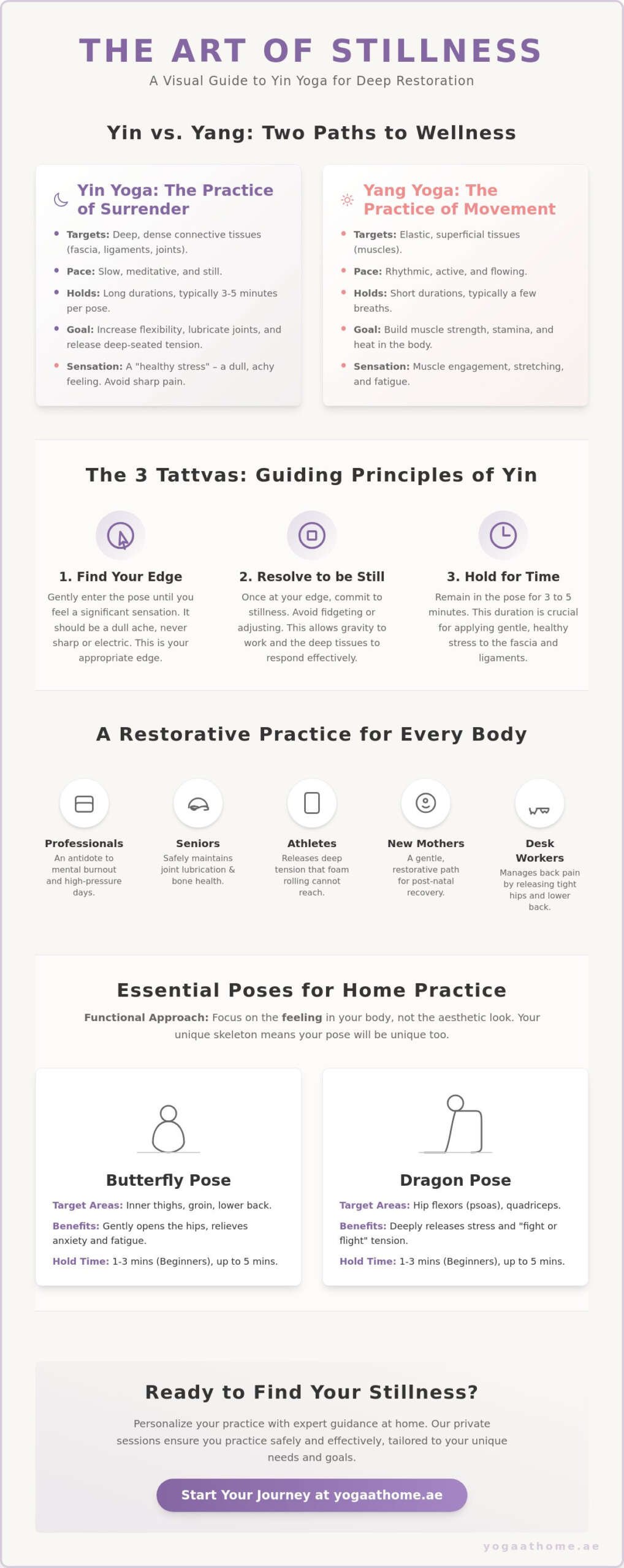
True health isn’t found in the relentless pursuit of more; it’s discovered in the quiet spaces between actions. Yin Yoga is a slow-paced, meditative practice that invites us to shift our focus from the superficial to the profound. While most modern exercises target the “Yang” tissues, which are the rhythmic, elastic muscles, yin yoga poses are designed to reach the “Yin” tissues. These include the ligaments, joints, and the intricate web of fascia that holds our physical form together. By applying gentle, consistent pressure to these areas, we encourage the body to remain supple and resilient over time.
Our modern lives are overwhelmingly Yang. We’re constantly moving, achieving, and reacting. Without the balance of restorative stillness, our systems become brittle and prone to injury. Practicing at home transforms your living space into a private sanctuary where you can finally drop the social mask. In this environment, you aren’t performing for a class or competing with a neighbor; you’re simply observing your internal landscape. This internal focus is guided by three foundational principles, or Tattvas: finding your appropriate edge, resolving to remain still, and holding the posture for a dedicated period of time, usually three to five minutes.
The Difference Between Yin and Restorative Yoga
While both practices use props and long holds, their intentions are distinct. Restorative yoga aims for total comfort and support to soothe the nervous system. Yin, however, seeks to create a “healthy stress” on the fascia. You’re looking for a dull, achy sensation that signals the deep tissues are being stimulated. It’s vital to distinguish this “Yin edge” from sharp, electric, or stabbing pain. If you feel the latter, it’s a signal to back off immediately. This practice perfectly complements active routines like Hatha Yoga or weight training by maintaining the joint mobility that muscle-building can sometimes restrict.
Who Can Benefit from Yin Yoga Poses?
This practice is profoundly inclusive and adapts to your specific stage of life. Professionals find it’s an excellent antidote to mental burnout, providing the clarity needed after high-pressure days. For those seeking Yoga for Seniors or Yoga for old age, these yin yoga poses offer a safe way to maintain bone health and joint lubrication without the strain of standing balances. Athletes use these techniques to release deep-seated tension that foam rolling alone cannot reach. Whether you’re a mother needing Post-natal Yoga or a desk-worker managing Yoga for back pain, the stillness of Yin offers a bespoke path to recovery that respects your body’s unique limits.
7 Essential Yin Yoga Poses for Deep Restorative Healing
Wellness is not a destination but a continuous, gentle process of returning to oneself. When we practice yin yoga poses, we move away from the aesthetic “perfection” often seen in modern fitness and toward a functional approach. This means what you feel in your body is far more important than how the pose looks in a mirror. Because every individual’s skeletal structure is unique, your expression of a posture will naturally differ from anyone else’s. This practice invites you to listen to your body’s subtle whispers before they become shouts of pain.
Safety remains our highest priority during home practice. For beginners, it’s wise to start with hold times of one to three minutes, gradually progressing to five minutes as your tissues adapt. Use your breath as a reliable internal compass; if your inhalation becomes shallow or jagged, you’ve likely pushed past your healthy edge. In these moments, back off slightly and find a place where you can remain still and soft. For those managing chronic discomfort, our specialized yoga for back pain sessions provide the personalized adjustments needed to practice these poses with total confidence.
Poses for the Lower Body and Hips
- Butterfly Pose: This seated posture targets the inner thighs and the lower back. By bringing the soles of your feet together and folding forward, you create a gentle opening in the hips. While it serves a different anatomical purpose than the active Padmasana, it is an excellent way to prepare the joints for deep seated stillness.
- Dragon Pose: This is a deep, often intense hip flexor stretch. It specifically addresses the psoas muscle, which often carries the weight of our daily stress. It’s a powerful tool for releasing the “fight or flight” tension stored in the pelvic region.
- Swan Pose: Known as the Yin version of Pigeon, Swan focuses on the outer hips and glutes. By staying in this shape for several minutes, you allow the dense connective tissues around the hip joint to slowly unwind.
Poses for the Spine and Upper Body
- Sphinx Pose: Laying on your stomach and propping yourself up on your forearms creates a gentle compression in the lumbar spine. This stimulates the lower back safely and helps reverse the “slouch” associated with desk work.
- Caterpillar Pose: A simple seated forward fold that targets the entire back chain of the body. It stretches the ligaments of the spine and the hamstrings, offering a profound sense of surrender.
- Bananasana: This unique side-body stretch involves lying on your back and curving your body into a “C” shape. It opens the ribcage and the intercostal muscles, making it easier to take deep, nourishing breaths.
- Tadpole Pose: A wide-kneed variation of Child’s Pose that opens the inner groins while providing a grounding, calming effect on the mind.
Integrating these yin yoga poses into your weekly routine creates a sustainable foundation for long-term health. By dedicating time to these seven shapes, you provide your body with the “functional pause” it needs to recover from the demands of a high-pressure lifestyle.
Setting Up Your Home Sanctuary for Yin Practice
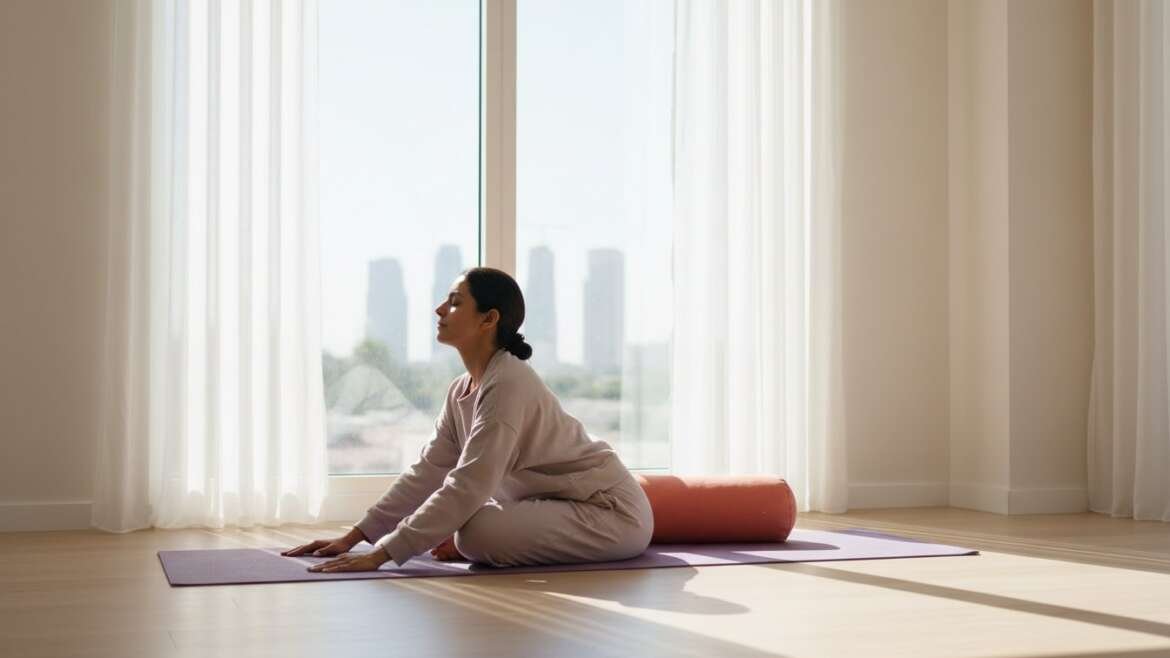
A sanctuary isn’t defined by its square footage; it’s defined by the intention you bring to the space. Creating a dedicated area for your practice is a vital step in signaling to your nervous system that it’s time to transition from “doing” to “being.” Because Yin is a cooling practice that doesn’t generate the internal heat of a vigorous Hatha Yoga session, the temperature of your room should be comfortably warm. Dimming the lights or using candles can help soften your visual field, making it easier to turn your attention inward and focus on the subtle sensations of your yin yoga poses.
Timing your session can also influence the depth of your experience. Many practitioners find that practicing in the early morning, when the body is naturally stiffer and the mind is quiet, allows for a more profound connection to the connective tissues. Alternatively, a late evening practice serves as a perfect bridge to restorative sleep. Recent data from 2026 indicates that participation in home-based wellness routines has surged by over 25% in North America, highlighting a global shift toward reclaiming the home as a place of healing and mental clarity.
Creative Home Prop Substitutes
You don’t need a collection of professional equipment to begin your journey. While specialized bolsters are helpful, you can achieve the same therapeutic results by hacking your home environment. A firm bed pillow or a tightly rolled duvet makes an excellent substitute for a bolster, providing the necessary support for your spine in a seated fold. If you need to bring the floor closer to you, reach for a stack of thick coffee table books or a sturdy box instead of a yoga block. A simple bath towel or a sturdy belt can also act as a strap to help you safely navigate your “edge” without straining your joints.
Cultivating the Mindset of Stillness
The most important tool you bring to the mat isn’t physical; it’s your mindset. In a culture that prizes constant productivity, the act of “non-doing” can feel uncomfortable at first. When you settle into yin yoga poses for five minutes, your mind will naturally begin to wander. Instead of fighting these thoughts, use basic breathing techniques to anchor yourself in the present moment. Deep belly breathing, where you feel the abdomen expand on the inhale and soften on the exhale, helps maintain the “functional pause” required for tissue release. This patient, grounded approach ensures that your practice remains a sustainable way of life rather than just another item on your to-do list.
The Science of Stillness: Why Yin Poses Target Deep Tissues
Physical health is a state of structural harmony where every layer of the body moves with ease. To understand why yin yoga poses are so effective, we must look beneath the muscles to the fascia. Fascia is the intricate, silvery web of connective tissue that encases our organs, bones, and muscles. While muscles are “Yang” in nature, meaning they are elastic and respond well to rhythmic movement, fascia is “Yin.” It is more plastic-like and requires steady, long-held pressure to encourage change. When we hold a shape for several minutes, we trigger a process known as “creeping,” where the connective tissue slowly and safely remodels itself.
This remodeling is the secret to lasting physical transformation. By targeting the ligaments and joint capsules, we release the deep-seated restrictions that often lead to chronic stiffness. This structural release allows you to stand taller and move with more grace in your daily life. It provides the essential foundation for more active postures, helping you find ease in your Tadasana or during your morning walk. As the global yoga market reaches a projected 68.15 billion dollars in 2026, more practitioners are realizing that true mobility comes from this patient, deep-tissue work.
The Meridian Connection and Energy Flow
Beyond the physical scaffolding, these postures stimulate the body’s energetic pathways. In traditional wisdom, yin yoga poses are seen as a way to clear blockages in the meridians, much like a needle-less form of acupuncture. Deep hip openers, for instance, often trigger a significant emotional release as we unwind the tension stored in the pelvic region. By staying present with these sensations, you can harmonize the flow of energy through the seven chakras, promoting a sense of holistic health that moves far beyond the physical mat.
Mental Resilience and the Nervous System
The practice of Yin is a profound training for the mind. By staying still while experiencing the “Yin edge” of a pose, you activate the parasympathetic nervous system, often called the “rest and digest” mode. This shift is scientifically proven to lower cortisol levels and improve sleep quality, which is vital in a world where mental wellness is now a primary reason for practice. Yin builds a unique kind of “mental grit.” It teaches you to sit with discomfort without reacting, a skill that translates directly into better stress management at work. To experience these benefits through a personalized lens, you can book a private yoga session tailored to your specific recovery goals.
Personalising Your Practice with Private Instruction
True wellness isn’t a one-size-fits-all garment; it’s a bespoke experience tailored to the contours of your unique life. While this guide offers a foundational map of yin yoga poses, a generic video or article lacks the intuitive response of a living mentor. Every skeletal structure is different, and what feels like a “healthy edge” for one person might lead to joint over-extension for another. Beginners, in particular, benefit from the watchful eye of a professional who can identify subtle misalignments before they lead to discomfort. This transition from a general guide to a personalised programme ensures that your time on the mat is both safe and profoundly effective.
In the sanctuary of your own home, Ladies Yoga becomes a deeply personal experience where you can drop all pretenses. There’s a specific luxury in having a female-only private session delivered to your doorstep, allowing you to practice in an environment where you feel completely secure and understood. This level of privacy fosters a deeper mental release, making it easier to access the restorative benefits of the practice without the distractions of a public setting. It’s about more than just stretching; it’s about building a sustainable wellness routine that respects your boundaries and your schedule.
The Benefits of a Private Yoga Mentor
A private mentor provides customized adjustments that a screen simply cannot offer. By understanding your unique bone structure and current flexibility levels, an instructor can suggest the exact placement of props to help you settle into yin yoga poses with total ease. This guidance is especially vital for those with specialized needs. Whether you require the gentle approach of Yoga for Seniors or the careful modifications of Pre-natal Yoga, professional instruction ensures that every shape you take supports your body’s current state. This relationship also brings a level of accountability and professional reliability that helps you stay committed to your personal growth, even on your busiest days.
Taking the Next Step Toward Holistic Wellness
A private session is a holistic journey that combines physical postures with meditation and breathing techniques tailored specifically to you. Instead of following a pre-recorded sequence, your practice can be adjusted in real-time to address the stress of your day or a specific area of tension, such as the lower back. This bespoke approach transforms a simple workout into a transformative life-long habit. If you’re ready to move beyond the basics, you can explore personalised yoga instruction for a truly restorative experience. By bringing professional expertise directly to your home, you make wellness an integrated, non-intimidating part of your daily existence.
Embrace the Transformative Power of Stillness
Health is an intrinsic value that flourishes when we prioritize restorative stillness. By integrating these yin yoga poses into your life, you’ve taken a significant step toward releasing deep-seated tension and reclaiming your mental clarity. You now understand that this practice isn’t just about physical flexibility; it’s a strategic pause that recharges your fascia and calms your nervous system from the inside out.
While a home practice is a beautiful beginning, the journey toward holistic wellness is often more profound with expert guidance. Our REPS UAE and Yoga Alliance certified instructors are dedicated to bringing professional excellence directly to your home or office. Whether you’re looking for specialized ladies-only sessions, Yoga for Seniors, or a bespoke routine to manage back pain, we provide the empathetic support you need to thrive. This personalized approach ensures your practice remains safe, effective, and perfectly aligned with your unique goals.
Are you ready to elevate your well-being with a practice designed specifically for your body? Book Your Personalised Private Yoga Session Today and discover the difference that professional, location-specific instruction can make. Your path to internal balance and physical resilience starts with a single, mindful breath.
Frequently Asked Questions
How long should I hold a Yin yoga pose?
You should typically hold a Yin posture for three to five minutes to effectively reach the deep connective tissues. Beginners often start with shorter durations of one to three minutes to allow their bodies to adapt to the stillness. As your resilience grows, you might choose to extend these holds to ten minutes in specific poses. This patient approach ensures you’re applying a healthy stress to the fascia without overtaxing your joints.
Can beginners practice Yin yoga poses without any experience?
Yes, beginners can safely practice yin yoga poses even if they’ve never stepped onto a mat before. This style is non-competitive and focuses on internal sensation rather than complex acrobatics or standing balances. However, it’s highly beneficial to have a professional mentor guide your first few sessions. An expert eye helps you find your appropriate “edge” and ensures you don’t accidentally over-stretch your ligaments while practicing alone at home.
Is Yin yoga supposed to be painful?
Yin yoga shouldn’t be painful; instead, you should feel a dull, achy sensation that indicates you’ve reached your “edge.” If you experience any sharp, electric, or stabbing sensations, you must back off the pose immediately. The goal is to find a place of manageable discomfort where you can still breathe deeply and remain soft. Learning to distinguish between therapeutic stress and injury-inducing pain is a vital part of a sustainable wellness routine.
What is the best time of day to practice Yin yoga at home?
The best time to practice depends on your personal goals and daily schedule. Many find an early morning session is ideal because the body is naturally stiffer, allowing for better access to the deep connective tissues. Alternatively, practicing in the late evening helps activate the parasympathetic nervous system, which promotes better sleep quality. Regardless of the hour, ensure your environment is quiet and warm to support the cooling nature of the practice.
Can I do Yin yoga every day?
You can practice Yin every day, provided you listen closely to your body’s signals and vary the areas you target. Because this style works on the deeper tissues, it doesn’t require the same recovery time as a high-intensity Hatha Yoga or gym workout. Many practitioners find a daily “functional pause” helps manage chronic stress and maintain joint mobility. If you feel particularly tender or fatigued, it’s perfectly acceptable to take a day of complete rest.
Do I need special equipment to start Yin yoga?
You don’t need professional equipment to begin your journey into yin yoga poses. While bolsters and blocks are helpful, you can easily substitute them with common household items like firm pillows, thick books, or rolled-up towels. The most important “equipment” is a quiet space where you won’t be interrupted. Over time, you might choose to invest in quality props, but a lack of gear shouldn’t be a barrier to starting your restorative process today.
Is Yin yoga better than regular yoga for weight loss?
Yin yoga isn’t typically categorized as a high-calorie-burning exercise compared to more active styles. Its primary benefits are improved flexibility, joint health, and stress reduction. However, by lowering cortisol levels and improving sleep, it can indirectly support weight management goals. For those seeking a more active physical challenge, we recommend our Hatha Yoga sessions, which focus more on muscular engagement and building internal heat through rhythmic movement.