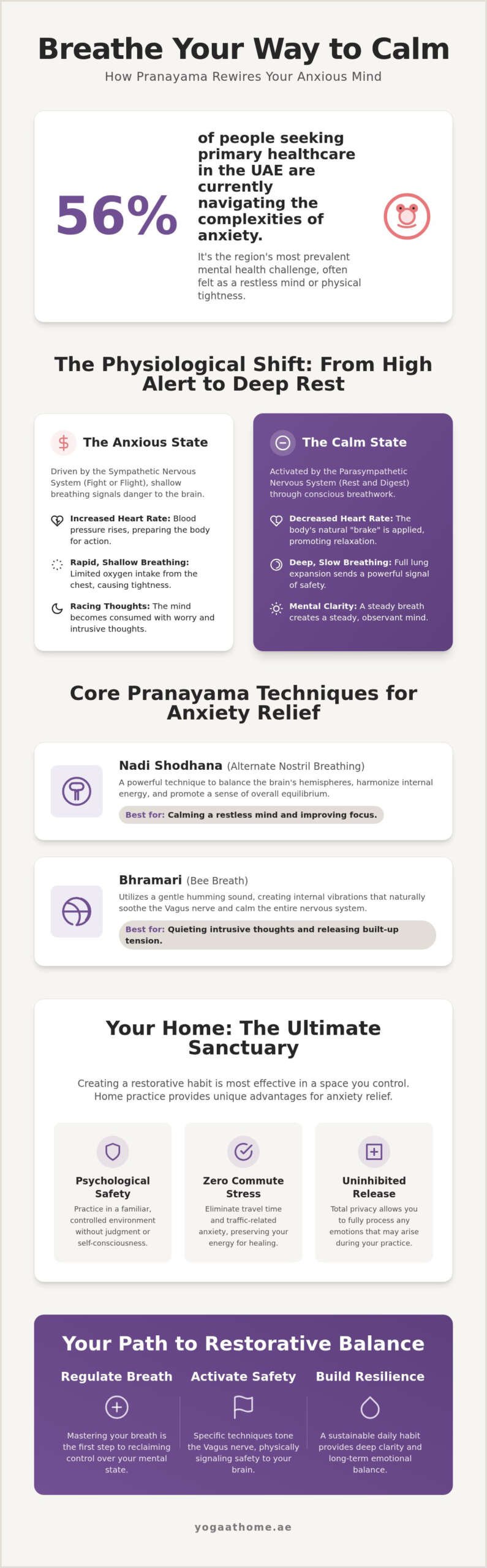
Did you know that 56% of people seeking primary healthcare in the UAE are currently navigating the complexities of anxiety? It is the most prevalent mental health challenge in our region today, often manifesting as a restless mind or a constant sense of physical tightness. You might feel that your thoughts are racing beyond your control, or perhaps you’re skeptical that a simple change in breath can truly impact your wellbeing. It’s understandable to want more than just a temporary fix when your nervous system feels constantly on edge.
This guide reveals how the ancient practice of Pranayama serves as a sophisticated physiological reset. By learning to regulate your breath, you can actively lower cortisol levels and find the same profound tranquility found in a professional guided meditation for anxiety sought after nationwide for mental clarity. We’ll provide you with immediate, restorative tools to calm your mind and establish a sustainable daily habit. With the right technique, you can transform your home into a sanctuary of peace, supported by the same expertise our REPS UAE certified instructors bring to every private session.
Key Takeaways
- Understand the distinction between involuntary breathing and the intentional regulation of vital energy to reclaim control over your mental state.
- Learn how specific breathwork sequences activate the Vagus nerve to physically signal safety to your brain and reduce cortisol.
- Master restorative techniques like Nadi Shodhana and Bhramari to balance your internal energy and quiet persistent, intrusive thoughts.
- Establish a sustainable home routine that provides the deep clarity of a guided meditation for anxiety dubai residents rely on for emotional balance.
- Discover the value of personalized support from REPS UAE certified instructors who can tailor these ancient practices to your specific wellness goals.
The Ancient Wisdom of Pranayama for Modern Anxiety
True wellbeing is not merely the absence of illness; it’s the presence of a steady, vibrant life force. This foundational philosophy is at the heart of The Ancient Wisdom of Pranayama, a practice that dates back thousands of years. While most of us go through our day breathing involuntarily, Pranayama invites us into the conscious regulation of Prana, or vital energy. It’s the difference between a leaf drifting on the wind and a sailor skillfully directing their sails. In our modern environment, where the nervous system is frequently trapped in a state of high alert, this intentionality becomes a necessary tool for survival and peace.
For those seeking guided meditation for anxiety dubai offers various paths, yet the most direct route involves mastering the breath. When we are anxious, our breathing becomes shallow and rapid, signaling to the brain that we are in danger. Pranayama reverses this cycle. It teaches us to lengthen the exhale and expand the lungs, which sends an immediate signal of safety to the brain. This practice isn’t just a set of exercises; it’s a way to communicate directly with your nervous system to reduce the physiological markers of stress.
The Relationship Between Prana and the Mind
In the yogic tradition, the mind and the breath are two sides of the same coin. Ancient texts explain that as the breath moves, the mind (Chitta) moves; when the breath is still, the mind becomes still. This connection is influenced by the Vayu, or the five subtle winds that direct energy throughout the body. When these winds are out of balance, we experience emotional turbulence. By practicing breath control, we aim for Sthira, which translates to steadiness or alertness without tension. A steady breath creates a steady mind, allowing you to observe your thoughts rather than being consumed by them.
Why Home Practice is the Preferred Choice for Anxiety
Developing a restorative habit is often most effective within the walls of your own home. For many individuals in the UAE, the thought of navigating traffic or entering a busy studio can actually heighten feelings of overwhelm. Home practice offers several distinct advantages for those focusing on anxiety relief:
- Psychological Safety: You are in a familiar environment where you control the lighting, temperature, and sounds.
- Zero Commute Stress: Eliminating travel time preserves your energy for the actual practice.
- Uninhibited Release: Breathwork can sometimes trigger emotional releases; having total privacy allows you to process these moments without self-consciousness.
By bringing an expert instructor into your personal space, you create a bespoke sanctuary that respects your boundaries and your schedule. This focused, one-on-one attention provides the same calming effects as the guided meditation for anxiety dubai residents use to find mental stillness. It ensures that every technique is performed safely and effectively, providing a solid foundation for long-term mental clarity and internal balance.
The Physiological Shift: How Breathwork Rewires the Nervous System
Anxiety is not just a mental experience; it’s a full-body event. When the brain perceives a threat, it floods the system with cortisol and adrenaline, preparing you for a fight or flight response. This reaction is governed by the Sympathetic Nervous System, which often leads to:
- Increased heart rate and blood pressure
- Rapid, shallow chest breathing
- Persistent muscle tension and physical fatigue
To find balance, we must learn to activate the Parasympathetic Nervous System (PNS), which acts as the body’s natural brake. Controlled breathwork is the fastest way to trigger this shift. By intentionally slowing your respiratory rate, you send a physical signal to the brain that the danger has passed, allowing your heart rate to drop and your body to soften.
The primary actor in this process is the Vagus nerve. This long, wandering nerve serves as the information highway between the brain and the internal organs. When you engage in specific yoga breathing for anxiety relief, you are essentially toning this nerve. A healthy Vagal tone allows for faster recovery from stress and improved emotional regulation. Establishing this physiological baseline is why many residents seek the structured approach of guided meditation for anxiety dubai experts provide to reclaim their sense of peace.
Another critical factor in managing panic is CO2 tolerance. Many people experiencing anxiety breathe too frequently, which paradoxically makes them feel like they aren’t getting enough air. Pranayama trains the body to handle slightly higher levels of carbon dioxide without triggering a panic response. This increased tolerance prevents the “suffocation alarm” in the brain from going off, providing you with a sense of control even during high-pressure moments.
Vagus Nerve Stimulation and Emotional Regulation
Specific breathing techniques increase your Heart Rate Variability (HRV), which is the variation in time between each heartbeat. A higher HRV is a strong indicator of emotional resilience and a healthy nervous system. Dr. Herbert Benson defined the relaxation response as a physical state of deep rest that changes the physical and emotional responses to stress. By mastering these techniques, you can move from a state of reactive panic to one of grounded, restorative observation.
Bridging Hatha Yoga and Pranayama
Physical alignment plays a vital role in how effectively you can breathe. If the chest is collapsed or the back is strained, the diaphragm cannot move through its full range of motion. Practicing the best yoga poses for back pain helps to open the torso and align the spine properly. A straight spine is essential for unobstructed Prana flow, making the experience as effective as any guided meditation for anxiety dubai has to offer. Our private yoga sessions ensure that your posture supports your breath, creating a holistic and bespoke path to tranquility.
Core Pranayama Techniques: A Practical Comparison for Anxiety Relief
Not all anxiety feels the same. Sometimes it’s a frantic, scattered energy; other times, it’s a heavy, heated frustration. Understanding which Pranayama technique to apply is key to a successful restorative practice. While a generic guided meditation for anxiety dubai residents often find online provides a good starting point, these specific breathing tools offer targeted relief for the nervous system’s varying states. By matching the technique to your current emotional landscape, you can achieve a more precise and effective physiological reset.
Nadi Shodhana: The Master Balancer
Nadi Shodhana, or Alternate Nostril Breathing, is the foundational practice for restoring equilibrium. To perform this, use the Vishnu Mudra by folding your index and middle fingers toward the palm. Close the right nostril with the thumb, inhale through the left, then close the left with the ring finger and exhale through the right. Maintaining an even ratio, perhaps four counts for the inhale and four for the exhale, is essential. This practice balances the logical left hemisphere and the creative right hemisphere of the brain, clearing the energetic channels to foster a deep sense of internal stability.
Bhramari: Using Sound to Soothe the Mind
If your mind feels like a beehive of intrusive thoughts, Bhramari (Bee Breath) is exceptionally effective. This technique involves making a low-pitched humming sound during a long exhalation. The vibration resonance has a direct, soothing effect on the cerebral cortex, effectively “drowning out” the mental noise of a high-stress workday or a sleepless night. For a more profound experience, use the Shanmukhi Mudra. Place your thumbs on the ear tragus, index fingers on the eyelids, middle fingers on the nostrils, and remaining fingers above and below the lips. Sealing these senses turns your attention inward, creating a private sanctuary of sound that mimics the calming depth of professional guided meditation for anxiety dubai practitioners use for mental stillness.
For moments when you need to stay grounded during physical movement, Ujjayi (Victorious Breath) provides a steady, rhythmic anchor. By slightly constricting the back of the throat, you create a soft “ocean” sound that helps you monitor your effort and remain present. Conversely, if your anxiety manifests as heat or anger, Sheetali (Cooling Breath) offers immediate relief. By curling the tongue and inhaling as if through a straw, you draw in cool air that lowers the body’s temperature and pacifies a heated mind. These tools allow you to customize your wellness journey, ensuring you have a specific response for every emotional hurdle.
Creating a Sustainable Home Practice: A Step-by-Step Routine
Consistency is the bridge between temporary relief and a permanent transformation of your nervous system. While understanding the theory of breathwork is valuable, the true benefits manifest through daily application. Establishing a routine at home provides a mental sanctuary similar to the professional guided meditation for anxiety dubai residents often seek to find stillness. Follow this structured five-step framework to build a practice that feels like a natural extension of your day rather than a chore.
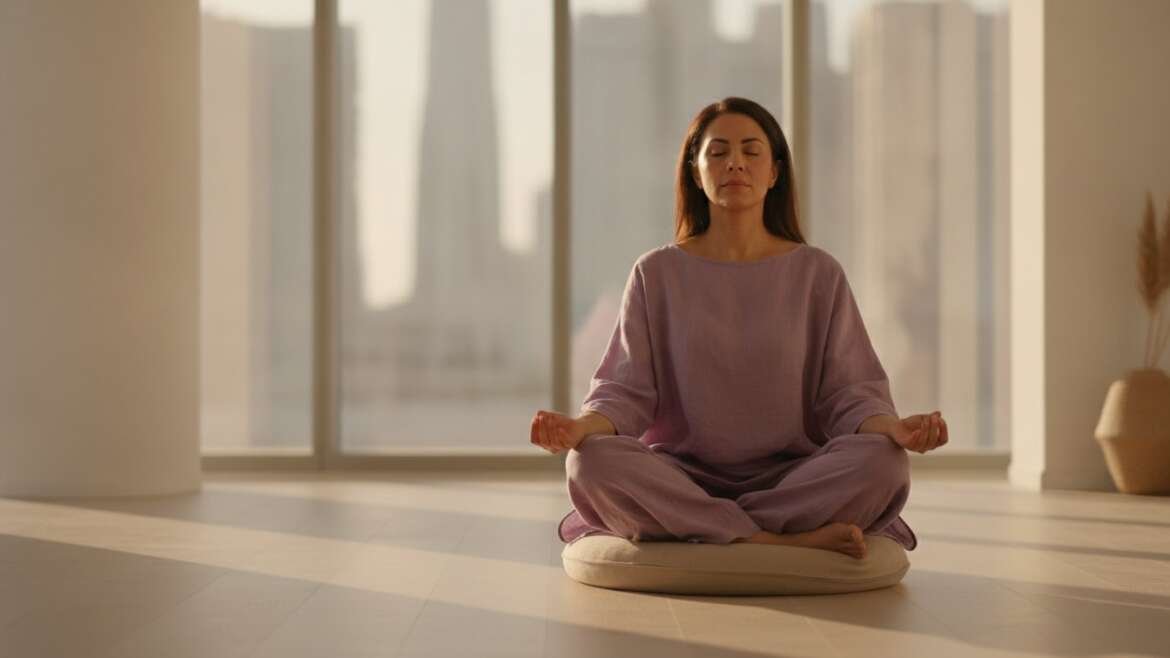
- Step 1: Preparation. Find a quiet space and sit in a comfortable, upright position. Use a cushion or a chair to ensure your hips are slightly higher than your knees, allowing the spine to remain effortlessly tall.
- Step 2: Initial Breath Awareness. Close your eyes and begin with Anapana, which is the simple observation of your natural, unforced breath. Notice the cool air entering your nostrils and the warm air leaving without trying to change it.
- Step 3: Physical Release. Perform gentle neck rolls and shoulder shrugs. Releasing tension in these areas is crucial because tight accessory muscles can “clamp down” on the diaphragm, making deep breathing difficult.
- Step 4: Selected Pranayama. Engage in 5 to 10 minutes of your chosen technique, such as Nadi Shodhana or Bhramari, as discussed in previous sections. Keep your focus on the rhythm and the subtle sensations in the body.
- Step 5: Integration. Conclude with three minutes of silent meditation or Savasana (corpse pose). This allows your nervous system to absorb the benefits of the practice and transition slowly back into your daily activities.
Timing and Consistency in the UAE Lifestyle
The ideal time for practice is during the Amrit Vela, the “ambrosial hours” before sunrise when the environment is naturally quiet. However, the fast-paced UAE lifestyle often requires flexibility. If a morning session isn’t possible, integrate two-minute micro-breaks of breathwork throughout your corporate day to prevent stress from accumulating. Creating a dedicated “Zen corner” in your home, even a small area with a specific candle or mat, acts as a powerful psychological trigger that signals your brain it’s time to relax.
Common Mistakes to Avoid
One of the most frequent errors is forcing the breath. If you feel a sense of air hunger or gasping, you’re trying too hard, which can actually increase anxiety. Breathwork should feel like a gentle expansion, never a struggle. Additionally, don’t ignore physical discomfort; if your back or knees ache, your mind will remain distracted. Finally, always practice on an empty stomach. A full stomach puts pressure on the diaphragm, limiting your lung capacity and making the practice feel heavy and restrictive.
If you’re unsure whether your technique is correct, working with a mentor can provide the professional reassurance you need. You can book a private yoga session to have a REPS UAE certified instructor refine your posture and pacing, ensuring your home practice is both safe and deeply restorative.
The Path to Restorative Balance with Personalized Yoga Support
Wellness is an intimate, lifelong process that flourishes best when supported by personalized guidance. For those dealing with acute anxiety, the thought of entering a crowded public space can be a significant barrier to starting a practice. Private instruction removes this obstacle by bringing the expertise of a mentor directly into your home. This one-on-one environment allows for a level of depth and vulnerability that is rarely possible in a group setting. It ensures that your journey with Pranayama and restorative movement is paced exactly to your needs, providing the same mental clarity as the professional guided meditation for anxiety dubai residents use to manage their daily stress.
Our instructors are REPS UAE and Yoga Alliance certified, which means they possess the technical knowledge and professional credentials to guide you safely. They understand the nuances of how the breath interacts with the nervous system and can adjust techniques in real-time based on your feedback. This expert-led approach is especially vital for beginners who may feel skeptical about the power of breathwork. Having a professional by your side provides the reassurance that you’re practicing correctly and effectively, turning skepticism into a sustainable wellness habit.
Why Private Instruction Beats Group Classes for Anxiety
In a group class, there’s often a subtle pressure to keep up with others, which can trigger the very anxiety you’re trying to soothe. Private sessions eliminate this comparison entirely. Your instructor focuses solely on your alignment and emotional state, offering immediate feedback that prevents injury and maximizes the efficacy of each technique. If you’re looking for a comprehensive roadmap on how to structure your sessions, our guide on yoga classes in Dubai explores how private home practice can deepen your mental work. This individualized pacing allows you to linger in a restorative pose or spend extra time on a calming breathwork sequence without feeling rushed.
Holistic Wellness at Your Doorstep
True transformation happens when Pranayama is integrated into a broader, bespoke wellness strategy. Whether you’re interested in Hatha Yoga to build physical resilience or restorative sessions to improve sleep, our trainers tailor every program to your specific emotional and physical needs. We also offer specialized ladies-only sessions with female instructors, ensuring a space of total comfort and cultural sensitivity for our practitioners. This holistic service is available across the UAE, making professional wellness accessible in the environment where you feel most secure. Start your journey to lasting mental clarity today with a personalized assessment that respects your unique path to peace.
Embrace Your Journey to Lasting Mental Clarity
Pranayama is more than a breathing exercise; it’s a profound physiological tool to silence the noise of modern life. You’ve discovered how intentional breathwork rewires your nervous system and how a sustainable home routine provides the same depth as a professional guided meditation for anxiety dubai residents trust for restorative balance. By mastering these ancient techniques, you reclaim control over your emotional wellbeing from the comfort of your own sanctuary. It’s a sustainable path that transforms your daily experience from one of overwhelm to one of grounded presence.
True transformation is often swifter and more secure when guided by a knowledgeable mentor. Our personalized programs are led by certified REPS UAE and Yoga Alliance instructors who specialize in tailoring practices to your specific needs. We offer specialized ladies-only sessions with female trainers, alongside bespoke programs for seniors and prenatal care. This expert support ensures every breath brings you closer to internal peace while respecting your individual physical requirements and schedule.
Book your private restorative yoga session today and take the first step toward a more grounded, tranquil version of yourself. Your path to serenity is just one conscious breath away, and we’re here to guide you every step of the way.
Frequently Asked Questions
Is Pranayama safe for everyone with anxiety?
Generally safe but requires caution. People with severe respiratory issues or a history of hyperventilation should consult a doctor first. For those seeking guided meditation for anxiety dubai locals use to find peace, it’s vital to start slow. Working with a certified instructor ensures that techniques are adjusted to your physical capacity, preventing the dizziness or “air hunger” that can occur when practicing without professional, expert-led guidance.
How long does it take for Pranayama to reduce anxiety symptoms?
You can often feel a physiological shift within just five minutes of practice. Slowing the breath immediately signals the parasympathetic nervous system to lower your heart rate. However, lasting mental clarity and structural changes in how you respond to stress typically require consistent daily practice over several weeks. A sustainable habit is much more effective than sporadic long sessions for achieving long-term emotional resilience and a grounded sense of internal stability.
Can I practice Pranayama if I have a blocked nose?
Yes, you can still practice, though you may need to modify the technique. If one nostril is blocked, avoid Nadi Shodhana and focus on belly breathing through the mouth or using a very light, gentle nasal breath. Sheetali (cooling breath) is also an excellent alternative as it involves inhaling through the mouth to cool the system. A private instructor can provide specific modifications to ensure your practice remains restorative during seasonal allergies or minor congestion.
What is the best time of day to practice breathing exercises for stress?
The early morning, known as Amrit Vela, is traditionally considered the most auspicious time because the environment is naturally quiet. However, the best time is ultimately whenever you can be consistent. Many people find that a short session after work helps transition from a high-pressure corporate environment to a restful home state. Practicing before bed is also highly effective for improving sleep quality and silencing the racing thoughts that often accompany anxiety.
Do I need special equipment for home breathwork?
You don’t need any specialized equipment to begin your practice. A comfortable chair or a firm cushion is usually enough to support a tall, straight spine. Some practitioners prefer using a yoga mat to define their “Zen corner,” but the most important “equipment” is simply a quiet, well-ventilated space where you won’t be interrupted. Ensuring your hips are slightly elevated above your knees can make seated breathing much more comfortable and sustainable for longer sessions.
Can Pranayama help with panic attacks while they are happening?
Yes, specific grounding techniques can be used to shorten the duration of a panic attack. Focusing on a long, controlled exhalation helps to counteract the hyperventilation often associated with panic. Techniques like the “sigh of relief” or gentle belly breathing can provide immediate anchors for your mind. However, it’s best to learn these tools during calm moments so they become instinctive when you need them most during an acute episode of distress.
What is the difference between Pranayama and simple deep breathing?
While deep breathing is a component of Pranayama, the latter is a more structured discipline involving the conscious regulation of vital energy. Pranayama includes specific ratios, holds, and energetic seals that target the nervous system more precisely. It’s a sophisticated method of “biohacking” your physiology to achieve states of deep mental stillness, offering a more nuanced approach than the generic guided meditation for anxiety dubai newcomers might initially expect when searching for stress relief.
Should I learn Pranayama from a book or a private instructor?
While books provide good theoretical knowledge, learning from a private instructor is significantly safer and more effective. A certified mentor can observe your physical alignment and catch subtle mistakes, such as forcing the breath or straining the diaphragm. This personalized feedback ensures that you’re performing the techniques correctly to avoid increasing your anxiety. Professional guidance provides the reassurance needed to build a confident, sustainable, and truly restorative home practice that respects your personal growth.