Imagine sitting in your quiet living room, the morning sun filtering through the blinds while your newborn finally drifts into a peaceful sleep. You feel a deep longing to reconnect with your body, yet the thought of navigating traffic or leaving your little one feels completely overwhelming. This is why many mothers are turning to hatha yoga for post-natal recovery as a way to heal within their own sanctuary. It’s natural to feel a mix of physical discomfort and a protective need to stay close to home during these first few months, and you deserve a practice that honors that bond.
In this guide, you’ll discover how personalized post-natal yoga at home can safely restore your strength, balance your emotions, and provide serenity during early motherhood. We’ll explore the essential timelines for returning to movement, such as waiting the recommended six to eight weeks after birth, and how gentle Hatha practices can restore your vitality in 2026. You’ll learn how bespoke, in-home sessions fit into your newborn’s schedule while providing the professional guidance you need for a serene transition into this new chapter of life.
Key Takeaways
- Learn the vital milestones for returning to movement safely, including why waiting for medical clearance is a non-negotiable step in your restorative journey.
- Discover how hatha yoga for post-natal recovery targets specific physical needs like pelvic floor strength while simultaneously calming the postpartum nervous system.
- Explore the logistical and emotional advantages of private home sessions that remove the stress of studio travel and let you stay close to your baby.
- Identify the specific categories of poses that help reverse the physical strain of feeding and carrying while restoring your internal sense of balance.
- Understand the importance of specialized, female-led instruction and how REPS UAE certification ensures your practice is both safe and professionally guided.
Understanding Post-natal Yoga: Restoring Balance After Childbirth
Health is a quiet, internal resonance that doesn’t require the noise of a crowded gym. After the profound transition of childbirth, your body deserves a sanctuary where it can heal at its own pace. Engaging in hatha yoga for post-natal recovery provides this space, focusing on the subtle alignment of the spine and the strengthening of the deep core. Unlike high-impact workouts that might strain your recovering pelvic floor, this practice is built on the principles of stability and ease. It’s a gentle reclamation of your physical self.
In Dubai’s fast-paced environment, it’s easy to feel the pressure of external expectations. However, your body has just performed a miracle, and its needs are now deeply internal. This specialized approach addresses the specific aches that come from nursing and carrying a newborn, such as tightness in the upper back and shoulders. By focusing on these localized needs, you aren’t just exercising; you’re providing targeted therapy for your new lifestyle.
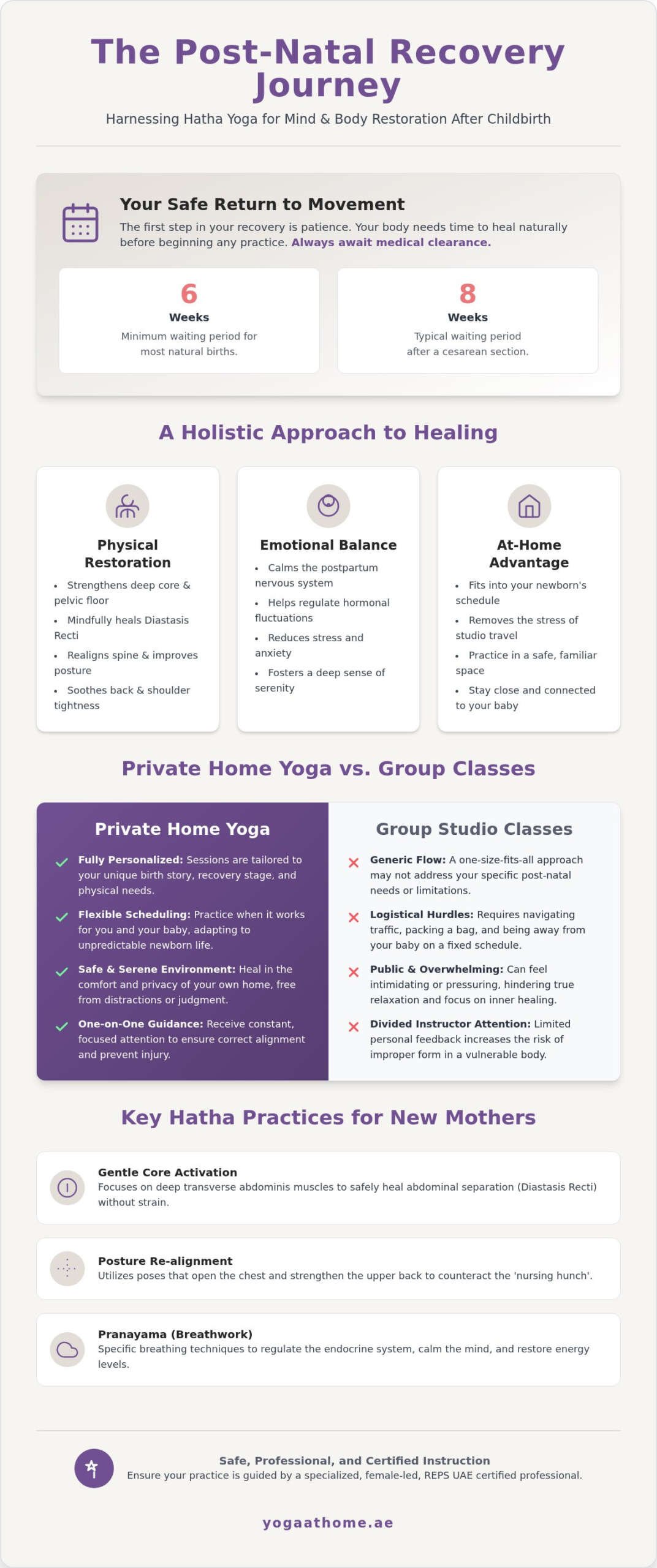
Before you begin, obtaining clearance from your healthcare provider is the first act of self-respect. This typically happens at the six-week mark for natural births and eight weeks for cesarean sections. This waiting period allows the body’s natural inflammatory response to settle. You’ll find that What is Hatha Yoga? encompasses a broad range of physical techniques that prioritize the union of breath and movement. Using hatha yoga for post-natal recovery is about listening to your body rather than pushing it. Recovery isn’t a race; it’s a sacred ritual of returning home to yourself.
Establishing a foundation of patience is perhaps the most difficult yet rewarding part of your practice. In the early days of motherhood, your energy levels fluctuate wildly, and some days even a few minutes of deep breathing will feel like a victory. Recognize that your healing is a journey, not a race against a clock or a social media feed. By approaching your mat with a spirit of kindness toward your changing body, you create a sustainable path toward long-term vitality.
The Role of the Fourth Trimester
The fourth trimester is a landscape in transition. Your organs are shifting back to their original positions while hormones like relaxin remain in your system, making joints more vulnerable to strain. Gentle movement helps manage this physiological shift, while mindfulness offers a way to navigate the emotional landscape of new motherhood. Post-natal yoga acts as a bridge between clinical recovery and physical vitality.
Setting Realistic Goals for Your Practice
Success in your early postpartum weeks is measured by how you feel, not how you look. Shift your focus toward improving mobility and deepening your breath rather than achieving complex poses. Every birth story is different, and a C-section recovery requires a different approach than a natural delivery. Prioritize consistency over intensity to build a sustainable habit that supports your long-term well-being.
The Holistic Benefits of Hatha Yoga for New Mothers
True restoration begins when we acknowledge that the body and mind are inseparable mirrors of one another. Integrating hatha yoga for post-natal recovery into your daily rhythm offers a path to reclaim your energy while honoring the immense work your body has performed. This practice isn’t merely about physical movement; it’s a method of hormonal regulation. By focusing on specific Pranayama (breathing) techniques and restorative postures, you can gently nudge your endocrine system back toward equilibrium after the intense fluctuations of delivery. This creates a much-needed sanctuary of self-care amidst the beautiful, yet exhausting, demands of caring for a newborn.
Physical Recovery: Core and Pelvic Floor
The physical journey of the fourth trimester requires a specialized touch that respects your body’s current state. Many mothers experience Diastasis Recti, a separation of the abdominal muscles that requires mindful, low-impact engagement to heal correctly. Expert-led hatha yoga for post-natal recovery prioritizes these deep stabilizer muscles without the risks associated with traditional crunches or high-intensity training. Following established postpartum exercise safety guidelines ensures that your return to movement protects your long-term health.
Yoga also plays a vital role in realigning the spine. Months of pregnancy shift your center of gravity, often leading to a persistent anterior pelvic tilt. Once the baby arrives, the repetitive motions of nursing and lifting can create new patterns of discomfort. Utilizing the best yoga poses for back pain helps open the chest and strengthen the posterior chain, counteracting the “hunched” posture often adopted during feeding. This structural support is essential for maintaining your vitality as your child grows.
Emotional Wellbeing and Stress Reduction
Sleep deprivation is a physical weight, but the mental fog that accompanies it can be even heavier. Deep, rhythmic breathing techniques lower cortisol levels, helping to move your nervous system from a state of “fight or flight” into “rest and digest.” This shift is crucial for managing the anxiety that often bubbles up in the early months. Even brief, guided mindful meditation can build the internal resilience needed for the long nights ahead.
- Reduced cortisol through focused Pranayama helps stabilize mood swings.
- Gentle movement improves circulation, which can lead to deeper, more restorative sleep during the short windows available.
- Meditation fosters a sense of patience, allowing you to meet the challenges of motherhood with a calm, grounded presence.
Establishing this mental clarity is just as important as physical strength. If you feel ready to begin this transition, exploring private yoga sessions in Dubai can provide the personalized support your body needs to heal holistically.
Why Private Home Yoga Beats Group Classes for Post-natal Recovery
Peace is a choice we make for ourselves and our families. Choosing private instruction over a public studio isn’t just about luxury; it’s about creating a sustainable environment for healing. Navigating the busy streets of Dubai with a newborn and a heavy diaper bag can turn a restorative session into a source of anxiety. When you practice at home, you eliminate the friction of travel. You’re in a familiar space where you can pause to soothe your baby or attend to their needs without feeling the pressure of a ticking clock or a room full of strangers. This comfort allows you to settle into your practice with a level of presence that is rarely found in a public setting.
Every day as a new mother brings a different energy level. Some mornings you’ll feel ready to build stability; other afternoons, you might only have the capacity for deep, restorative breathing. Hatha yoga for post-natal recovery in a private setting allows your instructor to adjust the sequence in real-time. This bespoke approach ensures you’re never pushed beyond your limits, which is a common risk in group settings where the pace is set for the majority. Your practice becomes a conversation between your body and your mentor, ensuring that every movement serves your current state of being.
Safety and Expert Guidance with REPS UAE Mentors
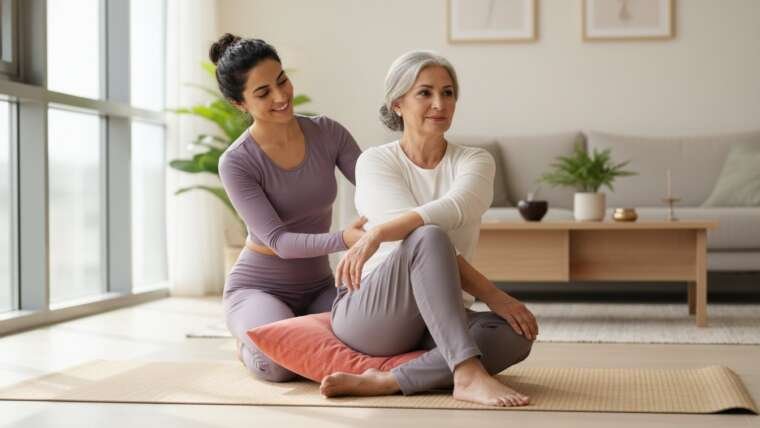
Professionalism is the cornerstone of trust. Our team consists of REPS UAE and Yoga Alliance certified female mentors who understand the intricate physiological changes your body has undergone. Having a dedicated professional by your side means every alignment is checked to prevent injury, especially if you’re dealing with complications like pelvic instability or diastasis recti. This one-on-one supervision removes the comparison trap. You don’t have to worry about what the person on the next mat is doing. Your journey is yours alone, guided by someone who respects your pace and your privacy.
Convenience as a Catalyst for Consistency
The most effective wellness routine is the one you can actually keep. By choosing private yoga classes, you transform your home into a sanctuary. You don’t need to coordinate childcare or rush through a commute. Instead, you can schedule sessions during your baby’s nap time, turning a potentially stressful logistical hurdle into a seamless part of your day. This integration helps hatha yoga for post-natal recovery feel less like a chore and more like a vital ritual of self-care that fits perfectly into your new lifestyle. When the barrier to entry is removed, consistency flows naturally.
Safe Hatha Practices and Essential Poses for Postpartum Healing
Health is an internal state of grace that unfolds slowly. When you begin your journey with hatha yoga for post-natal recovery, the focus shifts from outward performance to inward stability. Grounding poses are essential during this time. They help calm a nervous system that’s been on high alert for months. We also prioritize gentle chest openers. These movements are a direct antidote to the “nursing hunch” and the persistent strain of carrying your baby throughout the day. By opening the heart space, you’re not just stretching muscles; you’re inviting a sense of emotional lightness back into your life.
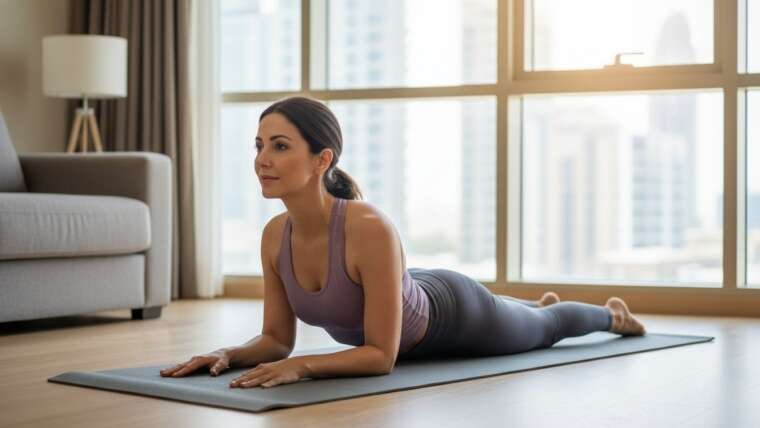
While traditional Sun Salutations might feel too demanding for a recovering body, we utilize modified versions that respect the healing of your abdominal wall. We avoid deep backbends or intense core engagement that could aggravate Diastasis Recti. Instead, we move with a rhythmic grace that builds gentle heat without causing depletion. This approach ensures that you’re building functional strength that supports your daily movements as a mother. Unlike generic fitness programs that might suggest planks or scissors too early, this practice honors the delicate state of your connective tissues.
Gentle Poses to Start Your Journey
Spinal mobility is often compromised during the fourth trimester due to postural changes. Cat-Cow is a foundational movement that brings fluid awareness to the spine and gentle engagement to the core without causing strain. Following this with a modified Child’s Pose, using a bolster or pillows for support, offers immediate relief for the lower back and a moment of quiet reflection. Tadasana, or Mountain Pose, serves as a vital tool to recalibrate your center of gravity and restore a balanced standing posture after months of pregnancy-related shifts.
Breathing and Pelvic Awareness
Oxygen is the primary fuel for cellular healing. Dirga Pranayama, or the Three-Part Breath, increases oxygenation in the blood and helps clear the mental fog of sleep deprivation. As you grow stronger, we cautiously introduce the engagement of Mula Bandha. This subtle pelvic lock builds internal strength from the foundation up, supporting the organs as they return to their original positions. It’s crucial to avoid high-impact movements or deep, binding twists during these early months. Your ligaments remain soft due to lingering hormones like relaxin, and pushing too fast can lead to joint instability.
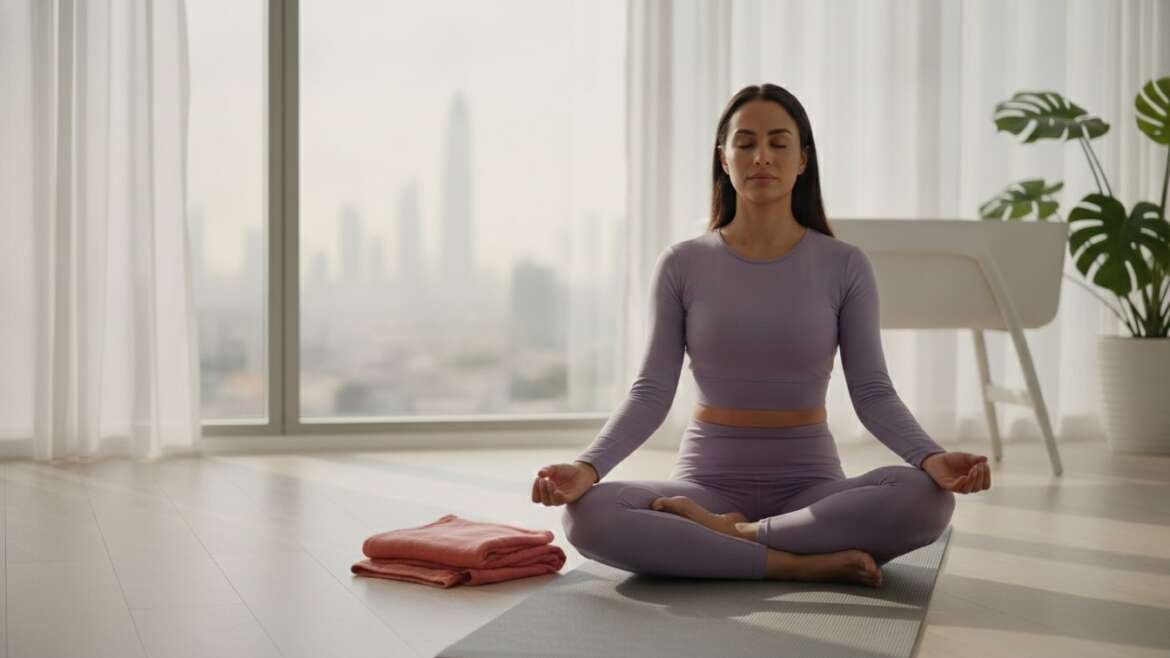
Finally, never underestimate the power of Savasana. This isn’t just a rest; it’s a period of deep neurological integration. It allows your body to absorb the benefits of the practice and provides a rare moment of complete stillness where you aren’t “on call.” This stage of the practice is where the real transformation happens, moving you from a state of exhaustion to one of quiet vitality. If you’re ready to experience a practice designed specifically for your body’s needs, book a private post-natal session with our certified mentors today.
Tailored Post-natal Care with Professional Home Instruction
Wellness is not a destination but a continuous flow that adapts to the seasons of your life. Our service brings a professional sanctuary directly to your doorstep in Dubai, ensuring that your recovery doesn’t compete with your new responsibilities. By choosing hatha yoga for post-natal recovery with our team, you receive more than just physical instruction. You enter into a partnership where ancient Hatha principles, gentle Vinyasa flows, and mindful meditation are woven together for your total wellness. We focus on creating a bespoke recovery plan that evolves as your body grows stronger, providing a sustainable path back to vitality.
Our Standards and Certified Expertise
Trust is earned through transparency and specialized knowledge. Every one of our female instructors holds REPS UAE and Yoga Alliance credentials, providing you with absolute peace of mind during this vulnerable time. We specialize in female-only post-natal care because we understand that the postpartum journey is both deeply personal and physically unique. This mentor-based approach means your trainer is there to support you emotionally as much as physically. They act as a grounded guide, helping you navigate the transitions of early motherhood with confidence and grace.
Creating Your Personal Sanctuary at Home
Transforming your living space into a restorative environment requires very little effort. Choose a quiet corner with natural light, perhaps near your baby’s nursery, and clear a small area for your mat. During your first private session, our instructor will conduct a gentle assessment of your current mobility and core stability. This initial conversation allows us to design a practice that respects your birth story and your specific goals. It’s a living practice that adjusts to your daily energy levels, ensuring that every session feels like a nourishing gift rather than another task on your to-do list.
Taking this time for yourself is a vital investment in your family’s harmony. When you feel centered and physically restored, you can meet the challenges of newborn care with a more patient and present heart. This journey of hatha yoga for post-natal recovery is an invitation to honor the woman you’ve become. It’s a quiet, powerful statement that your health matters just as much as the precious life you’ve brought into the world. Let your home be the place where your healing begins.
Embracing Your Path to Postpartum Vitality
Wellness is a lifelong commitment that begins with a single, mindful breath. Throughout this guide, we’ve highlighted how the transition into motherhood requires a practice that’s as protective as it is restorative. By prioritizing safety through expert alignment and respecting the natural healing timelines of your body, you set a foundation for long-term health. Integrating hatha yoga for post-natal recovery into your daily rhythm isn’t just about physical restoration; it’s about reclaiming your sense of self in the comfort of your own home.
Our specialized female-only mentors bring a wealth of knowledge to every session, backed by REPS UAE and Yoga Alliance certifications. This convenient national home-delivery service ensures that your sanctuary is always within reach, regardless of your busy newborn schedule. Begin your gentle recovery journey with a private post-natal yoga session today. You’ve embarked on a beautiful new chapter, and you deserve a partner who respects your pace and your privacy as you return to your center.
Frequently Asked Questions
When is it safe to start yoga after giving birth?
It’s generally safe to begin your practice six weeks after a vaginal delivery or eight weeks following a C-section, provided you’ve received medical clearance from your doctor. This timeline ensures your body has moved past the initial inflammatory phase of healing. Starting hatha yoga for post-natal recovery at this stage allows you to gently rebuild strength without overtaxing your connective tissues. Every recovery is unique, so listening to your body’s signals remains the most important guideline.
Can I practice yoga at home if I had a C-section?
Yes, you can absolutely practice at home after a C-section once your surgical incision has fully healed and your doctor approves movement. Our instructors specialize in modifications that avoid direct pressure on the scar while focusing on gentle mobility. We prioritize breathwork and seated postures that don’t strain the abdominal wall. This careful approach ensures you reap the benefits of movement while protecting the integrity of your surgical recovery and long-term physical health.
What is Diastasis Recti, and can yoga help fix it?
Diastasis Recti is the partial or complete separation of the rectus abdominis muscles, which is common during pregnancy. Targeted hatha yoga for post-natal recovery can significantly help by strengthening the deep transverse abdominis muscles that provide internal support. We avoid traditional crunches or heavy twists that could worsen the gap. Instead, we focus on subtle core engagement and alignment techniques that encourage the connective tissue to knit back together naturally and safely over time.
Do I need to leave my baby in another room during the session?
No, you don’t need to separate yourself from your baby during our private sessions. One of the greatest benefits of home practice is the ability to stay close to your little one, whether they’re napping nearby or resting on a play mat. If your baby needs attention, we simply pause the session. This flexibility removes the anxiety of separation and allows you to focus on your well-being without any added stress or worry.
What equipment do I need for a private home yoga session?
You only need a standard yoga mat and comfortable, breathable clothing to begin. Since we focus on restorative practices, having a few firm pillows, a blanket, or a bolster can be very helpful for support in specific poses. If you don’t have professional yoga blocks, our instructors can show you how to use common household items as substitutes. We aim to make your practice as accessible and uncomplicated as possible within your own environment.
How often should a new mother practice yoga to see results?
Practicing one to three times per week is ideal for seeing consistent improvements in your strength and mental clarity. Consistency is far more valuable than intensity during the postpartum period. Even a short, thirty-minute session can provide significant relief from back tension and fatigue. We design our sessions to fit into your schedule, ensuring that your wellness routine remains a supportive ritual rather than an overwhelming obligation that adds to your daily load.
Are your female trainers certified to work with postpartum clients?
Yes, all our instructors are REPS UAE and Yoga Alliance certified with specific training in post-natal care. This ensures they understand the physiological and hormonal shifts that occur after childbirth. Working with a certified professional provides an extra layer of safety, as they can identify movements that might be contraindicated for your specific recovery stage. You can trust that your mentor has the expertise to guide you through a safe and effective restorative journey.
Can yoga help with postpartum depression or anxiety?
Yoga is a powerful tool for nervous system regulation, which can help manage the symptoms of postpartum anxiety and depression. Through rhythmic breathing and mindful movement, you can lower cortisol levels and encourage a state of internal calm. While it’s not a replacement for clinical care, many mothers find that the practice provides a vital emotional anchor. It offers a quiet space to reconnect with yourself and find peace amidst the challenges of motherhood.