Did you know that 61% of people begin their wellness journey specifically to improve their flexibility, yet many feel that a loud, crowded gym is the only path to success? It is a common misconception that peak suppleness requires heavy machinery or public displays of effort. You likely find that the clamor of a fitness center and the long commute across the city actually hinder your ability to truly connect with your body. It is difficult to find stillness when you are surrounded by generic routines that don’t address your unique needs or your persistent back pain.
We believe your path to movement should be a restorative sanctuary, not a source of stress. In this guide, you will discover how to achieve physical suppleness and mental clarity through proven alternatives to gym for improving flexibility that are specifically tailored for the modern UAE lifestyle. We are going to explore seven bespoke methods that allow you to increase your range of motion and reduce muscle stiffness from the comfort of your own home. By shifting your focus toward personalized, mindful practices, you can create a sustainable routine that honors both your schedule and your personal growth.
Key Takeaways
- Learn how to move beyond the limitations of high-intensity weightlifting to embrace low-impact disciplines that prioritize functional mobility.
- Discover the science of your fascia and how simple myofascial release techniques can release deep-seated tension without leaving your home.
- Explore Hatha Yoga as one of the premier alternatives to gym for improving flexibility, offering a comprehensive system for joint and spinal health.
- Find out how to audit your living space and select the right props to create a quiet, effective environment for your daily practice.
- Understand the transformative power of private instruction in providing the real-time corrections you need to prevent injury and deepen your progress.
Beyond the Weight Room: Why Gyms Often Fail Flexibility Seekers
Health is a state of fluid harmony, not just a measure of how much weight you can lift or how fast you can run. Many seekers find that traditional fitness centers provide a loud, distracting environment that actually works against their personal goals for suppleness. Seeking alternatives to gym for improving flexibility is often the first step toward a truly restorative practice. These alternatives focus on low-impact, specialized disciplines that prioritize joint health and longevity over raw power. By moving away from the high-pressure atmosphere of a public gym, you open the door to a more mindful and effective way of caring for your physical form.
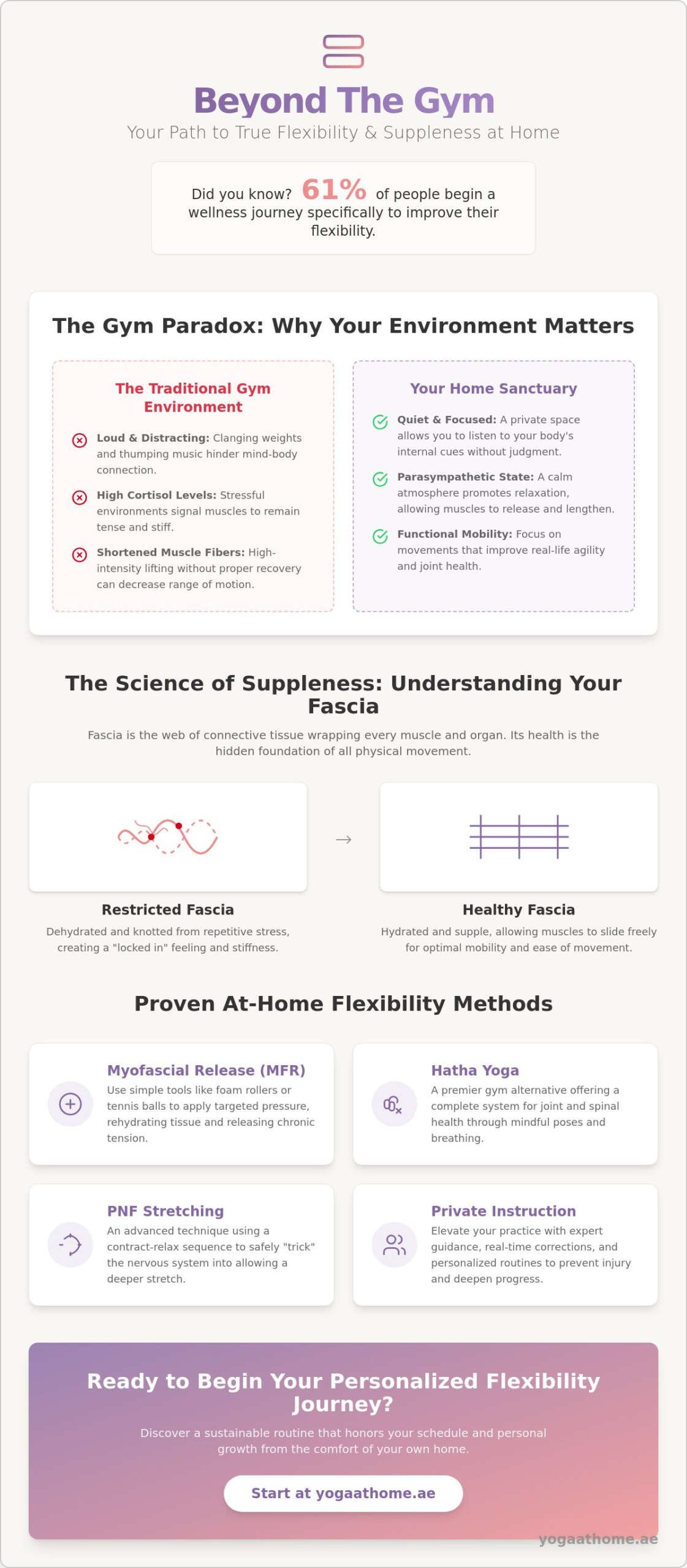
There is a phenomenon often called the ‘Gym Paradox.’ While lifting heavy weights builds impressive muscle, high-intensity training without proper recovery can lead to shortened muscle fibers and a significantly decreased anatomical range of movement. When you constantly push your body to its limits in a chaotic, competitive setting, your cortisol levels naturally rise. This stress hormone signals your muscles to stay in a state of ‘holding’ or chronic tension, which is a protective mechanism that inadvertently creates stiffness. To achieve a deep, lasting release, your body must enter a parasympathetic state. This physiological shift is nearly impossible to trigger amidst the clanging of iron and thumping music of a public facility. Choosing alternatives to gym for improving flexibility ensures your environment supports, rather than sabotages, your nervous system’s ability to let go.
The Psychological Advantage of Private Spaces
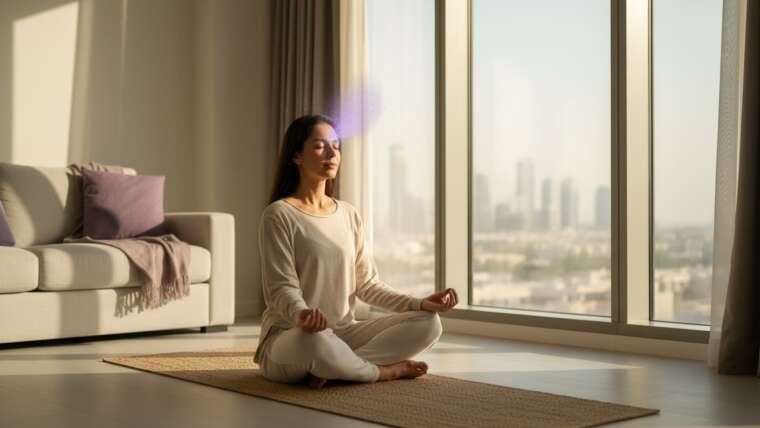
True transformation begins when you feel safe enough to listen to your body’s subtle whispers. Removing ‘gym-timidation’ allows you to focus entirely on internal cues rather than the perceived judgment of others. In a private, serene space, you can attempt challenging poses or deep stretches without a hint of self-consciousness. This calm atmosphere is the essential foundation of the mind-body connection. It allows your brain to stop scanning for external threats and start focusing on the rhythmic breath required for true suppleness.
Functional Mobility vs. Static Muscle Growth
Looking fit is not the same as being mobile. Traditional gym machines often restrict your body to fixed, linear planes of movement that don’t mimic the complex, spiraling actions of real-life activities. While these machines might build visible muscle, they often neglect the stabilizing tissues that protect your joints. Modern wellness now embraces ‘movement as medicine,’ shifting the focus toward functional mobility. This approach ensures you can move through a full range of motion with ease, whether you’re reaching for a high shelf, gardening, or simply waking up without that familiar morning ache. It is about reclaiming the natural agility that is your birthright.
The Science of Suppleness: Myofascial Release and Dynamic Movement
True physical freedom begins beneath the skin, within the intricate web of connective tissue known as fascia. This biological fabric wraps around every muscle and organ, dictating your overall mobility and structural integrity. When fascia becomes dehydrated or restricted through repetitive stress, it creates a feeling of being “locked” in your own body. Fascia health is the hidden foundation of all physical movement, acting as the body’s internal architecture of ease. Embracing alternatives to gym for improving flexibility allows you to address these deep-seated restrictions without the jarring impact of heavy machinery.
Myofascial Release (MFR) is a gentle yet profound way to restore this internal architecture. By using simple tools like a tennis ball or a foam roller, you can apply targeted pressure to “trigger points” that hold chronic tension. This process encourages the tissue to rehydrate and slide freely again. For those seeking advanced results, Proprioceptive Neuromuscular Facilitation (PNF) offers a high-level technique. By briefly contracting a muscle before stretching it with a strap or a partner’s assistance, you trick the nervous system into allowing a deeper range of motion. This scientific approach to The Importance of Stretching ensures that your progress is both measurable and safe for your joints.
Dynamic vs. Static Stretching: A Comparative Guide
Understanding when to move and when to remain still is vital for protecting your body. Dynamic stretching involves active movements that take your joints through their full range, effectively “waking up” the nervous system. Static stretching involves holding a position to gently lengthen muscle fibers after your body is warm. Incorporating these into bespoke Hatha Yoga sessions ensures your routine is balanced and effective.
| Stretching Type | Best Timing | Primary Goal |
|---|---|---|
| Dynamic | Before activity | Joint lubrication and blood flow |
| Static | After activity | Muscle fiber lengthening and relaxation |
The Role of Breath in Muscle Elasticity
Your breath is the most powerful tool you possess for unlocking physical tension. Deep diaphragmatic breathing signals the brain that the body is safe, which immediately dampens the “stretch reflex” that causes muscles to contract against a pull. When you exhale slowly into a stretch, you encourage the parasympathetic nervous system to take over. This biological shift allows muscles to stop guarding and start releasing. It’s a simple practice that transforms a basic stretch into a restorative ritual, moving you closer to the peak suppleness you deserve.
Yoga as the Ultimate Gym Alternative for Holistic Mobility
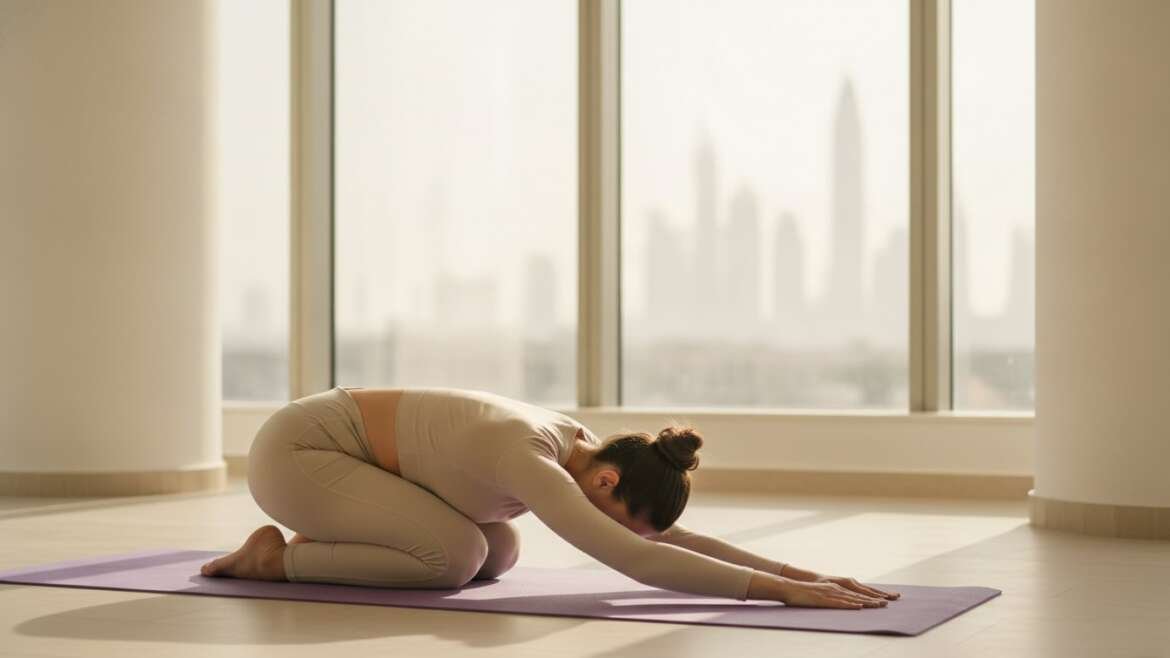
Yoga is an ancient path toward modern liberation, offering a comprehensive system that nurtures both joint health and spinal integrity. While a gym might offer a few minutes of perfunctory stretching after a workout, yoga provides a deliberate, structural approach to movement. It is one of the most effective alternatives to gym for improving flexibility because it treats the body as an interconnected whole rather than a collection of isolated parts. Hatha Yoga, in particular, serves as a foundational practice for those seeking structural alignment and a steady, grounded approach to mobility. It’s not just about reaching your toes; it’s about opening the channels of energy that allow your entire being to breathe.
By choosing yoga classes in dubai that take place in your own sanctuary, you exchange the generic routines of a fitness center for a bespoke journey. This practice introduces the vital concept of ‘active flexibility.’ Unlike passive stretching where you simply hang in a pose, yoga teaches you to build strength at the end of your range of motion. This protects your joints and ensures that your new-found suppleness is functional and resilient. For a deeper understanding of the scientific benefits, the National Center for Complementary and Integrative Health offers a guide on Yoga: What You Need To Know, highlighting its role in stress reduction and physical wellness. This evidence-based approach confirms that a dedicated practice is a powerful tool for long-term health.
Targeting Specific Needs: From Seniors to Pre-natal
Wellness is a birthright that evolves with us through every stage of life. For seniors, yoga is a gentle sanctuary that maintains joint lubrication and improves balance to prevent falls. In the delicate periods of pre-natal and post-natal recovery, guided stretching provides a safe way to manage physical changes and restore core integrity. We recognize that privacy is often a priority in our community, which is why specialized ladies-only sessions create a culturally sensitive and profoundly comfortable environment. This inclusive approach ensures that every practitioner, regardless of their stage in life, feels supported and seen.
Spinal Health and Back Pain Relief
The modern professional often spends hours bound to a desk, leading to ‘tech-neck’ and lower back compression. Yoga offers a direct antidote to these sedentary patterns through ‘spinal flossing’, a series of movements that maintain nerve health and vertebral mobility. By practicing the best yoga poses for back pain, you can reverse years of compression and reclaim a tall, effortless posture. This focused attention on the spine ensures that your central nervous system remains vibrant and free from the daily strain of a digital lifestyle. It is a restorative process that turns your home into a place of healing.
Designing Your National Wellness Routine: Home Flexibility Strategies
Health is a sanctuary built with intention and consistency. While public fitness centers offer variety, they often lack the tranquility required for deep physical release. Creating a personalized home environment is one of the most sustainable alternatives to gym for improving flexibility. By removing the stress of the commute and the noise of the crowd, you allow your nervous system to settle into a state of receptive growth. This intentional approach transforms your living space into a restorative retreat where your body can finally let go of chronic tension.
Establishing a successful home practice requires a thoughtful foundation. Follow these four steps to design your routine:
- Step 1: Audit your space. Find a quiet, flat area where you can move freely without distraction. Even a small corner can become a sacred space if it is kept clear and inviting.
- Step 2: Invest in quality props. Blocks, straps, and bolsters are not just for beginners; they are essential tools that allow you to explore deeper ranges of motion with proper alignment.
- Step 3: Establish a ‘Ritual of Release.’ Choose a time that honors your natural rhythm. A morning session wakes the body for the day ahead, while a practice before bed helps shed the day’s mental and physical weight.
- Step 4: Track your progress mindfully. Forget the scale. Use ‘reach markers’ or progress photos to document the evolution of your suppleness over time.
Overcoming Home Distractions
True focus requires a boundary between your wellness practice and the digital world. Silence your notifications and inform your household that this time is for your personal growth. You can anchor your mind by using aromatherapy, such as sandalwood or lavender, paired with a calming soundscape. A twenty-minute session of deep, focused movement in your living room often yields greater results than an hour of distracted effort in a loud fitness center. It’s about the quality of your presence, not the length of the session.
Safety First: Avoiding Common Over-Stretching Injuries
Your body speaks in a language of sensation, and it’s vital to listen closely. You must distinguish between the ‘sweet ache’ of a productive stretch and the sharp, localized pain of a joint under too much stress. The ‘no pain, no gain’ mindset has no place in a restorative practice; it is a dangerous myth that leads to long-term injury. If you are unsure about your alignment, it is always wise to seek professional guidance. You can book a private session with our expert instructors to ensure your home routine is as safe as it is effective.
Elevating Your Practice with Private Instruction from Yogaathome
Moving from a self-guided routine to expert-led transformation is a profound shift in any wellness journey. While exploring alternatives to gym for improving flexibility, you might find that “DIY” stretching lacks the precision needed for true structural change. Our mobile service brings the serenity of a professional studio directly to your doorstep or office, ensuring your practice fits seamlessly into your UAE lifestyle. Every instructor holds prestigious REPS UAE and Yoga Alliance certifications, providing a foundation of safety and trust that is often missing in a standard fitness center. This elite level of qualification ensures that every adjustment is rooted in deep anatomical knowledge, protecting your joints as you explore new ranges of motion in a restorative way.
The efficiency of a private session cannot be overstated. You don’t have to navigate traffic or wait for equipment. Instead, your home becomes a sacred space where the focus is entirely on your growth. This personalized approach allows for a level of depth and intensity that is rarely achieved in a generic gym setting. It’s about more than just physical exercise; it’s a supportive partnership in your restorative process.
The Power of One-on-One Mentorship
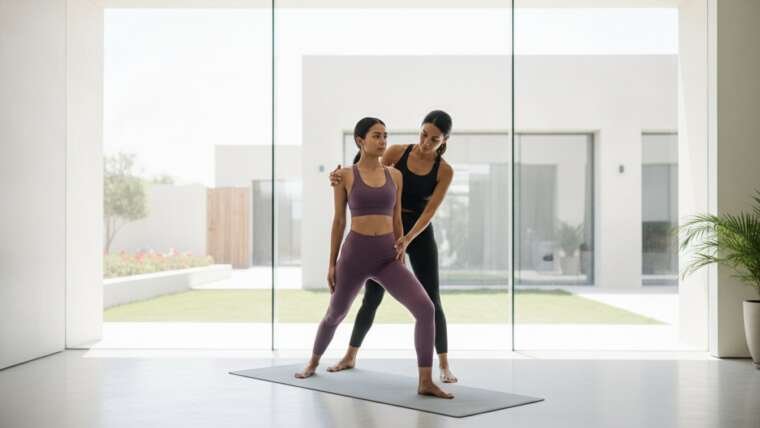
Group classes, while social, often fail to account for the unique anatomical differences that define your body. A pose that feels restorative for one person might cause strain for another due to variations in bone structure or past injuries. Private mentorship allows for real-time alignment corrections that prevent injury and accelerate progress. Whether you are seeking relief from office-induced tension or looking for athletic recovery, your sessions are customized for your specific goals. You build a long-term relationship with a mentor who understands your body’s history and potential, helping you move past plateaus with patience and grounded confidence.
Inclusive Wellness for Every Stage of Life
We believe that wellness is a lifelong journey that should be accessible to everyone. Our commitment to the UAE community includes specialized programs for ladies, seniors, and corporate professionals. With the global corporate wellness market expected to reach $94.6 billion by 2026, many local businesses are now integrating alternatives to gym for improving flexibility into their daily operations. Approximately 44% of companies worldwide now offer yoga to support employee well-being. Our “Yoga for Seniors” sessions focus on maintaining joint lubrication and preventing falls, while our “Ladies Yoga” provides a culturally sensitive environment for private growth. These bespoke programs ensure that your wellness routine is perfectly aligned with your personal needs and national health trends.
It’s time to honor your body’s need for movement in a space where you feel most at ease. Reclaim your mobility and mental clarity with a partner who respects your journey and your schedule. Book your first private session with Yogaathome today and experience the restorative power of personalized care in your own home.
Reclaiming Your Natural Agility
Health is a continuous journey that flourishes in the quiet moments of self-discovery. We’ve explored how moving beyond the weight room helps bypass the stress of high-intensity environments, allowing your fascia to truly hydrate and release. By integrating mindful tools like myofascial release and the structural wisdom of Hatha Yoga, you can transform your home into a sanctuary of movement. Embracing these alternatives to gym for improving flexibility allows you to build a practice that honors your body’s unique anatomy and your personal schedule.
Realizing your full physical potential shouldn’t be a source of intimidation. With decades of professional expertise delivered to your doorstep, our REPS UAE and Yoga Alliance certified instructors provide the real-time guidance you need to move safely. Whether you require specialized ladies-only sessions or senior programs designed for joint longevity, we are here to support your restorative process. Start your journey to suppleness with a private, personalized session at home. You deserve a life defined by ease, fluidity, and profound mental clarity.
Frequently Asked Questions
Can I really get flexible without using gym machines?
Yes, you can achieve exceptional suppleness without ever touching a gym machine. Most machines restrict your body to linear movements that don’t reflect how we move in daily life. By using your own body weight and gravity, you engage stabilizing muscles and move through more natural planes. This approach is one of the most effective alternatives to gym for improving flexibility because it promotes functional mobility rather than just static muscle growth.
How often should I practice flexibility exercises to see results?
Consistency is the cornerstone of physical transformation. You will see the most significant progress by practicing for at least ten to fifteen minutes daily or engaging in three longer, dedicated sessions each week. Flexibility is a restorative process that requires regular signaling to the nervous system. Short, frequent sessions are often more effective than one long, intense workout because they prevent the tissues from returning to their habitual state of tightness.
Is yoga better than traditional gym stretching for beginners?
Yoga provides a comprehensive system for structural alignment that generic stretching often lacks. While gym stretching usually focuses on isolated muscles, Hatha Yoga coordinates the breath with movement to release the entire kinetic chain. This holistic method is particularly beneficial for beginners because it emphasizes the mind-body connection. It teaches you how to engage your core and protect your joints, ensuring your journey toward suppleness is both safe and deeply restorative.
What equipment do I need to start a flexibility routine at home?
You only need a few simple tools to create a professional-grade home practice. A high-quality non-slip mat, two foam blocks, and a cotton strap are the foundational essentials for deepening your stretches. You might also consider a foam roller or a tennis ball for myofascial release. These alternatives to gym for improving flexibility are affordable and take up very little space, allowing you to maintain a clutter-free environment that supports your mental clarity.
How do I know if I am over-stretching or causing an injury?
Your body communicates through sensation, and it’s vital to distinguish between productive tension and harmful pain. A “sweet ache” or a feeling of warmth in the muscle belly is generally a sign of progress. However, sharp, stabbing, or radiating sensations near the joints indicate that you are pushing too far. If your breath becomes shallow or jagged, your nervous system is likely in a protective state, signaling you to back off and find a more sustainable depth.
Can older adults improve their flexibility significantly without a gym?
Age is never a barrier to reclaiming your mobility. Older adults can see profound improvements in their range of motion through specialized programs like Yoga for Seniors. These practices focus on gentle joint lubrication and steady balance, which are essential for maintaining independence. Because these routines are low-impact and can be performed in the privacy of your home, they offer a safe, non-intimidating way to reverse the stiffness often associated with aging.
Why should I choose a private instructor over a group yoga class?
Private instruction offers a level of customization that is impossible to find in a crowded group setting. Every person has a unique anatomical structure, and a private mentor can provide real-time corrections tailored specifically to your skeleton. This one-on-one attention ensures that you aren’t performing poses that could lead to injury. It also allows your instructor to adjust the pace and focus of every session to match your energy levels and personal goals.
How does stress affect my ability to become more flexible?
Stress is a physical weight that manifests as chronic muscle tension. When you are stressed, your body produces cortisol, which keeps your muscles in a state of “guarding” or contraction. This makes it physiologically difficult for your tissues to lengthen. By practicing in a serene, quiet environment, you encourage your parasympathetic nervous system to take over. This shift allows your muscles to stop protecting and start releasing, which is essential for achieving deep, lasting suppleness.